Software
Houzz Logo Print
tristin_idaho

What is this fertilizer?

10 years ago
last modified: 10 years ago

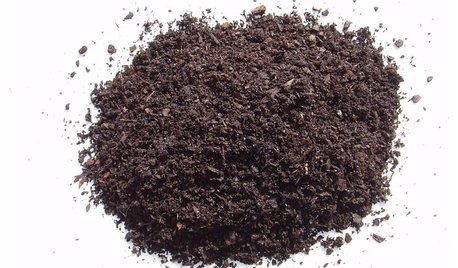
I got a free 50 lb bag of this fertilizer looking stuff called humic (view picture). What is it? Is it OK to put on new grass seed? And what are the application rates for it?

Edit: photo doesn't seem to be coming up. It just says

12 - 15 - 9 - 10 - Zn - Fe

HUMIC

Comments (20)

  • 10 years ago

    Humic is a reference to humic acid, which is a nutrient dense organic compound which is concentrated by microbes and made from microbe-created plant food. The acid part is relative. If 7.0 is neutral pH, humic acid is something like 6.5 pH. Can you take a picture of it and post to the forum, or find the manufacturer and post that so we can look it up?

    I believe it is a so called slow release fertilizer. In this case I think we'll have glaciers melted before humic acid goes to work. Maybe other people have had better experience and can make it work. Or it could be it works better on a chemically treated lawn rather than one that's been organic for 10 years.

  • 10 years ago

  • 10 years ago
    last modified: 10 years ago

    Hard to say as cooperatives buy in bulk, have it packaged in their name and sell it at a discount to members and the public. Humic substances are primarily composed of carbon and are the more stable product of the decomposition of organic matter. Although they don't offer a lot in the way of readily available nutrients, they play an important roll in soil structure, water retention, and cation exchange capacity. It's likely what you have has been supplemented with nutrients that may or may not be derived from the decay of organic matter.

    Regardless, It will be good for your soil, but I wouldn't add it to new seed. No particular reason.

  • 10 years ago

    Sounds good to me! What do you think a general application rate should be for it? They sell it pretty cheap for a 50 lb bag so I'd assume it should be on the heavy side application wise.

  • 10 years ago

    Please note that I edited my original post.

    Normally, a product is applied at the rate that results in the application of 1# of the highest NPK number per 1000 sq ft. I'd call one of the Valleywide Coops and ask what the source of the N&P&K is, if the N is slow or fast release and for application rates for lawn turf.

  • 10 years ago

    That's interesting, adding humic acids to synthetic fertilizer. Can't hurt I guess!

  • 10 years ago

    That's interesting, adding humic acids to synthetic fertilizer. Can't hurt I guess!

    I think you are drawing conclusions that aren't supported by the current state of the discussion.

  • 10 years ago

    So they just wrote HUMIC on the label to mess with their local coop members?

  • 10 years ago

    No. The term Humic substances can include more than humic acids.

    There just isn't enough information in:

    "12 - 15 - 9 - 10 - Zn - Fe

    HUMIC"

    to be able to say what is contained in the bag or the sources of the nutrients.

    Peat and brown coal are examples of "humic substance". Humic substances are "end stage" products (carbon chains) of decay and are very stable taking decades, even centuries to break down further. Consequently they have basically no NPK plant nutrient value. This product just doesn't give enough information to know the source of the NPK content. Organic? Synthetic? Combination?


    See this discusion.


  • 10 years ago

    True, they could have used coal or peat as filler.

  • 10 years ago

    So do you think this would aid in breaking down thatch?

  • 10 years ago

    Absent considerable creative and tortured reasoning, No. As a soil amendment, it has its benefits. However the benefits of a 50# bag spread over a small area will be minor and negligible as the area of application enlarges.

  • 10 years ago

    I told a guy about my issues in my lawn and he gave me that 50 lb bag. His words were, "ahhh put this down and that'll fix ya right up!" Looks to me like it will help with soil, which will help, but it wont "fix me right up" :)

  • 10 years ago

    I'm a bit confused. You initially asked regarding new grass seed and what I assumed was safety concerns in applying this product. Then you made reference to thatch and now to unspecified issues in your lawn that a guy says this product will fix. It may help if you can be more detailed in describing your issues?

  • 10 years ago

    Yeah, sorry, I have made quite a few threads covering my issues and have gotten a lot of good answers, so I figured people had already seen it. But for the short and long story...

    Short story:

    My lawn has a lot of thatch build up and places where nothing grows, over time I have decreased the thatch using soap, but this year I aerated and dethatched and wanted to plant. While working on my lawn a guy came by and lent me his tools and gave me that 50 lb bag of HUMIC. I was overseeding some and planting new in some.


    Long Story:

    I moved into this house a year ago, and previously it had sat vacant for three years, so the lawn was absolute garbage. There were weeds everywhere, spots that weren't growing anything, 100 different kinds of grass, or what looked like grass anyway, and parts of my lawn that were just fine... it was a mess. I'm pretty new to this stuff so it took me awhile to realize walking on my lawn felt like walking on a sponge. Soon figured out that there were 1.5" - 2" of organic matter that separated the grass from the dirt, it only had sense that it was thatch. Had sticks, pine needles ( used to be a huge pine tree there that apparently blew over a few years back), dead grass, etc. It was hard and like a crust, I could literally pick any spot on my lawn and use my hands to rip up the lawn, because all the roots from the little grass that was left and the weeds were growing directly in the thatch and not the dirt.

    To top it all off my "soil" was extremely hydrophobic. So whatever water could even get through the top 1/4" of dirt would just get soaked up into the thatch layer. So I posted on here last year and asked for a solution, as I didn't have money to start over completely. It's about 5500 sq ft and I could spent maybe $100 per year on it. Someone mentioned I could liquid aerate it using shampoo, so every week to every other week I used an entire bottle of $2 clear shampoo through a hose end sprayer to help water penetrate the soil and break up that thatch! After awhile I grew "very" frustrated with my lawn because I found out the sprinkler system that was installed was crap, my lawn (weeds) were green only in circles, and some of the weeds were so bad I couldn't even walk out there with bare feet. But I kept spraying that soap!

    So fast forward to this spring, and the lawn surprisingly looks a lot better. The thatch layer went from 1.5" - 2" to only 0.5" - 1"... and miraculously grass popped up and not too many weeds, though it's just spring, I'm sure those will come later. But parts of the lawn are very very thin. Like if you're looking straight down there will be a grass plug of this nasty looking thick bladed stuff (not crab grass) every 1-2 inches. And not a bunch of grass every 1-2" but just a little tiny grass shoot. Enough that if you look from the side my lawn is green, look from the top and its barren. And there were still areas outside my fence next to the road that had 2" of thatch and didn't grow anything at all.

    So I gave myself $100 budget again, and decided to overseed one portion of front lawn (1000 sq ft) and redo the portion next to the road (500 sq ft). So for the 500 sq ft section I completely ripped up everything. Found out the only thing growing were weeds that managed to root into the dirt and make it all the way through the thatch. I ripped it all up. About half way through that part an older gentleman comes up and offers to lend me his sifter, so I can sift out all the thatch and rocks and keep the dirt (the level of grass was 3-4 inches higher than sidewalk). So I used the sifter, finished that 500 sq ft section, and moved to front lawn section. When I returned the guys sifter, he gave me that 50 lb bag of HUMIC. Nice guy!

    I had the bright idea last year of buying a manual dethatching rake... heh heh. And this year I had the bright idea to buy a manual core aerator. I'm sure you're laughing at this point, I'd laugh at me too. An entire week later my 1000 sq ft section is dethatched and core aerated. Cored it every 3" give or take a bit. Then I took the left over dirt from the 500 sq ft section and spread it over my front lawn section giving it about 1/4" of soil. I then went to Walmart and bought Scotts Mountain Mix.

    It has 24% Shadow II Creeping Red Fescue

    19% Boreal Creeping Red Fescue

    19% Charger II Perennial Ryegrass

    14% Uno Perennial Ryegrass

    10% Abbey Kentucky Bluegrass

    10% Blue Bonnet Kentucky Bluegrass

    So I was all ready to plant, and cover with straw, but then had the thought that if all that soil I spread over the lawn had been under 2" or more of thatch for several years, it's probably lacking in the grass growing nutrients. So I got on to see if that HUMIC would work or if I needed to buy starter fertilizer. Ultimately I bought starter fertilizer for it, but figured I'd also ask if the HUMIC would help break up the remaining thatch on the other portions of the lawn because doing it manually will take until next spring... I spread the starter fertilizer, planted the grass, raked it in, spread straw, and now this is day two of watering it. So we'll see!

    I've gotten awesome help from everyone on here, and I really appreciate it. I've learned a lot. Pretty new to this stuff. Last year I didn't even know thatch was a thing...

  • 10 years ago
    last modified: 10 years ago

    That's a lot of work for a Spring seeding. I wish for your sake that you had waited until Fall. It is what it is. Once the grass begins to come up, your going to need to nurse it with regular watering to get it through Summer. Don't add anymore fertilizer after June 1 until late August/early September.. It sounds like you understand the basics of lawn care-water, mowing and fertilizing. Employ them and let us know where it stands mid-August. Turn that bag over and see if it has a label that was what the N is (ammonium, urea, etc.) Save it for application this Fall unless you can find out exactly what the N source is. Sounds like the microbes are working on your thatch. Continue treating the thatch areas as you have. Good luck.

  • 10 years ago
    last modified: 10 years ago

    Yeah trust me, I didn't know it would be that much work, but when you're half way done ripping up lawn and your wife is giving you the "eye"... there is NO turning back :)

    I wanted to do spring mainly because where I live it goes from summer to freezing temperatures in like a month. I was worried if I had waiting for fall the grass that I really wanted (bluegrass) wouldn't have been strong enough for the winter, but I fully plan on seeding again in fall if this doesn't work out too well.

    Thanks for the tips. The soil here is pretty sandy so I've had to water 3 times a day to keep the top damp. Main reason for the straw.

  • 10 years ago

    Keep in mind that the rye will germinate in 3-10 days. It's not uncommon for KBG can take 21-28 days. So don't stop keeping the seed moist once you start to see grass, keep it up so that KBG comes in too. Remember moist--3-4 short waterings a day.

  • 10 years ago

    Thats a really good point. And mowing should be ok though right? After rye comes up 2-3" I can mow on a high setting?

  • 10 years ago

    Wait for 3+ and breath through your eyes as if you were walking on eggs so you don't dislodge the KBG.