Software
Houzz Logo Print
goldstar135

Distilled Water?

10 years ago

Has anyone ever tried to make their own distilled water instead of going out to buy it? I'm just wondering because I don't feel like spending tons of money to buy gallons of distilled water all the time.

Comments (28)

  • 10 years ago

    Why do you need so much distilled water? Just curious.

  • 10 years ago

    I'm going to use it to water my plants in place of tap water, which has chlorine/fluoride which plants are apparently sensitive to. Also trying to collect rainwater, but not much in supply at the moment.

  • 10 years ago

    Please someone correct me if I'm wrong, but I read somewhere that distilled water might not be beneficial for plants because of it being "too pure", no nutrients/minerals etc. If you have to buy, perhaps better buy natural spring water or just let tap water sit for a while before using.

  • 10 years ago

    Distilled water is not good for plants. Bottled drinking water is much better. Deionized water is used for some sensitive orchids.

    If chlorine is present, it off-gasses if the water is allowed to stand for a number of hours, say, overnight.

    If it's chloramine, that doesn't off-gas. But can be treated/medicated as is used for aquariums.

    Fluoride doesn't off-gas. But a limited number/kinds of plants are sensitive to it.

    What are you growing that has problems? And what are the problems?


  • 10 years ago
    last modified: 10 years ago

    If you live in a humid location such as I do, you can buy a dehumidifier. It extracts all of the moisture from the air. When I run mine, on the very humid days, I have to empty out the [50 liter] reservoir two times a day. I would bottle up that water and use it on my plants. It's not much different than distilled water and works great on plants, too. I think that would be much easier than trying to distill water yourself. Just let a dehumidifier do the work for you. Plus, it makes the air in your home much more comfortable at the same time. :)

  • 10 years ago

    I've tried distilled water before because I thought it was better....it is not. I would never use it again, and boy did I waste a lot of time! Have you tested your tap water? I would think the tap would still be ok if you don't have the rainwater.

  • 10 years ago

    It really depends on the plants you are watering. Aroids, spider plants, and many other plants do not like tap water and will get brown tips. Most of this has to do with fluoride in the water. I'm lucky if I wanted to I could just drive to the spring and fill my bottles but not everybody is so lucky.

    The best thing to do is get your tap water tested then you can get an idea of what needs to be done. Most of the time you just need to lower the PH and remove the fluoride, other times there may be something more to be done.

  • 10 years ago
    last modified: 10 years ago

    My secluded neighborhood has a natural spring that runs through it, filling up two large ponds along the way. It originates from somewhere deep in the woods behind us, so it hasn't been contaminated through any human intervention. If it didn't already rain here enough as it is, I could walk down to there and fill up many bottles of it. Though, I would need me a little red wagon or something to haul all of that water back home, haha. So I wouldn't have to make so many trips. I haven't had to do that just yet, but the thought has crossed my mind.

  • 10 years ago

    I'm curious as to how you would make distilled water.

    Would you just boil it?


  • 10 years ago

    It's been a long time but this is how I used to prep water for plants. I've since gotten extremely lazy and live with the brown tips. Take a clean food can, not soda can and fill it with water, put it inside a heavy bottomed pot then put the lid on it. You can use a rock or something in the bottom of the can to keep it weighted. Turn on your burner to low so you don't warp your pan and let the water boil, as the steam rises it will go into the pot from the can. Let it boil for about 15 minutes then turn off the burner and leave the lid on for a few hours. Remove the lid then the can the water left in the pot should be cooled then is safe to water your plants with.

    This isn't how I used to do it but here is a video on how to distill water. this way may be safer but will leave marks on your pot.

  • 10 years ago

    Ohhhh, interesting.

    I only have brown tips on my Palm tree so I guess my water is OK.

  • 10 years ago
    last modified: 10 years ago

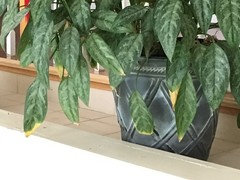
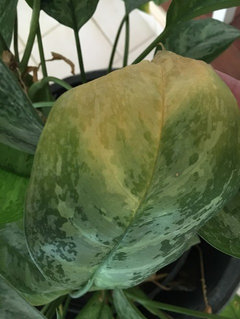
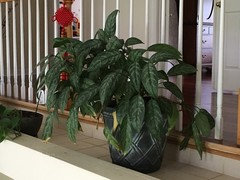
    I'm really only asking because my Aglaonema keeps having yellow leaves after each watering, which I think could be from chemicals in the tap. All my other plants seem fine with tap water.

    Since distilled water is "too pure", would water from a Poland Spring bottle work?

  • 10 years ago

    Brown tips, not yellow leaves are usually a sign that it's something in your tap water.

    id think your yellow leaves would be related to something else.

  • 10 years ago

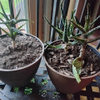
    Here's some pictures of the yellowing if it helps:

  • 10 years ago

    When was the last time you fed it? With what? It looks like fertilizer burn.

  • 10 years ago

    The last time I watered it? I remember that the soil felt rock-hard, so I put it in a tray with water so it could absorb water from the bottom. Maybe there is mineral accumulation in the soil? I haven't flushed it in a long time.

  • 10 years ago

    Rock hard soils is very bad not only because the roots can't absorb anything, it's also bad because as it pulls and hardens it will break feeder roots and allow fungus and bacterial infections to enter the plant. Soak the soil in warm water and then keep the soil moist, not wet. You will want to change the soil soon to a less peaty soil also. Look up 5:1:1 soil here on this forum and you should have all the info you need to get started.

    goldstar135 thanked Mentha (East TN, Zone 6B-7A)
  • 10 years ago

    "Soak the soil in warm water"

    Meaning submerge the entire pot?

  • 10 years ago
    last modified: 10 years ago

    yes, leave it there for a least 20 minutes. You may have to do it more than once. Get some wooden bbq skewers and poke one in the soil, if any resistance, leave it in the water longer. After about 30 minutes take it out then redo it the next day, keep doing this until the skewer can go through the soil without any resistance at all.

    goldstar135 thanked Mentha (East TN, Zone 6B-7A)
  • 10 years ago

    Would water from outdoor spigots contain chemicals found in tap water?

  • 10 years ago

    It depends. If you have an ion exchange softening system, plumbing from the water source usually bypasses the softener on its way to the outdoor sillcock, so it wouldn't be tainted with the salts used in the exchanger. If you have no softener or filtration system, water at the sillcock is the same as water at the kitchen or bathroom faucets.

    Al

    goldstar135 thanked tapla (mid-Michigan, USDA z5b-6a)
  • 10 years ago

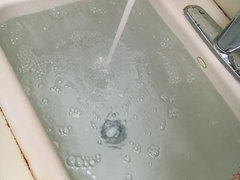
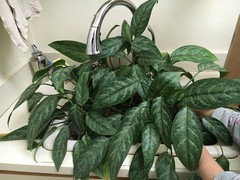
    Ok, so I submerged the plant for about thirty minutes. A ton of bubbles escaped when I put the pot in the water. It kept bubbling for about five-eight minutes before stopping. Took it out and let it drain at a 45 degree angle to get most of the perched water out. I put it in its usual location after draining.

  • 10 years ago
    last modified: 10 years ago

    I usually try to keep my plants' soil mix from completely drying out, but occasionally miss a watering. When I go to water it, I'll submerge the pots in water up to the soil line and let it soak, just like you did for this plant. This ensures that all of the soil mix gets rehydrated and that there are no dry spots hidden somewhere underneath the surface. Then I let it drain completely before moving them back to their usual location.

    goldstar135 thanked Photo Synthesis
  • 10 years ago

    Update on the ag–leaves look a lot perkier! Thanks for the help.

    Maybe yellowing was related to lack of water?

  • 10 years ago

    Hard to say w/o going over a bunch of details. If you focus on getting the basics covered, you'll be surprised at how much more you get from the growing experience.


    Al

    goldstar135 thanked tapla (mid-Michigan, USDA z5b-6a)
  • 10 years ago

    Al - Just curious if you knew how high your soil pH levels got before you really saw the problem? I've seen so many charts and things, but also like hearing personal accounts. =)

  • 10 years ago

    Al- I'm the "one" interested in learning more about water!

    "Since not one in 100,000 hobby growers know how to work around the issues and aren't interested in learning, tapwater belongs in the column labeled "not a particularly good choice, but something most of us are willing to deal with because it's so convenient".