Software
Houzz Logo Print
jeuteneier

Trench around established veggies

10 years ago
Hello gardeners!

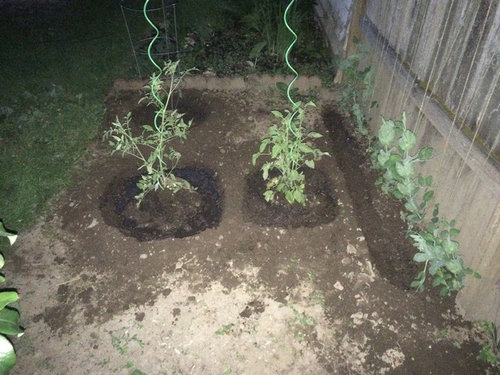
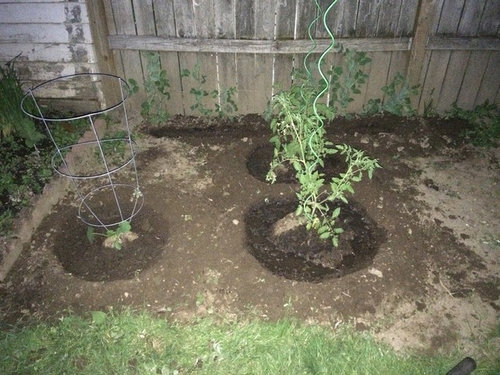
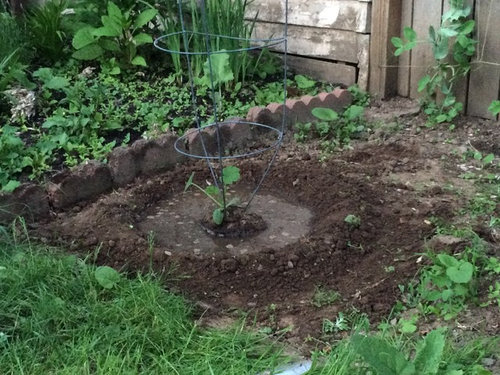
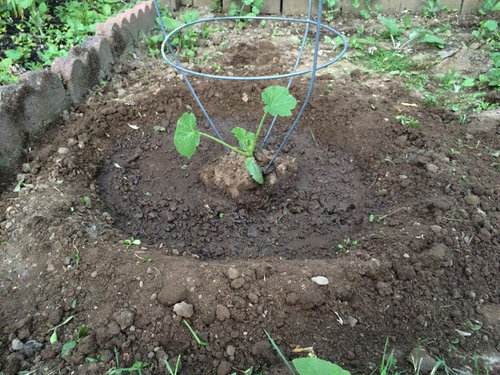
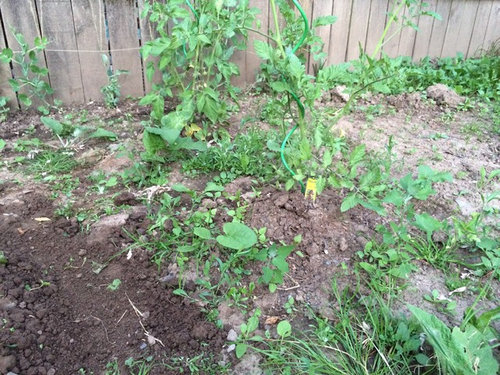
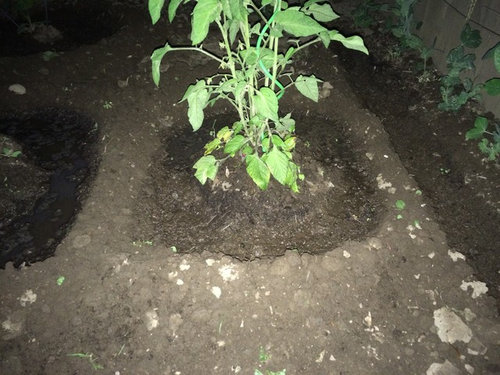
Here's some trench work I did around my veggies that have been doing well. The soaker hose has developed leaks and spraying all over and I'm getting tons of weeds as you can see in the before pics.


So I trenched around them and filled the trench with water to see what would happen. The water filtered pretty nicely. The soil has been amended very little so it's mostly just dirt but we got some decent veggies out of it last year.


I am wondering though if instead of trenching down around the plant I should have just built a burm up around it. One of the tomato plants I noticed I exposed a few small root ends (oops!).


Thoughts?


Also, I've got some free wood chips coming soon and plan to cover the non veggie areas with about 4" of chips for weed control.


Thanks!

Justin


Comments (16)

  • 10 years ago
    last modified: 10 years ago

    Just to understand... you removed the hose and dug trenches around the plants. Now you'll water each plant individually. You're doing this because the weeds were getting watered by the errant soaker hose. Next, you'll be putting down wood chips, but not on the garden itself, on a determined area around the garden?

    Are you going to use a mulch on top of the growing area?

    One thing to keep in mind... I'm not going to say what's best in your garden, but remember, don't just think on the surface. When soil is watered, the moisture will always, always, seek equilibrium. In other words, in the case of soil, it will spread. Aside from containing, or sequestering, the area in question, watering will eventually spread. Efforts like trenching does little except to focus the initial watering. It might help some, but not a lot. If it works enough for you're efforts, fine and good.

    You could think about 'edging' the area. It won't stop the water from spreading underground, but most weed roots will stop short upon hitting air. They will have a tougher time spreading into your garden space. Mulch will deter them even further.

  • 10 years ago
    last modified: 10 years ago

    "Before pics"? I don't see any weeds in the first five pix. But decent mulch is the answer, and it sounds like you're getting some. BTW, your root ball will extend far, far beyond what I see as your berm/trench. So watering just within that trench won't be good enough, even to the extent the moisture under the trench tries to spread.

  • 10 years ago

    The last pic (first one i loaded) shows the weeds.


    rgreen48, yes, I also wanted to experiment with trench watering as opposed to soaker hoses. I do have in mind the importance of the deeper watering. I may be way off base, but I figure that if I pour in a gallon of water it will perculate down (and sideways of course) but overall the water will get deep. Initial test showed that the water percolated nicely.

    daninthedirt, the trench extends about a foot on either side for a 2-3 foot diameter. Assuming that the water goes both down and out I envision water reaching somewhere in the 4' diameter mark. Again, I could be way off base. I can do a trench in an area that does not have a plant and dig down after a couple waterings.

    thanks for the replies!

  • 10 years ago

    I usually do a berm (so the plant is basically inside a basin) instead of a trench. Where I live it doesn't really rain at all during the peak summer growing season, and I've learned that the roots will find the water and grow there. I wouldn't worry about not having the water go where you want it, if it doesn't, the roots will, and as long as you water deeply enough they'll be just fine. I'd imagine it would be even less of a concern in an area where that weird water stuff fell from the sky occasionally. In my desert gardening experience. Yours may vary.

  • 10 years ago

    OK, that makes some sense. Though maybe as the plant grows, you could expand the berm. The rootball of the mature plant will be larger than a radius of 1-1.5 feet around the trench. I think a layer of mulch is the best bet. Then just sprinkle the whole area.

  • 10 years ago

    Totally agree, mulching in dry gardening situations is mandatory or else you just end up with concrete in between your widely spaced plants by mid summer. I generally don't widen the berms as plants grow, though. My berms are mainly to contain any hand watering I do at the beginning, or for applying fertilizer, etc, and are fairly unnecessary for daily drip irrigation irrigation.

  • 10 years ago

    Again, if your strategy is weed suppression by letting the soil dry out and turn into concrete what you're basically saying is that you also intend to suppress crop roots that try to expand into the dry region. Dry soil in a garden is actually pretty useless. If you're going to do that, you might as well have just planted your plants closer together. Same effect.

  • 10 years ago
    last modified: 10 years ago

    I'm not making concrete on purpose, it's just what tends to happen when it doesn't rain for 6 months or so and you're not doing sprinkler or hose irrigation over your entire area. I only water where water is necessary (roots) because 1. water is expensive here and 2. we are in a drought with restrictions on when and what we can water. So I drip irrigate at the root ball, not empty dirt.

    Spacing is still an issue for plant growth above ground. My tomatoes still go three feet apart so that I can actually get into my tomatoes and they don't become mildew jungles. Same goes for my peppers, squash, etc. Shallow rooted crops like lettuce do get a small area with irrigation over the entire surface.

  • 10 years ago

    I also trench and only water there. One thing that helps reduce the need for water even further is to mulch inside the trench. And then only water when the surface under the mulch has dried out.

  • 10 years ago

    OldDutch I was wondering about that. I was wondering if the mulch would soak up so much of the water that I ended up using more.

  • 10 years ago

    no wood chips. use hay

  • 10 years ago

    or sand at most.

  • 10 years ago

    actually i like the idea of something other than mulch so there is a visual difference between mulch material and where the trench is. once I get the mulch i'll post updated pics.

  • 10 years ago
    last modified: 10 years ago

    @Justin, Mulch is coarser than soil and so both dries out quicker and breaks what ever convention lines develop in the soil up to the surface cutting down evaporation as well as physically shading the actual ground from sun action. Frequent top layer hoeing actual produces a loose dust "mulch".

    I prefer wheat straw. At least around here and west wheat stands are pretty much pure with little to no weed and so very little weed seed to worry about. I have also had good success using fresh grass clippings, provided the lawn had not been treated for weeds. Just don't pile the new grass very deep to start with. You will want it to dry out quickly, like in maybe a single day if possible. Well made compost works about the best, because that can be worked right in at any time the crop comes off. The others become pretty heavy carbon and may suck nitrogen out of your soil if worked in too soon. That is especially true of wood chips and fallen leaves.

  • 10 years ago

    thanks Dutch! We actually generate quite a bit of grass clippings so maybe I'll start there. We don't treat the grass either.


    I do compost but it isn't old enough to start using yet. Maybe next year.


    So how do you decide how much water to pour into the trench? If it's straw or grass clippings do you just soak it with a couple gallons and call it good?


    thanks!

  • 10 years ago

    You could also check out ollas or DIY ollas using 2L bottles or 1 Gallon drink containers, or anything along that line.