Software
Houzz Logo Print
wantonamara

Thistle Day after the Rain

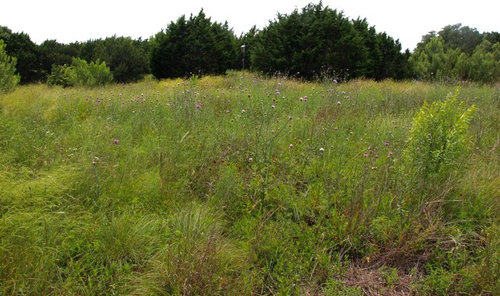
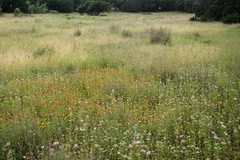
I have been held back by work and rain but finally I am out in the front field AKA my misbehaving prairie. I have a hard time calling it a prairie since their are so many invading exotic grasses. Every year I go out with my trash bags and strip the flowers, bag them and yank out the plants out of the still damp soil. It is a time of inventory about problems and future chores. It is hot and drippy sticky out there and I am really on the look out for snakes this year. MY neighbor who was walking by , held out to me to watch out , she had just circled around a snake that she couldn't ID on the warm road not far from where I was working. The grass is high since we have had two years of wet winters and springs and every invasive is charging Beggars Ticks, Johnston grass,prickly lettuce, and I think I Have weeping love grass. Pretty but invasive. I don't really know much about it. Does it form a mono culture? Is it a biological threat? I know that the Johnston Grass is a hated thing. I am overjoyed that my Queen Ann's lace is Daucus pusillus , a native. So many things appear only on these wet years.

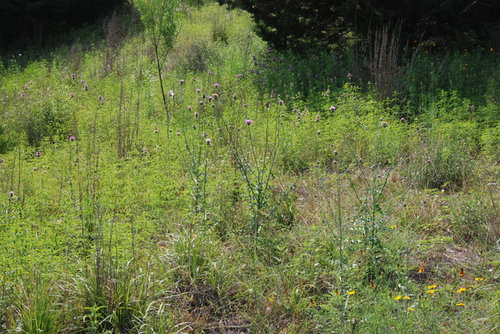
Here is an observation . While stripping thistle flowers I found many many dreaded leaf footed bugs on the dry, soon to float away seed heads. A lot of babies too. My vegetable garden is still without this scourge on my tomato plants this year. I am wondering what is going to happen when I take away this source of favored food from them. Will my tomatoes come under attack. I have had few leaf footed bugs until about three years ago, and that was when I started this thistle program. So I am wondering if this is connected. Hopefully they will just go to my neighbors field of thistle since he does nothing about them.

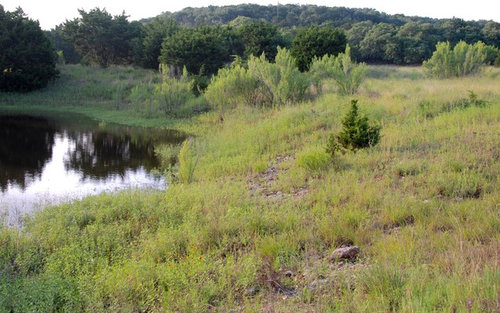
Here are some pictures. I just love to take pictures out here.


This should be a difficult patch since the tank is just exploding with mosquitoes. I think I will give my neighbor , a bee person a call today and borrow a bee hat. The mosquitos are bad. Another issue I need to research. It is a good sized Tank. This will be bursting into Horse mint bloom soon.


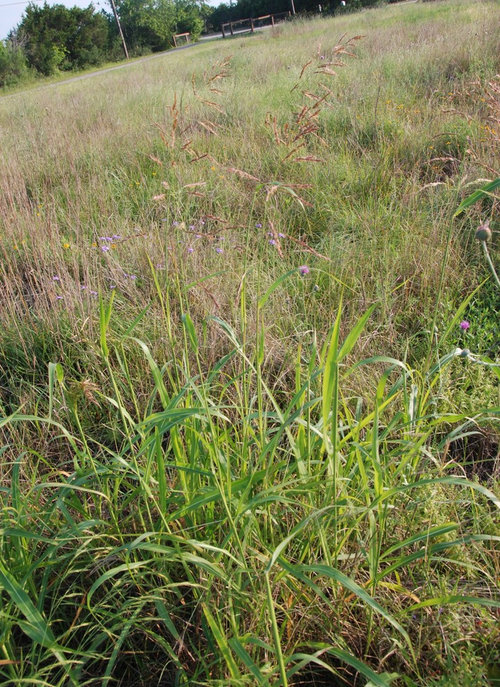
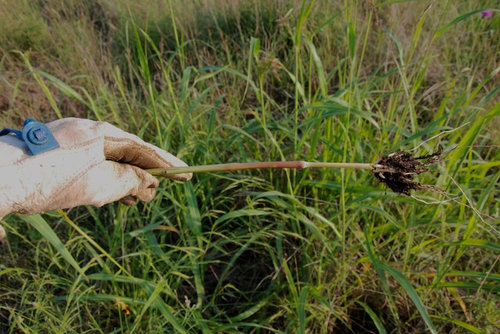
I guess I am out to pick up some roundup for the johnston grass. I have some Purpletop grass (Tridens flauvus) that looks and awful lot like Johnston grass but I think this is the dreaded JG judging from the stolen on the cane and the purplish shaft. Their seeds heads and broad leaves are similar and I am not good at grass ID's.


Here is one of the two consumption weed clumps( Baccharis neglecta) that have doubled in size while my back was turned. Isn't that how it always happens. I use Remedy mixed with diesel and a touch of soap painted on the many trunks and then I let them die slowly. Does anyone do this differently? It takes so long for them to die. I am open to suggestion. Its a shame they multiply so quickly because I adore how they look in fall, all white and silvery in seed. I better not neglect my Baccharis Neglecta.


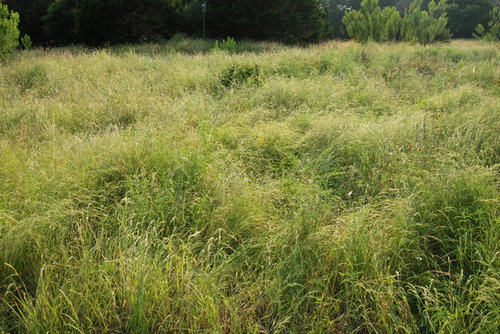
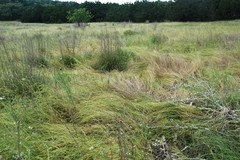
I love the Textures of the grasses out here. The front field changes in character from year to year. This year it is so dense and tall. The milkweeds are all but burred under all the annual grasses that are getting weighted down with all the rain, but not this rye grass(or I think it is a rhyme grass). I need to do a burn of this area . There will be a lot of material for burning this year. I am a bit frightened of the process and what the state wants as a burn plan and how to jump through their hoops. I am not a good hoop jumper. All I know is all this green stuff will be a huge fire problem in a La Niña drought. The powers that be are warning about a very strong La Niña starting this summer or fall.


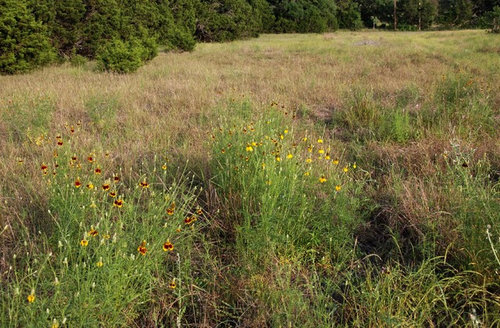
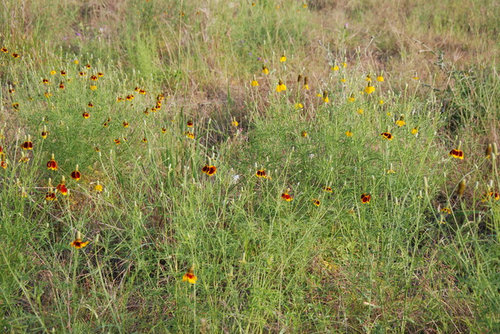
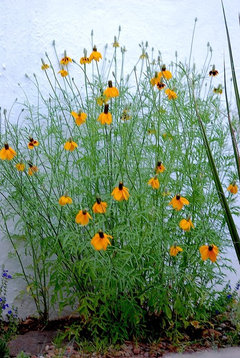
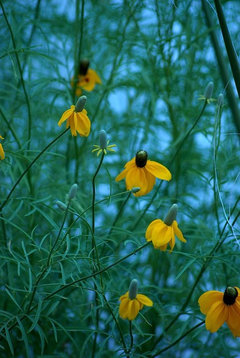
Txt, here is my yellow Ratabida columnaris.


Comments (16)

  • 10 years ago
    last modified: 10 years ago

    Sorry about all the auto correct that I didn't catch. Like Rye becomes "Rhyme" Grass. And the Ratibidia is Ratibida columniferas not what I said above.

  • 10 years ago
    last modified: 10 years ago

    Another shot of some of the green blue stem "exclamation marks". I need more flowers. The Ratibida columniferas are just getting started but I want more. The grass is entirely too thick and tall. All the antelope horn and vining milkweed is hidden underneath.

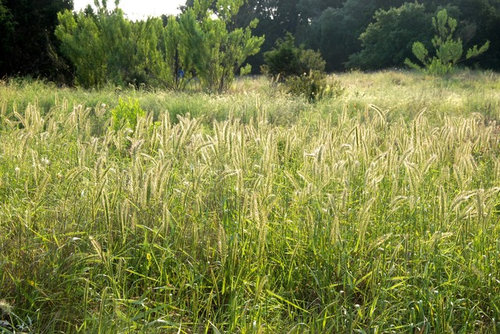
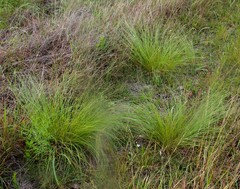
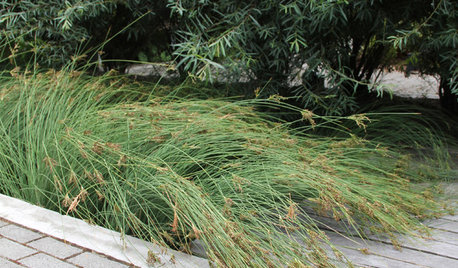
    Here is a mystery grass that I am beginning to think might be Eragrostis curvula (weeping lovegrass).Now here is a grass of many mixed feelings . People love or hate it. People say it is good for the environment and people say it is a mean invasive grass. And some government agencies say both at the same time. I am very confused after googling for information.

    I drove to New Mexico and collected some seed from this pretty grass on the roadside in Mayhill NM. I got home and finally IDed it as Weeping Love grass and then I walk to the front field and low and behold, what is this! It is all over the place. SHEESH!

    Here is another grass That I would like to ID. It is an annual that grows real tall and leans over and smothers stuff on wet years. It was pretty couple of days ago and now it is not. I hope the La Niña is not a bad drought because this grass was a head ache and a worry because it was all this dried material on the ground. Does any one know what this grass is. I am so bad at IDing grasses.

    I did get down and did the final bit of de-thisling by the " mosquito coast". Here I am suiting up for the task. My neighbor had no bee hat but a whole bee suit. GOD was it HOT wearing it! I think I am putting a mosquito hat on the buy list.

  • 10 years ago
    last modified: 10 years ago

    I can send you a small tree or two or more of the Baccharis neglecta if you like. You will have to deal with suckers off the roots but their roots are shallow , but maybe not in sandy soil. Again, I think that if it is in a garden, it is somethings that can be controlled if you are talking about controlling one tree. I have not been out to control this spot since 2009 0r 2008 so it is past due for me to start the control process on this area.

    Shish, I meant foxtail grass.

  • 10 years ago
    last modified: 10 years ago

    There is a really nice prairie I admire here every Sunday on our way to church, its a corner off the road to Edmond that looks like its an entire section with a low wooden fence around it, out along that road where they are building all those new additions and 'the country' is gradually disappearing :(( 3 years ago they mowed it down real low, looked just like after the harvest on a farm field, a kind of scalped look and there wasn't dried stuff laying on top like it had been mowed down and the tall stuff left to lay on top. I don't know if this was done as an option to burning but its a well kept area not taken over by thistles, bad grasses or cedars. The catty-corner section SW of it is being taken over by cedars and short woody stuff and now trees are starting to come up, its not well managed like the other one. Anyway, I wonder if they hired it done or what and if it was an option to burning that they do every so often? There's no house or anything there, its just a square section. I haven't had my eye on it long enough to really observe. It was mowed down low late in the season if I remember right and it was during that drought period.

  • 10 years ago
    last modified: 10 years ago

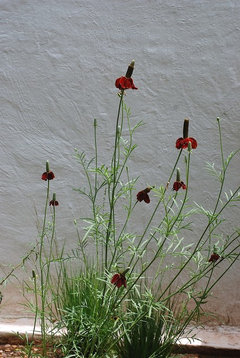
    Here's my Mexicans. They look pretty much like what you have. I planted the seeds by the wall in the courtyard.

    The all mahogany ones I planted from a purchased seed pack. I think these might be whats called long-cone type.

    Last year a plant came up that has weird butterscotch colored flowers with shorter skirts, unusual color I thought. It hasn't bloomed yet but I hope it came back and I didn't accidentally weed it out. The Mahogany ones tend to fall over and don't make the visual impact, the color is lost, unless its a big mass of them I think thats what happens.

    I might take you up on that offer. Its not sand, its regular unimproved soil that gets very dry in summer by those large hackberry trees where I'm clearing out privet to plant other light colored plants to decrease the dark look I hate seeing in that straight line, its unnatural and oppressive looking because of the way its laid out and higher up as if looming over my back yard like a dark beast. I'm digging out three large Rudbeckia maxima plants, they are thick roots that replant well, bare root stuff. Would you be interested? They are too big for me with my limited space but quite dramatic. You' only have to have about 6 or 8'' of diggable soil to plant them, I can tell you this, I need to dig better because any little piece makes a new plant and when I dug them out last year, I definitely didn't get it all because they came back this year as if they hadn't been dug out at all. The leaves are huge.

    http://www.wildflower.org/plants/result.php?id_plant=RUMA3

  • 10 years ago

    I will pass on the R. Maxima. I found my soil too alkaline and dry for them. They do well in Backland prairie in austin but not here. Too much calcium. They did not like it here. But I will take some seed of your yellow. It has a longer skirt and shorter nose. I will dig up the consumption weed for you and ship it to you NOW or in the Fall? We are getting to that too hot to ship time.

  • 10 years ago
    last modified: 10 years ago

    Not now, its too hot (not to mention sticky) and I don't want to water over there on that dry hill dragging the hose through grasses, besides I'm still thinking it through and really what I want is low stuff so late afternoon sun will come through to back light the bluestems. The only good thing is we still have lots of wind. I planted all those recent Bluestem I ordered from SRG along that side on my side, the other side where I'm clearing and planting tough stuff in is his negected side. It keeps getting thinned over time. I have a weekend planned to clip suckers and more privet, poison in hand. I've never seen such suckering trees as hackberry trees. Salvia greggii is a good fit and so far I've planted about 17 or more of them. Russian Sage is good too and I plan for more of those too. I may put some Pine Muhly in a section, I found it will take dappled sun and morning sun and sit in shade all afternoon & still look good with blooms. It blocks weeds good too & I have lots of volunteers which transplant real easy. I filled a whole section with it in the part that gets shaded earlier. Surprising.

    Too bad about the tall rudbeckia, they'd look good in that field & I was hoping to find a good home, they form tubers which transplant successfully, very successfully I might add. The size of the flowers blow me away, they are downright phallic not to put too fine a point on it. HUGE clumps of cabbagy large light blue leaves so its pretty in or out of bloom. Massed clumps here and there--it'd really be nice, if I only had space......

    I think I might have lost the butterscotch Mexican. He hasn't shown up yet, just mahogany in that area where he came up. Rats. I'll save you all the seeds when I deadhead them this fall. A bagful with your name on them.

    By the way, I planted lots of seeds from the Texas grass sage you sent me and I have them planted among grasses. I think that will look good come fall. I love that plant, its airy. I'm into 'airy' right now if you haven't noticed. I got 4 white guara for the same reason.

  • 10 years ago

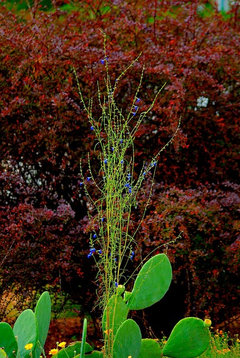
    I am unsure what you are calling Texas grass sage. Is it Salvia reptans , a tall blue sage with grassy foliage? I would think it would tower as a shrub over the grass. I have been trying to grow it and it comes back in spring just fine, and then a bug eats it right before it flowers . Frustrating.

    I will pot some consumption weed in a pot before I start my poisoning. I have others in other areas also. The ground is soft now. It is a touch of the Depression. Rosevelt program included breaks of consumption weed to hold back the soil. Thus the other name, Roosevelt weed

  • 10 years ago
    last modified: 10 years ago

    Thats it. Mine was short and then shot up thin stems with blue flowers in fall. You might be right about the shrub part, the plant is still pretty young but on second thought, I've seen photos of big ones. I'll just have to see how they do. I planted it by the NON-NATIVE :(((( Red Barberry that Reggie won't let us part with. He likes that red, the thing has gotten huge up by the house and Mockingbirds have nests in it every year.

    I read up about the Depression thing. Interesting. Its like Hoover Pockets when men would pull the lining out and walk around showing everyone empty pockets.

  • 10 years ago
    last modified: 10 years ago

    The red Barberry really sets off the green and blue.

  • 10 years ago

    You have a nice little patch of prairie coming along. Who would think a patch of grass could be so much trouble, but it looks fantastic especially against the dark depressing junipers.

    Sory I can't add anything as far as true grass IDs go. It's a shame there are so many invasive types and it practically takes a botanist to tell them apart.


  • 10 years ago

    Oh, forgot to ask. Do the thistles take over if you don't behead them? I kind of have a weak spot for those big biennial types, but the perennial ones are a nightmare even here. I suspect they act completely different for you though.

  • 10 years ago

    Yea, the biennials can take over . My neighbors is a field of violet in solid thistle . Mine is now purple with Monarda citriodora but not thistle now.. My grandfather fought the perennial thistles in Eastern Pennsylvania. They are really nasty and hard to dig out. These are much easier especially after a rain. We grand kids were all trained to search them out. He went after the roots tooth and naiL with his pickaxe. His dogs were good at searching for them. His family used to own a large piece of land that he had sold mostly off, but the neighbors far and wide still allowed him on the land to dig up the thistle. Every Sunday we did this, and we roamed sometimes 5 miles digging and pulling and then we got to go for a well earned swim.. The whole neighborhood thought he was crazy. I seam to be channeling him. My great grandfather wanted to raise the water table by building small damns everywhere. He even experimented with lining his ponds with brick to see if they would increase absorption rates into the water table. This urge to terra form must be hereditary.

  • 10 years ago

    I thought of you today as I was grubbing out a particularly big bull thistle. Normally I let them go for the goldfinches, but I think this year I'll just seed out a few more sunflowers.

    I think your great grandfather might have been onto something. Around here the beavers are coming back and doing their own thing and it does raise the water table. Interesting stuff.

    I think a lot of gardeners are more like stewards of the land than just planting something pretty. Even if it's just planting a milkweed for monarchs I think even the small things make a difference.

    I don't know if you'd be interested but here's a link to a blog about the week to week goings on in a Southern Ohio prairie/ woodland. Teasel is the weed he went after, and it was pretty much the same as you're doing where he would go around each summer decapitating teasel bloom stalks. Glad to hear the monarda has filled in for the thistle!

  • 10 years ago

    The thistle was ahead of the monarda in progression. I should take my camera out there.

Sponsored