Software
Houzz Logo Print
atanas_georgiev0

Treating scale infestation on an already stressed phal

9 years ago
last modified: 9 years ago

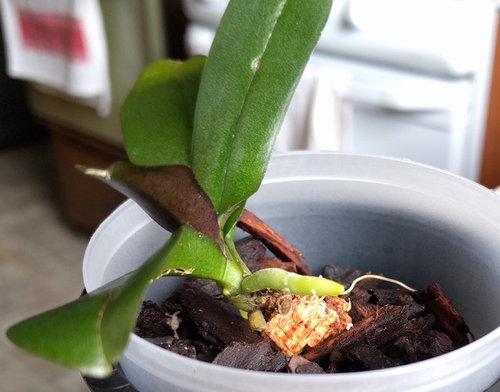
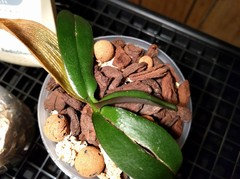
I discovered an early-stage scale infestation on my phal which is already very stressed out from losing roots due to root rot and being repotted 3 times in the past 3 months (my mistakes -- I am a rookie). The last one was this past Sunday.

The phal is tiny (a 4-year old mini with 3" leaves) and the spots are unreachable by any reasonable means so I am about to go systemic on it with Bayer Advanced 3-in-1 Insect Disease and Mite Control.

However, the poor trooper has barely two roots left -- 1.5" and 0.75" respectively (not visible in pic) -- with a new one just popping out. It's also about to lose one of its leaves (due to lack of enough roots, not because of the scales) and will have only 3 left, none of which are not in a great shape.

What would you, experienced orchid enthusiasts, recommend as the least-risky way to deal with this? Should I roll the dice, buy a new mix (how would I know if it's clean?), and repot yet again? Or should I just hope that the systemic would take care of the mix as well as the plant? Or perhaps treat with the systemic until a solid enough root system develops and then repot? How much spray should I apply so it's not too much to damage the orchid but it's enough to kill the bugs dead and avoid making them resistant?

This orchid is my only plant. It is of great sentimental value to me and I will fight with everything I got to restore it to health.

Can anyone help with advice?

(Environment: location: NY; indoors, west facing window; pot is on a humidity tray; temp: 70-80F, RH: 45-55%)

Comments (25)

  • 9 years ago

    I'm not seeing any scale. For a plant in that situation, I would not apply a systemic, but just clear out any scale I could and let it recover. I deal with scale on my citrus pretty much year round and as long as it doesn't take over it doesn't really hurt the plant much. It's never jumped onto any of my orchids despite being right next to each other.

    Or just trash the plant and get a new one with a better root system. Phals are everywhere so they are easily replaced.

  • 9 years ago
    last modified: 9 years ago

    Thanks for responding, @suzabanana!

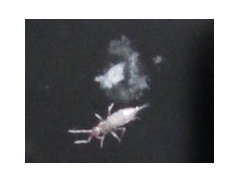
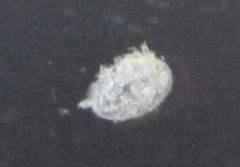
    Unfortunately, what I think is the signs of scale activity on the plant is impossible to take a picture of. It's tiny spots that look like these deep in the crown b/w the leaves. The reason that made me look so hard was seeing what look like a male and female scale bugs in the humidity tray beneath the plant on two separate occasions (sorry for the blurry pics, the things are tiny at barely 0.1" long).

    But you are making an excellent point: If they are usually not that hard on the plant and I am not seeing any substantial damage from them yet then it's probably safer to focus on recovery and growth for now. I was deeply concerned because everywhere I read about scale and mealybugs the advice is to start treating immediately.

    This phal is way too important to me to throw out so that's not an option but the good news is that it's doing great after the last repotting. All roots are healthy and the small bud in the original pic is now a fully-formed root grown to 1/3" just in the past few days :)

  • 9 years ago
    last modified: 9 years ago

    I seem to gather phalaenopsis orchids as if they're going out of fashion - clearly, it seems not... If you want to treat the bugs, take a cotton bud, or even a toothpick with cotton wool wrapped around the tip, dip into the following mix: 1tbsp cooking oil, 1tbsp baby shampoo, a half tbsp of rubbing alcohol, and half Tbsp bicarbonate of soda. dab on liberally, leave for 10 minutes, spray with water to shift scales. Repeat as necessary.

    Phalaenopses are actually epiphytic. That is to say, they will grow through some growing matter, but also take nutrients (moisture, light, nourishment) from the air. This is why orchid pots are transparent. The roots need light. They're green, which means they contain chlorophyll. which processes light and provides energy.

    Your root exposure is actually a good thing.

    Spray the plant with rain water, if you can, or leave tap water to stand for 48 hours, in order to permit any chemicals present to dissipate. Do this daily.

    Buy new orchid compost, but don't pot into a clear plastic container until the roots are twice as long as they are now.

    Don't use a large container. Place a bamboo stick in the new compost, next to the leaves, to support the plant, and keep it stable while the roots establish.

  • 9 years ago

    If it's not too personal a question, why exactly is this plant so precious....? Feel absolutely free to not reply to the question...

  • 9 years ago
    last modified: 9 years ago

    Mix 1/2 70% Isopropyl alcohol with 1/2 Hydrogen peroxide and spray the leaves with it, but do it in the early am or when the sun has come down. I have even soaked my orchids (Cattleya, Dens, and Phals) root systems in 1/2 Hydrogen peroxide and water (sometimes straight HP ) when I suspect root rot or some kind of disease attacking my roots.

    Sorry, but I don't see any scales. Scales look like little tiny 1/2 peppercorns stuck to the leaves and stems. The above will get rid of them as well. If scales do exist, spray, wait a few days, then scrape them off.

    Have saved many plants this way.

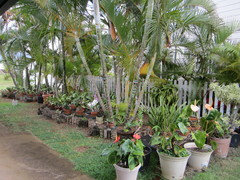
    My orchid garden, mostly Cattleyas ..about 80 of them. All toll, I have about 120 Orchids, not counting other flowering plants. LOL!

    This is my insect and disease killer of choice. I can take care of 90 of my problems with just this stuff. You can purchase at Costco.

  • 9 years ago

    I would recommend alcohol on a q-tip and wipe off the bugs. Works well and repeat it every two weeks or whenever you see any scale.

    I never had luck with Peroxide. It will burn the roots and can burn the plants. I either use the alcohol or a systemic, granular like Bayer Rose and Shrub for severe problems.

    Jane

  • 9 years ago

    Wow, thank you all for the replies and the suggestions!

    First of all, I think you are all correct that there were no scales. Seems like it's the mealies, instead.

    I thought it was scales because of the small brownish spots I saw deep in the crown between the leaves which matched a pic I found with examples of scales. It was the only physical evidence on the orchid itself. But it drove me mad that I had no solid clues to go on: no bugs on the plant or the pot, no white powder, no sticky residue or anything like that which would point to the type of infection.

    I think this has now changed because, after scrutinizing with a magnifying glass for the past few days, I am finally starting to see the white cottony deposits on the leaves which are typical for mealybugs. They are still barely visible and it's still possible that my imagination is playing tricks on me (could they be dust particles?) but I think I shouldn't take chances anymore. Plus, now would be a good time to do something while these are still eggs/crawlers and not adults.

    BTW, here is a tip I discovered while obsessing over my precious: to see the cottony powder (or are these eggs or crawlers? -- I will need a microscope for that) while still in its earliest stage, place the orchid in a dark room, shine a flash light horizontally, parallel to the leaf surface, and look from the same vantage point. Every little tiny white speck that sticks out lights up by the reflected light! You still can't tell what they are if they are that tiny but you will know they are there.

    So, anyway, I am not sure if the mealies are an upgrade or a downgrade from the scales but IIUC my treatment options are the same. I decided against repotting yet again: In either case I will need to apply something to treat both the potting mix and the plant. I don't think I stand a chance with local measures. I've tried q-tips, toothpicks and even the tip of a pin but there are many tight spaces I just can't reach.

    So, as much as I am apprehensive about using imidacloprid, it looks I am headed that way. The only other choice I found was submerging the plant in diluted insecticidal soap or mild dish detergent. Has any of you tried this? How long did you keep the plant in it? Would it be milder to the plant than imidacloprid?

    For the record, my thinking is that neem oil is out because of high temperatures and because I've seen warnings against using it on weakened plants. I am avoiding alcohol too because it warped one of the leaves when I first tried it. I am open to trying hydrogen peroxide but I am leaning towards trying soap first -- it seems safer to me.

    @Jane: I was going for the Bayer spray initially but I am now thinking of ordering these Bonide granules instead. How would you recommend using them on such a tiny plant? Place one granule on the surface and water? Or chop it up into smaller chunks and try to distribute evenly?

    @Alexandra: Thanks for bringing up structural support! That's another thing that pains me. I spent so much time trying to set something up when I last repotted. There is very little space b/w roots and leaves that I can work with. I tried threading twine and tying it to a chopstick but the whole think was wobbly and it didn't seem to help at all. I got rid of it, covered the two roots with bark chips surrounded with a thin layer of sphagnum moss (the original pic does not reflect this), and am now relying on them to attach more steadily to the bark and the sides of the pot eventually as they grow. In the mean time, the orchid is quite wobbly so I am trying not to disturb it too much. Are there any major risks in keeping it that way?

  • 9 years ago

    @Kauaiguy: I am so jealous looking at your garden! My biggest hopes for now revolve around building a small terrarium where I could give my orchid some company once it's stabilized.

  • 9 years ago

    Atanas Georgiev, he's only bragging... My garden is twice that size and the number of dandelions, plantains and thistles in my lawn easily outnumber his orchids! I could win prizes for my weed display! Why, the moss alone is exceptionally abundant! *LOL!!*

  • 9 years ago

    Kauaiguy, that really is impressive, but I haveta say, your wonderful climate is probably a factor; right now, in the uk, we're enjoying the irritating and frustrating temperatures of early March...it has barely hit 14 degrees C here for over a week; it takes the pleasure out of external gardening... :o(


  • 9 years ago

    More spam????

  • 9 years ago

    Thank you for your post; the pictures of your plants are very impressive. I say that you don't grow plants for that long, and with that much success without becoming, over time, an expert. I think they're marvellous, and you do yourself a disservice. I also like your spathyphillums... well done you!

  • 9 years ago
    last modified: 9 years ago

    Thank you:

    I don't know if this is going to work but I'm hoping the the link below will take you to photobucket, where you can see some more of my orchids. If not you can probably copy and paste the link in the address bar. Please enjoy! I will be uploading more pictures in the future. Aloha!

    http://s161.photobucket.com/user/Kauaiguy/library/My%20Cattleya%20Collection?sort=3&page=1

  • 9 years ago
    last modified: 9 years ago

    @Kauaiguy, I second what Alexandra said. There is no way you've been taking care of orchids for so long and not become an expert. I certainly value your perspective and thank you for the advice. I am here to learn, after all.

    Speaking of which, I should probably stop claiming I've figured out what kind of buggers I have because I obviously haven't. If I sound too sure about things, it's only because I am trying -- and failing -- to be brief, not because I actually know what I am talking about.

    So here is my dilemma: I think I need to know what bugs I am dealing with so I can decide on the right intervention. But I don't have any actual bugs on the plant to identify -- the ones in the pics were in the humidity tray, not on the Phal, and they were found before the last repotting when I soaked the mix and the roots in Physan 20. Most instructions for any treatment I have seen include a step where you decide whether it's helping or whether the bugs have come back which I can't do as is. Would it be a good idea to get some sticky traps and place them around the plant to hopefully capture some culprits?

    The alternative would be to go in blind with some sort of nuclear option which scares me because my first priority is the health of the orchid.

    Oh, and I am dropping out of the see-my-garden arms race. I am just not worthy. Yet! :)

  • 9 years ago
    last modified: 9 years ago

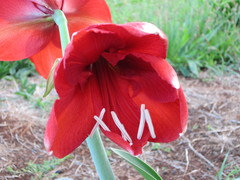
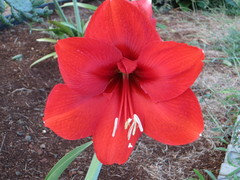
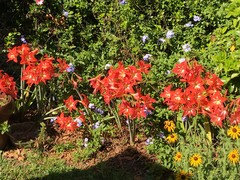
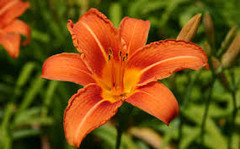
    Never drop out of see-my-garden scenario, as one beautiful plant that someone has never seen is worth admiring EVEN if it's in the middle of a bunch of weeds! Here's what I'm talking about ... in the middle of nowhere (an empty lot near me), out comes this plant which I think is a day-lily. ... So, I dug it out and planted it in my yard!

  • 9 years ago

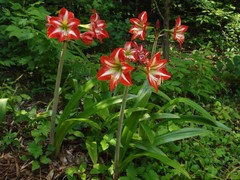
    Beautiful flower but it looks like a Amaryllis to me.

    Atanas, if you think it is bugs, buy a safe spray like Bayer Natria Insect, disease and mite control. It also has a fungicide in it. I've used it and it works for indoor and outdoor plants. Otherwise you can concoct your own spray by mixing a little vegetable oil, dish soap, and some cinnamon. I've made sprays using tea tree oil, various mint oils, garlic, etc. The oils smother the scale and mealies.

    Just don't use oils in bright sunlight. Spray in the evening and keep the plant out of direct sun for a few days.

    Jane

  • 9 years ago

    LOL! I really didn't know if it was a Day Lily or an Amaryllis .... thanks for the correction.

  • 9 years ago
    last modified: 9 years ago

    It is a Hippeastrum Hybrid! Amaryllis like so many other plant names has been put in the dust bin.

    Easy to grow (in the right climate).

  • 9 years ago

    Well, we still call them Amaryllis here in the States, Arthur. Whatever, I knew it wasn't a lily.

    Jane

  • 9 years ago

    No pain here when the name got changed. I always called them Hippeastrum. Is that lovely display a New York or Florida photo?


  • 9 years ago

    Now that I am back home from work, I see I don't need any sticky pads. The humidity tray is again full of Objects of Interest(TM)! Most of them seem like just dust particles but at least a couple of specks have the shape of mealybugs. They are still too tiny, at the limit of my magnifying glass, so I can't tell anything for certain. Next step: off to Amazon for a more powerful magnifying glass.

    @Jane: Thanks for letting me know that the Natria is safe on orchids. Do you prefer it over the Bayer Advanced 3-in-1? Have you used any of these on mini Phals?

    @Kauaiguy: When I said I was dropping out of the garden arms race, I meant I can't compete with any of you just yet with a single Phal which hasn't bloomed in four years. I am not walking away though, just enjoying from the spectator section.

    Oh, wait! This reminds me: I have these various cactus seeds at work I was given some time ago. Now would be an excellent time to plant them and see what comes out. And solidify my newly found botanical aspirations... Hmm, I sense a trap here. What am I being sucked into? Help?!

  • 9 years ago
    last modified: 9 years ago

    Gardening is indeed a web of intrigue... once in, it's hard to break away....but the companions are a fascinating lot, and as has been amply illustrated here, we never stop learning. As I often say, 'No gardener in the world has EVER stood back satisfied, arms crossed and declared "My work here, is done!" '

    Regarding the Hippeastrum question: The correct name for the large bulb (often sold at Christmas time in the UK) is the Hippeastrum, but many people call them Amaryllis, or Day lily. The Day Lily proper, is a garden plant with fleshy thick roots. It's like Geraniums; the garden geranium is also known as Crane's bill, and the geraniums we know as hardy annuals, with showy flowers of every hue, are properly called Pelargoniums, even though everyone knows them as Summer Geraniums. It's fine, just different strokes for different folks....

    This is the Amaryllis Day Lily

    And this is the Hippeastrum

    Evidently, they are from the same family, but the Amaryllis has much thinner stems and leaves. The Hippeastrum has a tall, tubular thick stem, and thick strap-like leaves jutting out of the top of the bulb.

  • 9 years ago
    last modified: 9 years ago

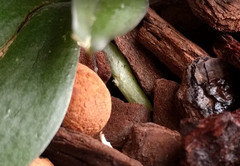
    I found something disturbing on one of the roots today as I was going through my morning fuss around the Phal. I uncovered the longest root a bit and discovered what looks very much like a textbook mealybug (pic center):

    Worse, I also saw another insect crawl by but I was too shocked at this display of audacity and could not take a good look at it. It was most certainly not a mealybug. From what I managed to notice it was brownish and had wings (but it did not bother flying, just crawled out for a moment to say hi and moved on into the mix).

    I tried to clean off the thing that looks like a mealybug with a Q-tip dipped in 70% isopropyl alcohol but it just kinda melted and solidified onto the root. Adding a drop of soap did not help. I could not scrape it off with a toothpick either and the toothbrush was too big to reach.

    My question to you, dear mealybug conquerors, is: How do these suckers react when you touch them with alcohol? How quick are they to run off? Do they move at all?