Software
Houzz Logo Print
hzdeleted_19693228

What now?

10 years ago

Hi, all. I hope someone will help.

We bought a property two years ago and started a compost pit for autumn leaves and other yard waste. I have two 3x8 enclosures behind an above-ground swimming pool which we all hate.

Finally this spring, we got around to having the pool removed, thus exposing a huge empty, very sandy area. We have started digging holes 3 feet deep to bury the stuff in our pits. My idea was to help replenish that sandy soil so it could eventually be planted and turned into something more than just grass.

There are still tons of things to be done on the property but I still would like to know how long it will take for all that organic matter to break down in the ground? Are my ground pits too deep or too shallow? I am alternating layers of sand and yard waste in various stages of composting--is this the way to do it or should I just dump a layer of it and cover that up the rest of the way?

Thanks for reading.

Pagan

Comments (8)

  • 10 years ago

    How long it will take for the Soil Food Web to digest the organic matter and make those nutrients available to plants depends on many things, but generally starting from where you are figure on a couple of years at least. A good amount of compost will help because there would be more of the wee buggers that make up the Soil Food Web in compost so they do not need to migrate in. The presence of earthworms are one indication of members of the SFW moving in.

    kimmq is kimmsr

    User thanked kimmq
  • 10 years ago

    "We have started digging holes 3 feet deep to bury the stuff in our pits"

    Too deep, too much work. Layer the stuff on thickly - like lasagna gardening - and when it has decomposed, mix it into the sand. Also any "spare dirt" from around the property can be layered on and eventually tilled in. Organic matter alone won't revive sand, it needs some amount of real dirt.

    That would be a good place for raised beds for a while, and when you break them down, till in the beds.

  • 10 years ago

    What lazy said. Layer it on top, the most decomposed first, grading to least, if you have different materials. Let it sheet compost.

    Alternatively you could put down several inches of compost, till it in and start planting, but it sounds like you are wanting to do it the slow and less expensive way (which is great).

    Can you post a closeup picture of this sand?

    User thanked toxcrusadr
  • PRO
    10 years ago

    Woodchips, sawdust, grass clippings, autumn bagged leaves, used coffee grounds from starbucks or coffee shops. Make a compost pile AND lasagna it. You need to be thinking in terms of pickup beds worth at least.

    User thanked Springtime Builders
  • 10 years ago

    Thank you so much for the information.

    So far it has worked this way: one hole three feet deep and because they were on top of the existing pile, last autumn's leaves went to the bottom of this pit. Then I put a layer of sand and then raked some more of the stuff, one more layer of sand and then the more decomposed stuff and finally covered the pit. I was just guessing and it was at this point (with a headslap) I realized I needed to find out what the hell I'm supposed to do.

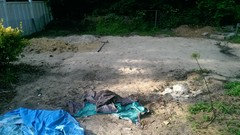
    This is the general area:

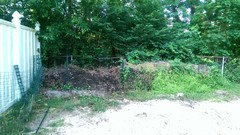
    These are the two compost enclosures:


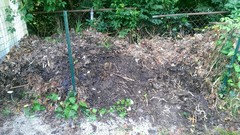
    Close-up of the first one I opened:

    My first concern, really, is to move the compost into the newly-exposed area and bury it. We're having that chain-link fence replaced in about six weeks (it takes that long to order the panels, for some reason) so we have time to do it properly, I just don't know what that is.

    The area is already a little depressed (probably pressed down by the weight of the pool) and everything else in the yard is planted with grass and things so I will not have extra dirt.

    Should we just dig the whole place about a foot deep and spread out the stuff before covering it up? I really have no plan what to do with the area in the meantime, there are other things on the property that need to be dealt with anyway. When and how often will I have to plow it?

    If it helps, the stuff on top stinks and the stuff at the bottom has a more earthy, rather yummy-earth smell.

    Again, thanks.

    Pagan

  • 10 years ago
    last modified: 10 years ago

    That sure looks like compost that is ready to be put into the soil. If you are able to till up the whole area, you could till it over (so, yes to your above question), spread this stuff out, maybe add a few bags or a pickup load of topsoil if you want to raise the grade permanently, and till all that together. Once you've done that you shouldn't need to do much more tilling. If you sheet compost on top of that with new materials for awhile, you'll probably want to dig/till that in before planting, whenever you get to it.

    You could put a cover crop on this too, if you're NOT composting on top of the ground. But since you have compost piles, you could just make your next ones on top of this area. The worm activity will be great because of the compost tilled in and the piles on top. This will really boost the fertility when you're ready to plant.

    In any case you can abandon the 3-ft deep thing and work in the top few inches or a foot at the most.

    You're going to have a great garden here in the future!

    User thanked toxcrusadr
  • 10 years ago

    Thank you so much, guys. I'm new to this whole yard thing and really needed this help.

    Live long and prosper.

    Pagan