Software
Houzz Logo Print
rouge21_gw

My Tiarellas have been declining :(.

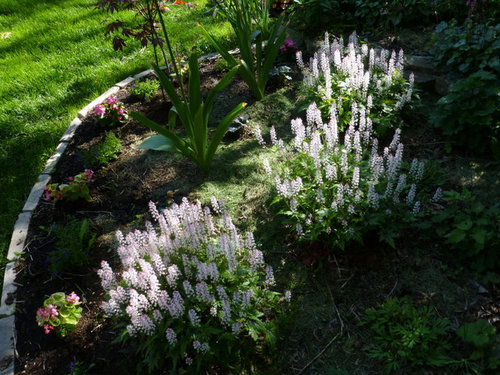
Here are the 3 "Sugar and Spice" from 2014:

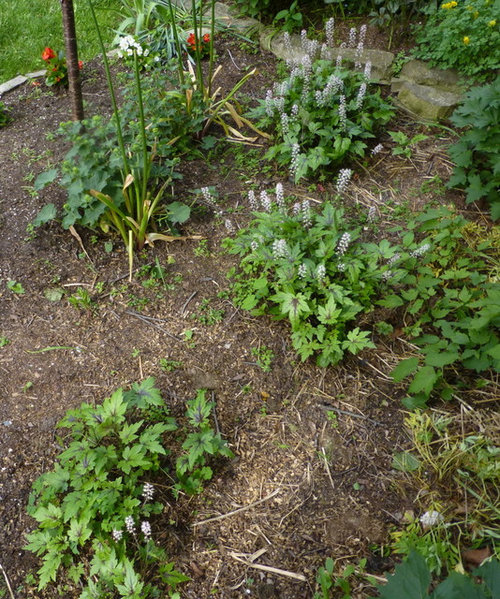
and the same 3 exactly 2 years later 2016 (and almost the same as spring 2015):

So now 2 years running they have not been nearly as floriferous or vigorous as in 2014.

There doesnt seem to be any obvious reason(s) for the change in vigour for these plants as most importantly I have consciously maintained the soil in this plot.

I really like Tiarella and I was spoiled by their performance 2 years previously. Any ideas?

Comments (17)

  • 10 years ago

    Rouge, this reminds me of the recent buddleia post. I have had no luck with tiarella here, so, I'm never wasting money on them again. It's a shame, I really like them.

    Sherry

  • 10 years ago

    Don't tell me this Sherry :(. I was so spoiled by their display two years ago. I will not give up ;)! (Now I sound like I did when I was doing Buddleia year after year after year ;))

  • 10 years ago

    I don't grow them but I grow a lot of delicate shade plants. It's possible they don't like the root competition of what looks like a Japanese maple, which I see has grown quite a bit in two years. That is usually the explanation for shrinking plants, or failure to thrive. You might clean that bed out of other plants that are less important to you. Or maybe it's getting more shade from the JM now, and that will always give you fewer flowers.

    I compost mulch every spring, but I'm erratic about adding fertilizer. This year I added organic fertilizer (boxed roses and bloom fertilizer) and my plants really took off. I'm hoping to have more blooms too.

  • 10 years ago

    If a Japanese maple planted there (may, are you seeing something I am not??), then I doubt root competition is a concern - JM's do not produce any sort of aggressive root system and generally coexist with other plants perfectly well. Other maples......not so much :-(

    IME, tiarellas thrive in shade, even dense shade, but they do prefer a pretty organically rich soil (lots of OM) and even, consistent moisture. They struggle in very dry conditions. I never fertilize inground plantings but I do mulch routinely with compost and that does help to enrich the soil as well as protect against heat and moisture loss.

  • 10 years ago

    mayflower, thanks for looking carefully at the photos. In the first photo is a very small JM (Brandt's Dwarf as I recall). It died in 2015 and so this spring I replaced it with a standard form of Prunus incisa Kojo No Mai (you can see the trunk in the second photo).

    Thanks gardengal48 for your input. I understand all that you are saying and as I think I wrote in the OP I put down quality compost last Fall and this spring in that small bed.

  • 10 years ago

    Maybe it's just a climate thing :-) I am really perplexed at the difficulties many seem to have at growing plants that I find remarkably easy to grow, often to the point of them being problematic (i.e. the buddliea from a previous thread). I can only assume that my very benign, mild and adequately moist climate is making the difference!!

  • 10 years ago

    Maybe it's just a climate thing :-)

    Maybe. But as you can see they did so well in 2014 (maybe the year earlier as well?)

    I was spoiled.

  • 10 years ago

    I only grow the running type - in the beds under the oak and some near the shed. They definitely have good years and bad years for me (this is not a good year!). When were they planned? (I'm wondering if the very floriferous picture is from their first year or two when they were stil 'juiced up' on fertilizer in the original potting mix, and now that has run out and they are living in 'real world' conditions...?). I don't think they look bad - you just need to add some more things to the bed :-)

  • 10 years ago

    Course it is GardenGal - you (and me) garden in the sort of temperate maritime climate many gardeners can only dream of. Although I continually envy them the summer heat - if we can get up to 70F, we consider this to be practically 'boiling'.

  • 10 years ago

    Ain't that the truth, gardengal!

  • 10 years ago

    Tiarella dwindles to nothing for me too and I'm in the PNW.....I do have tree and shrub roots where they have been planted.

  • 10 years ago

    It is years ago, but my tiarellas also were great for one or two years, and then just dwindled. I don't know what to blame.

  • 10 years ago

    I'm interested in, and thank everyone, for the above responses. I bought my first Tiarella 'Sugar & Spice' earlier this year. I set them (2) in a large container on my East/West facing breezeway where they're shaded most hours of the day. I do see some scorching on leaves where they caught the sun so am guessing the tag doesn't lie about them wanting full shade. I've set a terra cotta 'Plant Nanny' in the container with an upturned bottle of water enhanced by a few drops of organic seaweed extract. So far they're thriving. Fingers crossed they continue to do so. I'm really liking them. I love hosta (and can boast at having 30+ named varieties) but it's always an uplift to come across something else that livens up a full/part shade area.

  • 9 years ago

    Rouge, Any update on your Tiarellas? Have they been any better this year? I am strongly considering adding some Sugar & Spice and I can live with a plant that has good and bad years, but not one that slowly and steadily declines the moment it goes in the ground.

  • 9 years ago

    Hello arlene. All three survived the winter. One was pretty vigorous with the other two not so. I think as long as they return I will keep them as is.

  • 9 years ago
    last modified: 9 years ago

    Interesting information, Rouge. Over the years, the Tiarella have not been survivors in our garden.

    Nevertheless, I'd agree with David Tomlinson (with 1500 different perennials) that the average life expectancy of perennials in gardens (here) is maybe five years. Other than neglect (e.g. not periodically dividing many), many perennials in gardens just act as though they have a naturally imposed life expectancy. It would be interesting to know how that compares with the life expectancy of individual plants in their wild state. That is how much is to do with their domestication/ horticulturization and garden life ? And yet, in a local ecological context, presumably the life expectancy of one or two individual plants has no meaning. Also, there's clearly pluses for some plants maintained in gardens over their inhabiting wild spaces.

    David's perennials are often raised from seed by David himself, typically from wild-collected seed, from temperate parts of the world.

    One can also wonder what effect grooming (selecting cultivars over generations of the plant) has on their life expectancy. Species perennials frequently seem more robust than cultivars selected from them; not to deny that the exuberance of wild forms can be quite unwelcome in a garden.

Sponsored
Hope Restoration & General Contracting
Average rating: 4.7 out of 5 stars35 Reviews
Columbus Design-Build, Kitchen & Bath Remodeling, Historic Renovations