Software
Houzz Logo Print
neptune25

Apple trees — no fruit

10 years ago
last modified: 10 years ago

We have a couple of apple trees in our back yard. Each year, for the past few years, we've been getting less and less fruit. This year, the trees had a ton of flowers, but there's absolutely no fruit on the trees. None.

Is this likely a pollination problem? If so, is there anything that can be realistically done about it? Thanks for any info. Incidentally, we have some other fruit trees as well, and they all have plenty of fruit on them, so I don't think the weather is the problem.

Comments (37)

  • 10 years ago

    So you are saying that they've produced fruit in the past? Have any apple trees been removed from your property in that time that could've been a pollinator? Do you happen to know the apple varieties? A few things could be happening. The trees may be the same variety and can not pollinate each other. The trees could have been overcropped in the past and they've gone biennial. The trees are diseased or sick and can not produce quality fruit any longer. Do you keep them pruned properly and do you have a spray regime to thwart disease and insect pressure?

    neptune25 thanked speedster1
  • 10 years ago
    last modified: 10 years ago

    speedster1,

    Thanks for your comment. You asked a lot of questions, which I'll try to answer.

    So you are saying that they've produced fruit in the past?

    Definitely.

    Have any
    apple trees been removed from your property in that time that could've
    been a pollinator?

    There was a puny apple tree over 100 yards away that died a few years ago, but I seriously doubt that was a pollinator.

    Do you happen to know the apple varieties?

    No, these were planted probably about 20 years ago, and not by me.

    Do you keep them pruned properly?

    Decently, every spring.

    Do you have a spray regime to thwart disease and insect pressure?

    No, we don't spray them at all.

    The trees may be the same variety and cannot pollinate each other.

    That's possible, but I suspect it's something else.

    The
    trees could have been overcropped in the past and they've gone
    biennial.

    Since the production has been less and less every year, I think it's something else.

    The trees are diseased or sick and cannot produce quality
    fruit any longer.

    That's certainly possible. How can you tell for sure? Also, how can you tell if pollination is the problem?

  • 10 years ago

    Did you thin the apples after they set fruit?

    it is necessary, or they will use all their energy and have none left to grow the next crop.

    neptune25 thanked tim45z10
  • 10 years ago
    last modified: 10 years ago

    Shah Clicker wrote:

    Its not due to pollination. Any other thing is happens. You should proper look after them

    Huh? :)

  • 10 years ago

    tim45z10 wrote:

    Did you thin the apples after they set fruit?

    it is necessary, or they will use all their energy and have none left to grow the next crop.

    Well, the past several years, there haven't been enough to thin. ;)

  • 10 years ago

    I vote for pollination issues. If the tree is healthy and blossoms well the only thing is that either a late frost has damaged the blossoms or the correct pollinator is not near enough. Some apples are triploids, this means they cannot pollinate another apple so if these happen to be triploids or of the same variety you will not get many fruit. Although the smaller apple died it could have been the pollinator that both these trees needed.

    neptune25 thanked User
  • 10 years ago

    Do they get a lot of flowers on them? If yes and they don't fruit I would think pollination would be the problem. Do they get no flowers? Are you pruning off all the flower buds?

    I had one apple tree on the side of the house that was just in too much shade and while a very healthy tree it just didn't produce very many flowers and only gave us a handful of apples each year. How is the sun exposure on your trees?

    neptune25 thanked sharppa
  • 10 years ago

    ubro wrote:

    I vote for pollination issues. If the tree is healthy and blossoms well
    the only thing is that either a late frost has damaged the blossoms or
    the correct pollinator is not near enough.

    This year, it would not have been the frost, since all the other fruit trees we have are loaded.

    Some apples are triploids,
    this means they cannot pollinate another apple so if these happen to be
    triploids or of the same variety you will not get many fruit. Although
    the smaller apple died it could have been the pollinator that both these
    trees needed.

    Interesting. I heard that the problem can also be a lack of pollinating insects. Do you think that could be the case?

  • 10 years ago
    last modified: 10 years ago

    sharppa wrote:

    Do they get a lot of flowers on them?
    If yes and they don't fruit I would think pollination would be the
    problem.

    Yes, a ton of flowers.

    Are you pruning off all the flower
    buds?

    No, never touch them.

    How is the
    sun exposure on your trees?

    Well, the sun exposure is no different than when the trees were producing lots of apples just a few years ago. The sun exposure is not perfect, but decent enough I think.

  • 10 years ago

    Do you notice a lot of bees on the flowers? Maybe you could set up a mason bee house to help with pollination if there isn't any activity. I did buy one many years ago but no mason bees ever populated it unfortunately. I think you can buy bees for it in early spring though but I have never tried it.

    One of my apple trees is a very late apple. It flowers but there are no other apples nearby to pollinate it so i get very little fruit on it. I did plant two other very late apples in the hopes they were start working together to get more fruit.

    neptune25 thanked sharppa
  • 10 years ago

    Next year, if you can wait that long, you could check if the problem is that the trees are triploid or the same variety by finding a few branches of a tree you know pollinates others. Use Konrads method to pollinate plums by hanging a plastic pot bottle in the tree, filled with water and blossoming branches. I did this with my plum this year and it did set fruit.

    neptune25 thanked User
  • 10 years ago
    last modified: 10 years ago

    sharppa wrote:

    Do you notice a lot of bees on the
    flowers?

    Great question. I've never checked, but I sure plan to next year.

    Maybe you could set up a mason bee house to help with
    pollination if there isn't any activity. I did buy one many years ago
    but no mason bees ever populated it unfortunately. I think you can buy
    bees for it in early spring though but I have never tried it.

    A Mason bee house? Sounds interesting. Is it a lot of trouble?

    I did plant two other very late apples in the hopes they were
    start working together to get more fruit.

    How did that turn out?

  • 10 years ago
    last modified: 10 years ago

    ubro wrote:

    Next year, if you can wait that long, you could check if the problem is
    that the trees are triploid or the same variety by finding a few
    branches of a tree you know pollinates others.

    We have a very old apple tree on our farm (probably at least 50 years old) that's way too far away to pollinate the trees in question. It usually has a lot of flowers, though. The odds of it being of the same variety are very low. But what are the odds of it being triploid? And would age be a factor at all?

    Use Konrads method to
    pollinate plums by hanging a plastic pot bottle in the tree, filled with
    water and blossoming branches. I did this with my plum this year and it
    did set fruit.

    Sounds cool. Is the water to keep the branches alive? And would just a few small branches or pieces of branches work to pollinate a large apple tree? The larger of the two trees in our back yard is probably 30 feet tall.

    Just curious—why was your plum tree having problems bearing?

  • 10 years ago

    Hi Neptune25,

    I bought a "mason bee house" years ago on the marketing promise that the bees would find it and live in it and help pollination my trees and bushes. I never got bees. But you can buy pre-populated tubes of bees to get bees there immediately if you wanted to try that. I just attached it to a remote spot in my backyard on a fence and what I've read is they are not aggressive and are early season bees which can be helpful.

    My newer apples trees are only 2 years ago now so only 6 feet or so and don't have a lot of blossoms yet to help with my other tree. Hopefully next year will they will flower more and cross pollinate. It was a bad spring with weather in PA so I got very little apples and almost zero peaches this year.

    Your trees sound quite large. It might make more sense to remove them, pick some new trees (online from Stark Brothers, Raintree Nursery, Adams County Nursery, etc) and make sure you get a few that will cross pollination. It's much nicer to have a 10 foot tree vs. a 30 foot one especially when you decide to start spraying. We got an Enterprise tree a few years ago and absolutely love those apples and the tree itself is somewhat disease resistant.

    neptune25 thanked sharppa
  • 10 years ago
    last modified: 10 years ago

    Hi sharppa,

    But you can buy pre-populated tubes of bees
    to get bees there immediately if you wanted to try that. I just
    attached it to a remote spot in my backyard on a fence and what I've
    read is they are not aggressive and are early season bees which can be
    helpful.

    A couple of questions:

    1) Where can you buy the pre-populated tubes?

    2) Is it too late in the season to do this now? I live in Zone 8A, North GA. It won't help with the apples this year obviously, but would it help establish a colony?

    Hopefully
    next year will they will flower more and cross pollinate.

    Yes, I hope so.

    It was a bad
    spring with weather in PA so I got very little apples and almost zero
    peaches this year.

    Sorry to hear that. I guess a late freeze, huh? We got a lot of peaches, but since we don't spray them, they usually have fungus and worms. ;)

    Your trees sound quite large. It might make more sense to remove them,
    pick some new trees (online from Stark Brothers, Raintree Nursery, Adams
    County Nursery, etc) and make sure you get a few that will cross
    pollination. It's much nicer to have a 10 foot tree vs. a 30 foot one
    especially when you decide to start spraying. We got an Enterprise tree
    a few years ago and absolutely love those apples and the tree itself is
    somewhat disease resistant.

    Thanks for the info. I'll think about that.

  • 10 years ago
    last modified: 10 years ago

    I found this link for summer bees. I always have problems with pollination in my garden (which is right next to the apple trees), so this might be helpful as well. Apparently you also need to get bees that are appropriate for the state you live in, and this company determines that.

    http://crownbees.com/shop/complete-kits-for-easy-buying/summer-complete-kits/beehut-summer-kit

  • 10 years ago

    Was the tree purchased or planted from seed?

    neptune25 thanked tim45z10
  • 10 years ago

    Sorry I really don't know where to buy bees besides trying to google a source. I got the mason bee house off amazon or from a gardeners catalog 5-10 years ago.

    Warm weather followed by a late freeze/cold spell here. I have two properties near each other and the apples at our house did great (near the south facing house so a bit protected) while the other apples are 1/10th last year. We'll have hundreds of apples anyway though and we'll be set with applesauce for many many months.

    Don't ask about my 30 blueberry plants. Now that is a LOT of blueberries. I love them but a eating a quart a day is about my limit and we freeze the rest. None yet in Z6 PA but we're eating strawberries now.

    neptune25 thanked sharppa
  • 10 years ago

    tim45z10 wrote:

    Was the tree purchased or planted from seed?

    Purchased.

  • 10 years ago
    last modified: 10 years ago

    sharppa wrote:

    Sorry I really don't know where to buy
    bees besides trying to google a source. I got the mason bee house off
    amazon or from a gardeners catalog 5-10 years ago.

    OK, thanks.

    Warm weather followed by a late freeze/cold spell here.

    I hate that.

    We'll have hundreds of apples anyway though and we'll
    be set with applesauce for many many months.

    OK, that's good at least.

    Don't ask about my 30 blueberry plants. Now that is a LOT of
    blueberries.

    Wish I had your problem, LOL. Well, at least we have a ton of wild blackberries.

    I love them but a eating a quart a day is about my limit

    A quart a day??? That might not be so good for one's blood sugar. ;)

    and we freeze the rest.

    I imagine you have a pretty big freezer. :)

    None yet in Z6 PA but we're eating strawberries
    now.

    Glad that you're harvesting lots of good fruit.

  • 10 years ago

    neptune--Yes my plum had problems pollinating I needed a wild plum and the neighbour had one but she lived a few miles away, hence the branches in a bottle.

    I am sorry but I forgot the fact these trees are 30 feet high, I don't think a few branches would pollinate a 30 foot tree, but I would hate to see them ripped out if you can fix the pollination issue and if you like the apples these trees produce. I am not an expert on old apples but I assume age could be an issue as could the weather.

    neptune25 thanked User
  • 10 years ago

    Inspect the flowers, do they have fully formed parts? Try hand pollinating a crop.

    neptune25 thanked tim45z10
  • 10 years ago
    last modified: 10 years ago

    ubro wrote:

    neptune--Yes my plum had problems
    pollinating I needed a wild plum and the neighbour had one but she lived
    a few miles away, hence the branches in a bottle.

    I'm glad that worked for you. We have 3 plum trees, but I don't think we've ever had a problem with pollination. It's the curculios that are the problem. LOL.

    I am not an expert on old
    apples but I assume age could be an issue as could the weather.

    OK, thanks . Hopefully I can figure out what the problem is eventually.

  • 10 years ago
    last modified: 10 years ago

    Tim wrote:

    Inspect the flowers, do they have fully formed parts? Try hand pollinating a crop.

    OK, I'll have to check next year. Do you have a good link that describes how to hand-pollinate?

    Incidentally, I discovered 3 small apples on one of the trees today. Woo-hoo!! ;)

  • 10 years ago

    Here is the one I used to help me apple breeding

    I know you are not breeding apples but it does show some good information on had pollination, timing, and how to gather pollen. The videos are short and there is 10 of them but you can skip to the ones that will apply to your needs.

    neptune25 thanked User
  • 10 years ago

    Great. Thanks so much for the helpful link, ubro.

  • 10 years ago

    Good call ubro!

    A couple of branches hanging in a large tree can go a long ways.

    Mine was a small plum tree..


    Pollination

    neptune25 thanked Konrad..just outside of Edmonton Alberta
  • 10 years ago

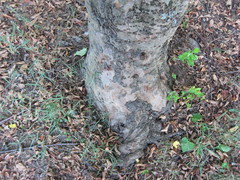
    My first question would be is the tree in good overall health? Have a look at the base of the tree for any damage either girdling from rabbits, or what looks like nail holes near the base. I can't imagine it's a pollination problem or late frost issues if your other trees have fruit. If the tree as a whole looks unhealthy it may be a vole problem. Good luck.

    neptune25 thanked User
  • 10 years ago
    last modified: 10 years ago

    David,

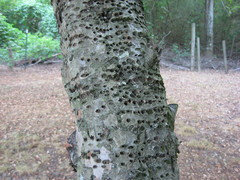
    Hi. Well, there are two trees. Starting a couple of feet up, it appears there are "nail holes" all over the trunk of the bigger tree, going quite a ways up. What is this? Otherwise, the tree looks at least reasonably healthy. If you'd like, I could snap a photo.

    Of course, the problem could indeed be that the puny apple tree 100 yards away that died (which I mentioned earlier in this thread) was serving as an essential pollinator.

  • 10 years ago

    Sounds like bores. They are cutting off the flow from root to leaf. You could try to suffocate them out by piling sand around the base up and over the holes. If the tree looks healthy other wise it should come back next year.

    neptune25 thanked User
  • 10 years ago
    last modified: 10 years ago

    Sounds like bores. They are cutting off the flow from root to leaf.

    Interesting. Well, the holes go really far up, though. I'll try to remember to snap a picture or two of the trees this weekend and post them.

  • 10 years ago

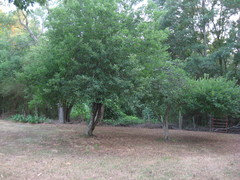
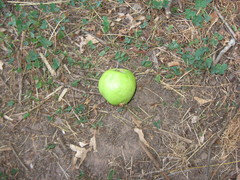
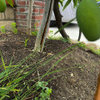
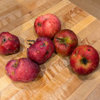
    Here are some photos I took of the trees, including a surprise apple on the ground. Do these holes appear to be made by bores?


  • 10 years ago

    Those look like greater tree bores. The tree looks big enough to weather that damage though. Are you located in the country or are there other folks near by? It may be as simple as no pollination. The tree looks like it is in good health, without further metrics(soil pH, foliar analysis...) it would be hard to say. And of course the trees could just be getting older and on their way out.

    David

    neptune25 thanked User
  • 10 years ago

    Thanks for the info, David. We're located in the country. So would that make "no pollination" more or less likely?

    Do older trees just stop bearing all of a sudden? I don't think these are more than about 20 years old .

  • 10 years ago

    The holes look more like woodpecker damage to me.

    neptune25 thanked Paul (MD 7a)
  • 10 years ago

    Thanks, Paul. Yes, I had done a Web search, and woodpecker damage also seemed like a possibility, so maybe that's all it is.