Software
Houzz Logo Print
matt_lyons27

Tomatoes dying back

10 years ago
Good morning everyone,

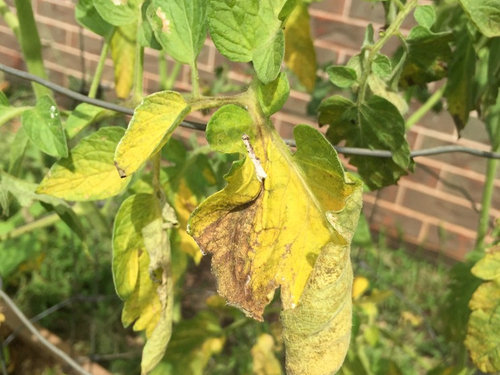
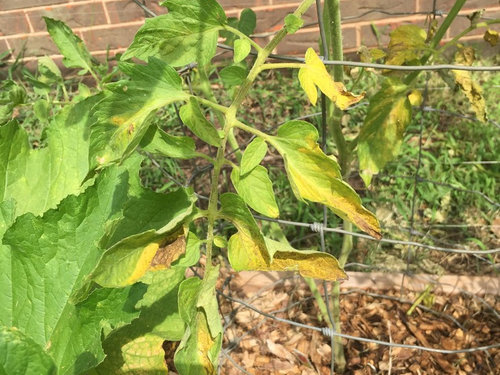
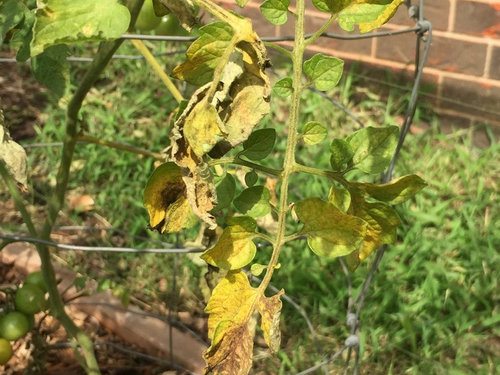
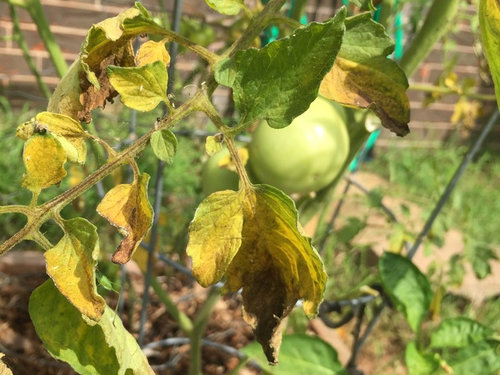
I have been having some issues with my tomatoes, the leaves are turning yellow from the outside in and than within a day or 2 the whole branch is dead.


I thought for for a while it was early blight and I have been removing all affected branches and spaying once a week with a homemade any funglal to help combat the spread but it's not working. I am having to pull a lot of branches off every day. Some of my tomatoes sets are now exposed to a lot of light.


At at the rate I am going my plants are going to be dead in a few weeks.


Below I attached some pictures of the leaves. If anyone has any suggestions I would greatly appreciate it! At this point I am just trying to save as much as possible and maybe get some tomatoe harvest.


Thanks for the help!

-Matt


Comments (9)

  • 10 years ago

    Hi Matt, It is hard to diagnose a disease from a photo because the photo captures only one point in time. Sometimes, there's also multiple diseases and issues occuring at once which also makes it very difficult to diagnose. I find it easier (though not always easy) to diagnose a disease by the way it first appears and the progresses over time.

    It does look fungal in nature. Other than that I won't attempt to pin it down, other than to say I think more than one thing is going on and at least some of what I see is Early Blight. Once fungal diseases appear, you cannot cure the plants of the disease. All you can do is try to slow it down, and you've already been doing that with the use of your homemade fungicide spray and by removing infected foliage. Sometimes that approach enables us to keep the plants going for quite a while, and sometimes not. I have found commercial fungicides more effective than homemade ones, but none of them is a curative for fungal disease.

    Have you been feeding and watering the plants regularly? Plants that are lacking in moisture or nutrients have a hard time fighting disease, and I found my tomato plants improved quite a bit and put out a lot of new growth after I fed them once and watered them a couple of times over a 2-week period. My plants have developed a wide range of issues after we had about 3 solid weeks where they were wet for a good portion of every day, whether it was from rain, drizzle, fog, mist, heavy dew, etc. and some diseases can start growing on plants that are wet for only 15 minutes. So, clearly the three wet weeks in late May/early June led to a lot of tomato issues. I sprayed with a fungicide (Daconil twice, Copper twice), on a 7-10 day schedule, alternating to help prevent any disease present from developing a tolerance of the same fungicide. The kind of fungicides used by home gardeners are preventive or protective and work by coating the leaves to prevent fungal spores from attaching to the foliage. Because it is very hard to get 100% coverage of every part of every plant, some disease usually manages to get around the fungicide and attach and grow.

    Fungicides are most effective when used from Day 1 that the plants go into the ground. When you don't start using them until after the plants are sick, all they can do is help slow down the progression of the disease a bit. They won't cure the plant and likely won't even save it. After I had sprayed 4 times, I stopped and decided I'd just try to get through the harvest period and then put in new plants for fall (though not in the same exact spot). Then I fed and watered the plants, and even some that were almost dead seem to be rebounding, so you might try that. It has been almost two weeks since I fed them, so I might feed them again and see if I see continued improvement.

    I do think the timing of the usual diseases follows a predictable pattern---generally first appearing on the plants when they are setting, enlarging and ripening a large amount of fruit, and much more in a wet period than in a dry period, so often drought years are not bad disease years. I feel like the plants are putting so much energy into fruiting at the time that they are maturing a crop that they do not have any energy left to resist the diseases, and this may be why hungry plants seem more prone to disease, or at least why diseased plants seem to improve and put out some new foliage and perk up a bit after being fed. That new foliage, though, will contract the same diseases if you aren't spraying funigicides regularly and if you aren't removing all the diseased foliage. Like you, I cannot remove all the diseased foliage or the plants would be naked and the fruit sunscalded, so I've just removed as much as I thought that I could without there being sunscald.

    Do all your plants have the same thing? Mine don't. Some have Early Blight, some have Alternaria Canker, some have Septoria Leaf Spot and some have Black Mold. A few had bacterial speck when the weather was cooler, but they improved after we warmed up. Some have more than one thing going on, and some have no diseases. All of them are under attack by spider mites, stink bugs and possibly Tomato Russet Mites. We've been harvesting lots of tomatoes, so I am just about beyond caring what the plants look like at this point. I also know that there is only so much we can do to keep the plants alive once diseases and pests hit in the hot summer months. I think that with most plants, I'll be able to harvest all the full-sized fruit, and then I'll yank out the sick plants and leave the few healthy ones. And, for anyone who's wondering what plants are withstanding the onslaught of diseases best so far this year, they are: Nebraska Wedding, True Black Brandywine, Vorlon, Burpee's Big Daddy, Rocky, Heinz 1350, Stump of the World, Early Girl, SunGold and Ildi.

    It was a pretty wonderful tomato year until the wet spell hit in late May and then the whole gamut of diseases and pests seemed to come out of nowhere. Some years are just this way.

    I have fresh plants for fall and hope the diseases will run their course in the heat and just go away, and that the fall plants don't have the same problems.

    Dawn

  • 10 years ago

    Dawn, I'm glad you mentioned feeding the tomato plants. I haven't fertilized in quite awhile. Since planting out, I have done one side dressing with some garden tone, and an application of mag sulfate, but that has been a while back. I should have given them a feeding earlier. I think I might drag out the garrett juice and give a foliar feed here in a bit, as the garden is now in shade. I put plenty of goodies in the soil before I planted, and have been trying to NOT over-fertilize. I bet they could use a little something. Lots of transpiration going on....you can't walk through them without getting wet. I'm watering every 3-4 days now with the soaker hoses. Just trying to keep it steady, and so far have been lucky to have no BER on a single tomato.

  • 10 years ago

    I haven't had any BER either, knock on wood. I hope feeding yours helps them perk up a bit. They are working so hard to produce fruit that they probably need some nourishment about now. I'm really bad about not feeding them much once they're bearing, so when they were looking so sad and bedraggled after the pests and diseases starting hitting them hard, I thought that maybe they needed something. The pepper production is picking up and those plants look perfectly happy, so it is nice to have some plants that don't look sad and pathetic. We drove past the home of a friend who is a gardener, and noticed his plants just don't look as good as they did a couple of weeks ago. I guess it is just that time of year.

  • 10 years ago

    My Sweet 100 looks a lot like this. Now I know what to try.

  • 10 years ago

    Try everything, but what works best for me is to remove really sick tomato plants and replant with fresh plants for fall. I already have my new tomato plants sitting on a table by the garage (far from the garden so that the spider mites and diseases don't find them before I put them in the ground), just waiting to go into the ground. I usually put fall tomato plants in the ground in the last week of June or first week of July.

  • 10 years ago

    Matt, my spring starts just went in about a month ago. Since they were so small, I dared them to survive the heat wave, the bugs and quasi-drought. They were looking just like this until I watered them more regularly. They weren't thriving, but surviving better and the yellowing did not expand.

    I've a new sandy bed and that's where I put them. I'm familiar with clay that holds more water and such and forgot that sand drains faster. And I hate watering. Did I mention that?

    They were struggling until recent. They started to grow in new green and look unusually healthy for a mid-summer affair. I think the roots finally reached the cool moist clay beneath the sand. (Note: My clay soil is very healthy. )

    Now, these yellowing leaves are at the very bottom and hardly noticeable. Plants are really tough if they have enough air, moisture and food that they can easily convert from healthy soil.

    I had another tomato plant in the same bed that the dog damaged. I'm lazy and didn't want to help it back to live, so I laid it down and buried a healthy stem portion and continued to water it in. She's rebounding all on her own from a new root system. Tomato vines are awesome!

  • 10 years ago

    Matt, I thought I'd check in and see if your plants are getting any better, or any worse?

    I have been seeing similar symptoms on some of my tomato plants lately, and some of them obviously have Septoria Leaf Spot (for which a copper spray is the best treatment, though you need to spray in the evening to avoid burning the foliage once high temps are in the 90s) but others have Early Blight. Since rain stopped falling here a while back, nothing much is progressing further up the plants in terms of disease, so if your rain has perhaps stopped there, then maybe your plants may be improving as well.

    I also fed my plants again and am getting new growth on some of them that may make up for all the diseased leaves I removed. I hope you are getting some new healthy growth on your plants too. I'm going to keep a handful of the healthier ones that are putting out new growth, and replace the rest with fresh plants for fall. Early July is the ideal time to do that if your plants look like they are not going to recover.

    Dawn

  • 10 years ago

    Things are looking up dawn! I started feeding a lot more regularly with tomatoe tone and fish fertilizer and the new growth has helped the plants.


    Also i did some closer inspections of my plants and relized most of my damage was coming from mites. So I started spraying them every few days which has helped.


    thanks for all your help!

    Matt

Sponsored
Mary Shipley Interiors
Average rating: 4.8 out of 5 stars34 Reviews
Columbus OH Premier Interior Designer 10x Best of Houzz