Software
Houzz Logo Print
gigielle

Sudden wilting - pull?

10 years ago
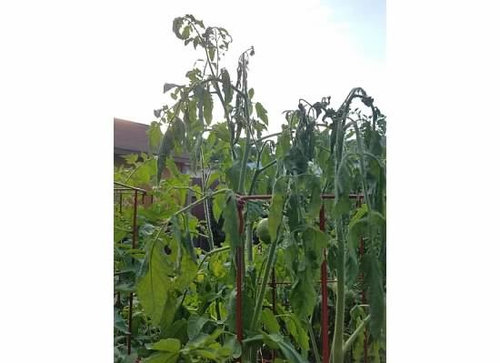
Hi All,

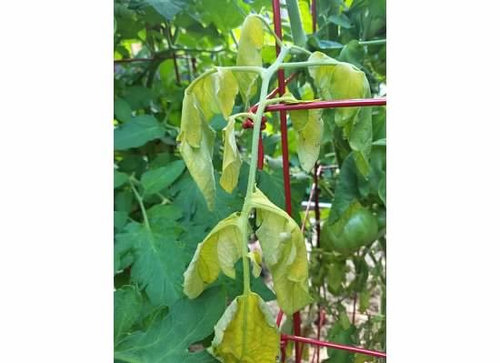
Went out today to check the plants, and one of them is looking pretty shady. It was pretty healthy yesterday morning when I last checked, and now not so much. Well, the pictures below tell the story. It's been really hot and humid, the hottest it has been all summer, for the past few days, and most of the plants are looking okay, except this one and the nearby Noire de Crimee (which I think has some septoria). I have not been watering - nature has been taking care of that, but again, not excessive rain or anything like that. Nothing else I have done to them.

I'm pretty freaked out that it is a bacterial wilt given the wilting is throughout most of the plant from what I can tell. I snapped off a few of the bottom leaves (some of the yellowed ones in the pic) and suspended in water, but did not see any white discharge. Should I try again with a different sample from another part of the plant? I'm afraid perhaps my samples were too yellowed?

Sorry for the crappy pictures, I didn't have my phone so my husband snapped these and had to text them to me.

I'd hate to pull the plant as she has a ton of fruit, but I would rather sacrifice one than lose them all.


Comments (6)

  • 10 years ago

    An addendum - I tested two more wilty samples, more green ones, which don't appear to be discharging anything. Question: do I need to test a section of one of the main affected stems? I've been sticking to the leaves.

    I also realized that the entire plant isn't affected. Just a pretty significant portion.

  • 10 years ago

    Can you get a better picture of the overall plant?

  • 10 years ago

    First, one plant, even if it is infected with a terminal disease, in no way means you would lose them all unless you have viral infected soil. So no need to rush to conclusions or swift action. Many things could be causing the wilting - including your watering regimen or lack thereof and the shallow rooting that could have developed - and the odds of those other causes are greater than BW.

    Second, yes you need to test infected stem material for the test to be effective and since as much as possible of the infected stems need to be removed anyway to save the rest of the plant you will have plenty of material to test.

    Then you can try to baby the plant along until the fruit hits color break and can be harvested by spraying it with a copper based fungicide just in case it is bacterial.

    Dave

  • 10 years ago

    Since wilting happened so fast, It is possible that a rodent damaged the root.

    Just a guess.

    Sey

  • 10 years ago

    Thanks, Dave. I needed someone to give me a virtual smack upside the head to calm down and not do anything crazy! I will suppress the panic and not do anything drastic tonight. I'm going to sleep on it (since it is dark now) and inspect again in the morning to see if it looks the same (in case the heat/humidity contributed to this) and snap better pictures if it is (and get a good stem sample to retest).

    I have Daconil, but will pick up some copper fungicide tomorrow.

    Gorbelly - as noted above, I'll try to get some better pics in the morning.


  • 10 years ago

    Okay, this may get long - in addition to the plant noted above, it's neighbor Noire de Crimee isn't looking fantastic (and now a bit wilty).

    Some more possibly useful background/information:

    • While I haven't been watering, we have been getting good, soaking rain at least once a week. That said, it also hasn't been excessive. When I planted, the seedlings were buried quite deep to encourage root growth.
    • I know the plants are crowded. Honestly - they are way bigger than I expected. My plants have never gotten this huge (at least not all of them) but they have all exploded this year. I've been trying to prune to increase air flow. Before we even realized what was happening with these plants I'd been considering reducing to 6 plants per 4x8 bed next year.
    • I've been mulching and stripped bottom leaves early in the season to try and minimize soil borne disease.
    • I have NOT been able to spray with Daconil as planned. My work schedule has made it hard to keep up with everything and this is the one thing that has really slipped.
    • I did test some of the main stems - though from the top since I was trying not to do anything drastic - from both problematic plants and I did not see any milky discharge. Also did not see any discoloring, but realize that is probably a better test further down the stem for both cases.
    • We definitely have rodents running around. It's a raised bed, and I didn't see any burrowing but won't say it's not possible.

    Some more pictures. First, a shot of the whole plant, the Plan 9. I did notice that it is not the entire plant - it is just part of it. It's a little hard to tell from this picture since I was trying to get a shot of the whole plant and it is a tall one. You can see the wilting, but may be harder to see where the non-wilting parts are.

    A closer picture - a little easier to see that there are sections that are not wilting. Basically, everything on the right side that is not potato leafed is the plant in question.

    A close up of the bottom stems. I noted which one appears to be fully unaffected at this point.


    This first plant very much displays yellowing at the bottom leaves, with just generalized wilting of the plant as you move up. I'm wondering based on what I have been reading if this could be Fusarium?

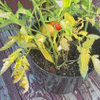
    The second plant, the Noire de Crimee has always looked a bit stressed, with curled leaves, and I have never been able to figure out why. But while it is also generally wilting (and not necessarily the whole plant at once) it is much more dramatic, as in the pic below). The leaves are shriveling quickly once they do wilt/die.

    I would love advice on reasonable next steps. I don't want to be totally drastic, but also willing to do what's necessary. Obviously, I will remove all affected leaves and get some copper-based fungicide and spray today in case it is bacterial.

    Question: If i can trace the wilting to specific stems, should I cull those stems entirely? Any other advice?

    Thank you in advance.


Sponsored
CHC & Family Developments
Average rating: 5 out of 5 stars5 Reviews
Industry Leading General Contractors in Franklin County, Ohio