Software
Houzz Logo Print
yosemiteann

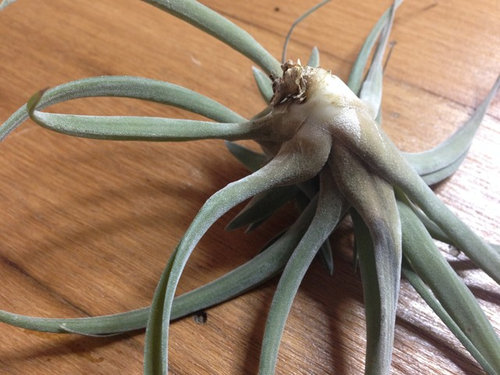
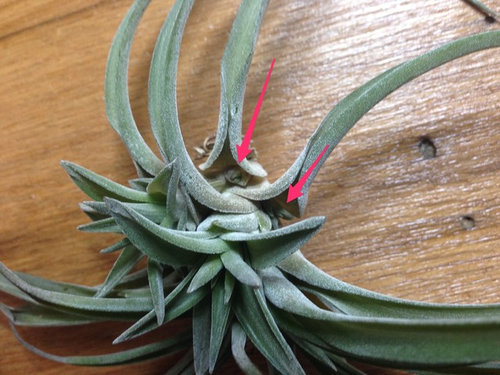
Tillandsia mixed message: too much or not enoughwater?

10 years ago
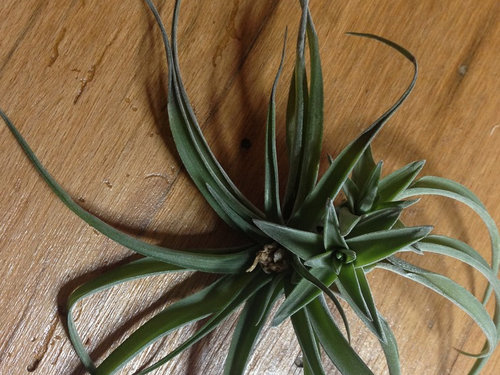
In me endless quest to better understand the water needs of my Tillandsia, I have this plant that on one hand seem to have cured dry leaves, yet they pull off easily, raising concerns about rot, and then they reveal a few tiny new pups!


Can anyone advice on the next next step?


Comments (4)

  • 10 years ago

    Hi everyone.

    yosemiteann - I don't know about Tillandsias, but I do know that various other brom's will often produce one or more pups as a survival response when the main plant has rotted or is dying for some other reason. It also happens sometimes when the plant is stressed by trauma or some other cause,

    I imagine this is just Mother Nature's way of ensuring continuity of the species.

    All the best, Nev.

  • 10 years ago

    Am I right in saying that Tillandsia are monocarpal and once they flower they die,then produce pups?

  • 10 years ago
    last modified: 10 years ago

    Well... they produce pups and then they eventually die. :P

  • 10 years ago

    Hi everyone.

    Most bromeliads die after flowering and then produce pups;
    but some (including some Tillandsias) die without producing pups in this way.

    Some years ago I was fortunate enough to see one such
    plant which was a “monster” Tillandsia in flower. It was a species called Tillandsia
    rauhii and was almost three feet across and had a huge arching inflorescence about
    seven feet in length. It had been grown by a friend of mine who although a fully-fledged
    “bromeliad addict”, had an uncontrollable passion for Tillandsias.

    She told me it had taken just over twenty years for her plant
    to flower from when she got it as a small “seed grown” plant. Although when these
    plants were young they often produced many
    basal adventitious pups (Often called “grass pups” or “hair pups”), they didn’t
    produce the usual type of pup we usually see after plants have flowered. My friend
    said the most common way to reproduce these plants was by seed and gave me some
    to try.

    I was surprised at how easily they germinated and had
    reached a height of about one eighth of an inch after six months. But there they
    stopped; and after two years were still only just under three eights of an inch
    tall.

    Normally I’m a pretty patient bloke, but not knowing much
    about these plants, I lost interest when I saw how slow they were growing and suspected
    it was something I was doing wrong so I decided to give them to a younger
    friend of mine who was a keen Tillandsia fancier. I felt much better when after
    about six months he told me they still hadn’t grown any larger and I realized my
    growing technique hadn’t been the problem and it was probably a characteristic
    of the particular species causing such slow growth.

    Anyway the next year we had a very cold winter, and as my
    friend lived further south he suffered the consequences more than I did and
    consequently all of these little seedlings succumbed to the excessive cold, so
    I guess I’ll never know how long it would have taken us to grow some of these seedlings
    into the magnificent plants they could have been.

    I did read an article about “wild collected plants” which
    said, “Three of the plants of Tillandsia rauhii collected in 1956 began to
    develop their inflorescences in late 1989 and reached full bloom in January
    1990, so it seems it is a very slow growing plant.

    I seem to remember on this very forum some years ago, one
    of our current members spoke of flowering Till. Rauhii so maybe he would like
    to add a bit more about his own experiences with this plant.

    Below are a couple of sites which have some good pictures
    of this particular plant for anyone interested:

    http://www.bromeliad.org.au/pictures/Tillandsia/rauhii.htm

    https://commons.wikimedia.org/wiki/Category:Tillandsia_rauhii#/media/File:Tillandsia_rauhii_BotGardBln08112010C.JPG


    All the best, Nev.

Sponsored