Software
Houzz Logo Print
hrallen44

Should I give up?

10 years ago

I used to live in a much milder area (zone 6b) where I enjoyed growing tomatoes. To care for them, I gave them a quick hose soaking if they needed water, sprayed only rarely and as needed, and almost always harvested a decent amount of tomatoes.

I moved to Georgia (zone 8a) and did get started late (purchasing plants in early June) --3 varities, a hybrid determinate bush-type, an heirloom indeterminate type, and some hybrid cherries. Nothing esoteric.

Well, I've already had more pests here than I had in a single season up north, so I've moved to a strict weekly (or even bi-weekly depending on the issue) spraying schedule. Now I'm dealing with what I think is some sort of viral or bacterial issue on one of my plants (slow growing, but there nonetheless) and to add insult to injury, my tomatoes have had a lot of flowers and exactly..two fruits, which aren't even ripe yet. Don't get me started on my peppers.

Is there any point to even continuing? It's a lot more work than I expected, but I'd have no issue doing it for a good harvest (or a chance at one, anyway), but I think I'm swimming against the tide at this point.

The plants themselves do look somewhat healthy, minus the scars they received from their battles with pests (and the slow-growing virus/fungus.) But I look at the weather forecast and it's 95+ the next week, and we're not likely to see a significant break in the weather for a month or two.

The tomatoes do get a bit of a reprieve from the large tree planted to their west, which grants some afternoon shade, but....I dunno.

Suggestions for this year? Advice for next year?

Comments (17)

  • 10 years ago

    I've noticed that southern gardeners try to get their tomatoes in the ground as early as possible so that they can get a harvest before the heat gets brutal and pests and disease ramp up. Depending on how far south, they sometimes plant for a spring crop and then again for a fall crop, planting at least some early varieties each time, as they plan for two short seasons instead of one long season. Also, my impression is that a fungicide regimen is frequently not optional if you garden in the south, and planting varieties resistant to wilts and nematodes can be key to success in many parts of the southeast. Maybe you can get some more concrete advice in the Georgia Gardener forum? While there seem to be a lot of challenges, I find myself happily envious of southern gardeners as they are enjoy ripe tomatoes while my plants are still getting established. Their posts and pics are a nice distraction to tide me over vicariously during times when a ripe tomato is still a long way away for me.

  • 10 years ago

    Early June to put in tomatoes? If you're like where I am, you need to be putting them in in March. You're not in 6b anymore! In my heat zone, which is probably not too different than yours, tomatoes will simply shut down fruiting in June. Boom. They're done. Welcome to southern gardening. VERY different than northern gardening. Peppers should do somewhat better in the heat.

    You'll have to be more specific about pests.

    You can try to keep your tomatoes alive through the summer and wait until it cools off enough to fruit, but I've never been very successful with that.

  • 10 years ago
    last modified: 10 years ago

    I live about 25 miles south of the Atlanta Airport. I transplanted one group of tomatoes into the garden on 3/30 and the second group on 4/15. I have gotten a load of tomatoes but they are now shutting down and getting diseased. I should have started some more seeds a week ago so I could transplant them on 8/15 but I never got around to doing that.

    I get early blight every year. This year I tried spraying with daconil and copper fungicide so I escaped that disease this year. Now I have wilting tomatoes which I think is Southern Blight. I took the tomato plant pieces to the extension office today so I maybe able to determine the cause of their demise.

    Green bean production shut down about 2 weeks ago. The Rattlesnake Beans are still looking good but I planted them late and they have not started flowering. Squash died from SVB. Emerite beans are now infected with Rust (I think). But the corn, okra, cowpeas, winter squash and sweet potatoes are still growing strong.

    So no, don't give up. Keep fighting and experimenting. Some things work and some don't. Try planting at different times. Try planting different varieties. Try different fertilizers/compost. etc.

  • 10 years ago

    Sorry but your season is over. And in zone 8a in Georgia, probably you won't have a second crop/season. I have gardened in zone 7b north of Atlanta. Not as hot considering that my garden got 6 to 7 hours of sun and shaded rest of the day. So i kept my tomatoes going til October. My LFD was around April 7th and I used to plant out even before that date by monitoring the weather forecast.

    Looking at the bright side, you have learned a valuable lesson and you are going to succeed the next season.

    sey

  • 10 years ago

    Im from zone 8b uk, i recommend hand pollination!, Use a paint brush to exchange pollen. Dont give up, keep them alive you'll get fruit even if you have to pick them early when they're green, you can ripen them indoors with a paper bag and a banana. Dont give up!!.

  • 10 years ago

    Concur; Tomatoes are not extremely hard to grow in middle Ga. There are are some very bad diseases, which can be circumvented to some extent.by using resistant varieties. Tomato Spotted Wilt Virus and Fusarium are the major ones. We have southern blight but it manifests itself early about the time flowering starts. Only some varieties are susceptible. Insect pests are pretty much negliable. They need to be started in April and again in late July for a fall crop. Long beaing indeterminate plants don't do well in midsummer so we normaly


    l get better yield from determinates, more so when double cropped.

  • 10 years ago

    bau the man: Im from zone 8b uk

    Bau, zones are determined by lowest frost temps. There is nothing else similar about a UK zone 8b and southeast US zone 8b. The UK and most of Western Europe tends to have very mild weather, with relatively warm winters and relatively cool summers. East of the Rockies here in the US, the winters can get brutally cold (although much less so in GA) and the summers can get brutally hot. In general, the weather swings between extremes a lot more here across the pond.

    Also, it's worth remembering that the US state of Georgia is at the same latitude as Syria. New York City is at the same latitude as Madrid. I think people on both sides of the Atlantic forget how much further south the US is than Europe.

  • 10 years ago

    Just about the time I start feeling sorry for myself because of the aphids, birds, or occasional early blight...I read stuff from folks that have real weather challenges. All I can say is: you guys are the best and most determined gardeners. My brother-in-law lives in Texas...and boy, the nasty weather around him is enough to make you quit growing veges/fruit. I think I might just sit under the air conditioner and lick my wounds. haha

  • 10 years ago

    Thank you everyone.

    Lesson learned, I will definitely be planting earlier next year. March, April and May can be (somewhat, lol) pleasant here, and I should've planted then. Instead, I just kept the same schedule as I grew up with.

    I think at this point, I'll let whatever happens happen. Still water if they need it, but just let them produce what they produce and not be so fussed at this point worrying about a harvest which probably isn't going to happen. Just be happy if I get a few tomatoes before they die and chalk it up to learning experience.

    I've learned I need to get those plants in the ground much earlier, and just start spraying insecticide and fungicide weekly as a matter of course. And only buy resistant hybrids (at least until I get my feet under me growing here.)

    Maybe if the tomatoes die, I'll see if I can get anything in the ground later--carrots, radishes, etc.--just for a "win" this year.

    But I've got my compost pile cooking and hopefully all ready to go for next March/April--when I'll correct these mistakes (but sure to make new ones!)

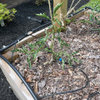
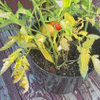
    If anyone wants to take a gander, this is a pic of some foliage I pruned from my bad tomato. I'm guessing a disease, but unsure of what kind. If someone could give a guess at an ID from the pic, I'd appreciate it.

  • 10 years ago

    My guess would be bacterial speck. Could be septoria, too. If it affects fruit with little black dots, it's bacterial, as septoria does not affect fruit. However, lack of spots on fruit does not rule out bacterial speck, since speck doesn't always affect fruit.

  • 10 years ago

    Agree that it looks like C. Speck.

    If you have some plants with healthy foliage why not root some cuttings from them now to plant for your Fall garden? In 10 days you can have new plants ready to plant.

    Dave

  • 10 years ago
    last modified: 10 years ago

    Here is a growing chart for Ga. Look at the bottom of the chart to tell when you plant for your location. And yes, a fall garden is easy. The website for uga has a lot of specific planting information for GA.

    Ga Planting Chart http://extension.uga.edu/publications/files/html/B577/B577PlantingChart.pdf

  • 10 years ago

    Thank you everyone who took a gander at identifying my issue. If it's bacterial speck, and it spreads to the tomato surface, are the tomatoes still safe to eat?

    Also, since I wrote the initial post, a few more tomatoes decided to form, so maybe I'll get a few decent tomatoes before the plants give up the ghost. :)

    I do know one thing that grows well in Georgia, though, Muscadine grapes. The people who lived here before planted a whole bunch of them up against the side fence, and they are growing like weeds. And I did absolutely nothing to/for them! I didn't even water them.

    The only bad part is I can't stand Muscadine grapes, lol...but the birds should be in heaven once they ripen!

    And thank you so much for the planting calendar. I will definitely have to get a few things in the ground now, since apparently I can have a whole second season!

    (And thanks for the tip about starting new tomatoes, Dave!)


  • 10 years ago
    last modified: 10 years ago

    Yes, fruit with bacterial speck lesions is safe to eat. The lesions are very superficial as well--sometimes, they can be scraped off with a fingernail, although there's no real need to do so, as the bacterium won't hurt you. Some people recommend against canning fruit with bacterial speck, though I think that's more about possible pH changes in affected fruit rather than any danger from the bacterium that causes speck.

  • 10 years ago

    Re: "The only bad part is I can't stand Muscadine grapes, "

    They are an acquired taste, don't give up. If the hulls bother you, make jelly with them.

    After a while, they taste better than store bought. Their aroma is distinct.


  • 10 years ago

    I don't have plants, but many people shared them with me when I lived inland. I was shocked at first. The grocery stores here sell them. The are preferred by the locals.

  • 10 years ago

    That's a good idea, janice. I love the aroma of muscadine grapes but am less fond of their texture. Jelly would be delicious. Now I'm jealous of Georgia.

Sponsored
Peabody Landscape Group
Average rating: 3.5 out of 5 stars8 Reviews
Franklin County's Reliable Landscape Design & Contracting