Software
Houzz Logo Print
orneryponystudio

Caudex Question

This may seem weird, but I am not really a fan of a big fat caudex or huge swollen roots on adeniums. /Some/ of them are interesting but most of them are not very attractive to me personally. Some are out right grotesque.

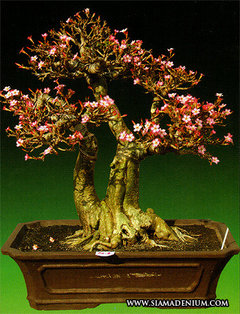
So, if I were interested in growing them for more traditional looking bonsai with more even trunk structures that resemble trees without a fat caudex or swollen huge roots, do you have suggestions? I see a number of them online that have slimmer profiles and with pruning can achieve beautiful thick crowns. While I am sure to also grow the stunted, shorter, thicker types as well for variety, I'd appreciate some tips. Thank you.

Comments (12)

  • 10 years ago

    It takes rooted branches (scions) much longer to obtain any kind of caudex. Some just buy cheaper grafted to get a more true to parent colors. Root them and have more scions.

    Demmitt sells some of his clones and original plants. He describes them as shrub like. http://lithops.com/adenium.htm

    I have his ever blooming Crimson Star.

  • 10 years ago

    Hmmm, that isn't quite what I'm asking. I'm curious about the differences in culture, pruning, and training between the more traditional bonsai forms and those with the emphasis on the lower half of the plant. I could post a photo that may illustrate my meaning better, but they wouldn't be my photos and someone might object.

  • 10 years ago
    last modified: 10 years ago

    Just don't raise your plants then, Patty. The basic adenium trunk is actually just a simple featureless cylinder. The gnarly bits can stay under the soil, out of sight and pruned occasionally to keep them manageable (they do grow, regardless of what you do).

    A bit of good news though is that some specimens get more gnarly than others. I've culled a good number of yearlings that failed to fatten up despite being grown hard.

    IN terms of culture, you can short circuit the adaptation of the plant by not starving it of water, thus encouraging the tendency to not develop the fat caudex which is what it would normally do to store water. I have a couple of 3 year old plants that are like this and one particular yearling that somehow hasn't developed either. I'm keeping it because it has really nice cadmium red blooms.

    There are some growers here who wire the branches to train them into shape but i've not seen long-term results. When young, the branches are soft. Your conundrum will probably be how to grow them hard enough to produce sturdier branches but not so hard that you'll end up with a caudex so fat it breaks your pot.

    I think it's very doable. It will just take effort opposite to the norm.

    Pagan

  • 10 years ago

    Thank you both! That is precisely the sort of information I am looking for - I appreciate it. My thought and my hope is that some of them will lend themselves to growing very short and fatter with pruning and others will tend taller and leaner and I can work with them accordingly. I really want some of each, not all set up exactly the same. I like the variety.

    I noticed that the ones I personally enjoy the most aren't super heavy in the lower section and tend to have the thinner .. hmm more 'centipede' roots I think? But perhaps not quite so rigidly formal and even. So I'll experiment. I haven't found a good source yet online that talks about different training styles for adenium like there are for other kinds of bonsai.

  • 10 years ago

    Oh! You can grow from cuttings instead! I just saw your other thread. I will post a reply here since it is germane to this topic.

    Rooted adenium cuttings is probably your best option since they retain the shape of the original cutting very well. Seed-grown plants will have a natural swelling at the base, but rooted cuttings--not so much. The roots will still grow fatter over time but above the ground it will retain the tree trunk look. I have never rooted adenium cuttings but others here surely must have.

    If it is to be used for grafting, a cutting will spoil in the mail but if it is for rooting, it will do fine since the time it will take to mail one is the same amount of time a cutting needs to dry anyway, before being put in a pot.

    I'm guessing it will have to be a somewhat mature branch to raise the odds of uneventful rooting.

    Pagan

  • 10 years ago

    Yes, that is what I am finding out on my other thread, thank you. I will try some both ways and see what results I can get.

    Once my variegated red arrives and it shows good new growth, I'll be taking a tip cutting anyway to try promoting more growing tips faster by tissue culture which then can be rooted or grafted. So it will be a learning process. The feedback I am getting is very helpful, thank you.

  • 10 years ago
    last modified: 10 years ago

    I have found that you want 6+ inches for a cutting. All of mine around 8-12 inches took while the shorter ones failed.

    I have some pictures of the rooted cuttings (almost 2 yrs old) if you like.

  • 10 years ago
    last modified: 10 years ago

    If I do a tissue culture, it won't matter if it's a 1/2 inch cutting, actually. Because I'll be cutting it down even smaller than that. The first medium I would start it in is to make it grow, and then it can be moved into a flask with medium to grow on roots unless I wanted to graft it. So it's an entirely different process than rooting normally.

    But yes I'd love to see the photos of the larger cuttings that you rooted because as mentioned, that's another method alternative.

  • 10 years ago

    This photo belongs to SiamAdenium and they get all of the credit. This is what I'm talking about for a drier, leaner kind of gnarly where it's not all fat and swollen. To me this is a fantastic example of what would be my ideal for at least some of my plants in the long term. Roots showing, but also substance to the trunks without looking like they have edema. I also happen to like the smaller flowers here that are more in scale to the size of the tree - though for all I know this specimen may be very large.

  • 10 years ago

    My 6" reference is relating to rooting cuttings. The shorter ones seem to fail more easily. I theorize that there is a fairly set amount of time to root, and the smaller cuttings dry out before that time.

    I would be interested to hear the results of your tissue cultures of adenium!

  • 10 years ago

    That does make perfect sense, Jedoba. I will be taking that advice if I try to root cuttings in soilless mix instead of by tissue culture medium.

0