Software
Houzz Logo Print
justin_hunter97

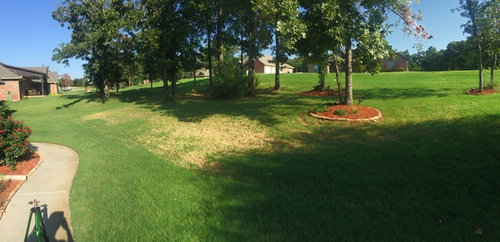
Brown grass on slope

10 years ago
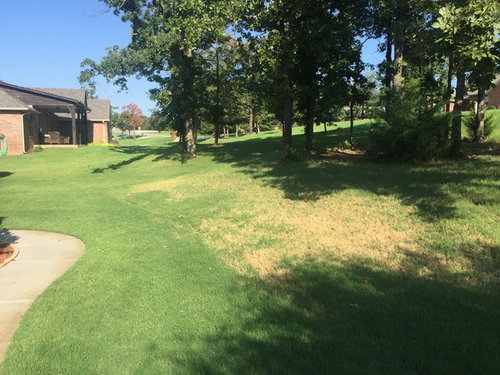
I have a pretty well established Bermuda lawn in central Oklahoma. Nitrogen usually runs pretty low so I do fertilize about every 7 weeks with high nitrogen mix.

the yard slopes down to the front of the house as you can see in the picture. I find it nearly impossible to keep this section of grass green. Being on a slope is it possible that it dries out quicker? Anyone have any thoughts?

Comments (9)

  • 10 years ago

    Mix of factors including but not limited to water runoff, shade, tree root competition for water/nutrients. Looks like there are some swales in the area. Those look nice and green, usually an indication that they are getting more water/nutrients than the rest of the areas.

    What is your preferred height of cut?

    Type of bermuda?

    Date sodded?

    Watering routine?

    What fertilizer and how much do you currently apply every 7 wks?

    Some options for improvements include adjusting the watering methods. There are some newer sprinklers that better water hills by putting out less water over a longer period of time, eliminating run off. You could also up your feeding to every 4 weeks and add in some organic feeding if you don't already. If after fixing everything else and shade ends up being a strong factor you could go with a more shade tolerant variety in that little area.

  • 10 years ago

    The height of cut is usually 3-3.5 inches. I cut often and not too much at time. I am not sure the type of Bermuda. The entire yard was sodded with new home build 3 years ago. The sod was placed on top of very poor quality sand. I have worked hard the last few years to increase the nutrients with a little organic feeding. I ensure the yard gets a solid soaking about every 5 days if it does not rain. This area that is yellow is really in full sun most of the day. The shady part next to it actually does okay. The fertilizer is a 29-0-0 and is based on soil samples. I aerate twice a year and dethatch once a year.

    Overall, you can see the rest of the yard does extremely well with this plan. The part you mentioned about run off does make me think that this may be an issue. I also wonder if the trees next to it have a root structure going under this part that is robbing some of the water and nutrients as you say......

  • 10 years ago

    Tree roots hurt. I was convinced it was shade until you said that spot doesn't get any... Sandy soil is OK, every Bermuda golf course is sandy base. Is it thatchy at all? I find a lot of thatch collects on the face & precipice of hills, especially if you're mowing that high. If it's not that thatchy & it's not shady, maybe bugs or worms.

  • 10 years ago

    So thatch and water penetration might be out of the question if you do all that. As its in only one area all the time ? I would go with water run off you can get a cheap soil humidity probe to see whats up. I would probably just run a sprinkler on it

  • 10 years ago

    Thatch is never out of the question on homeowner grade Bermuda, especially mowed at that height

  • 10 years ago

    I don't know your capacity to change this up, but I would recommend changes and see what happens.

    First I would mow lower, much lower. Your lawn should never go above 2" I personally prefer shorter height. I maintain 1/4" hoc. I don't' like the look of bermuda much past ~7/8", I think reeljake likes 3/4" - 1 3/4". Bermuda just performs differently when allowed to grow higher. It will shade itself causing it to thin out and cause problems similar to what you are experiencing. The higher cut also changes the resource requirements needed to maintain a nice looking lawn.

    Next I would increase the fertilization routine to every 4 weeks for the rest of this year. Do that up until ~2 wks before your first frost of the year. I personally fertilize every 2 wks and use a lot of organic material which helps with water retention.

    Then I would water on demand, not a schedule. This takes a lot more effort on your part. You have to pay attention to your lawn or it may suffer. I get by on 1/4" water every 8-10 days. It sounds nuts, but it's true. My average temps for the past 2 months are 93+, with 15 days > 100 with no rain, no cloud cover.

    Before you take any suggestions I would highly recommend doing a true assessment of your desire and ability to maintain your lawn based on those suggestion. Mowing lower means mowing more often, upwards of four times per week (if you are not on a growth regulator). Same goes for on demand watering, you have to walk your lawn and pay attention to it (which ain't that hard when you mow four times a wk).

  • 10 years ago

    Hmmmm, my yard has always been thicker, greener, and lusher than everyone else's in the neighborhood and I've always thought that this is due to having it grow high and mowing in smaller increments such as 0.5 inches. The entire yard does extremely well except in this one area. I had not considered fertilizing that often. But, it would make sense given that the sandy soil has very little nutrients in it. Based on what you and others have mentioned, I think this spot suffers from runoff. The grass thins out there and turns brown and then thatches quicker. I am going to fertilize more, try and dethatch this area, and then water more frequently just in this area....

  • 10 years ago

    Total newb here when i comes to bermuda, but I thought bermuda turns blue-ish not brown from drought stress? Or is blue-ish and then eventually brown?

  • 10 years ago

    Bermuda Bible - pictures at bottom.

    Yes it thins and turn bluish with increased brownage when stressed. People can often miss the subtle stress response though only to notice when it's brown. If you look at clippings a day or so after you mow you can really see how dark/blue they are compared to the normal lawn because of a loss of moisture. The big thing is comparing your normal color to the suspected change. Since so many people use different fertilizers and amendments our baseline color is different. I have 3 different types of bermuda now and they all look different baseline, when stressed they look different also. Occasionally I've gone out the evening after mowing & gotten a little panicked cause the lawn looked blueish, it was simply dried clippings in a bare spot.

    Generally speaking, the entire lawn pictured above look light green with a few darker areas which I presume get more water & nutrients due to runoff. There is also a brown undertone throughout the lawn which is not just thatch but the grass itself turning brown. In some bermuda strands only like the top 2/3 is green if I remember correctly, that's why shorter cuts look completely green with no hints of brown at all.

    So with all that, it's difficult to say when looking at pictures for the first time. Our personal preferences for what a lawn looks like can cause us to say something looks stressed when it is not and vice versa. The owner is usually the best person to say if his/her lawn looks stressed/different. The one thing we mostly agree on though is brown is bad. Patches of brown means bad stuff obviously. The stress response may have not been noticed until dormancy kicked in.

    If the op is completely happy with everything else in his lawn, just throwing water & fertilizer on that spot will green it up real quick. Add in some iron and it would be the best looking area in the lawn in a week or so. The problem would be keeping up with it after it comes back. If he can't maintain it the grass there may die instead of going dormant again.