Software
Houzz Logo Print
blue_skink

Where to plant garlic

10 years ago

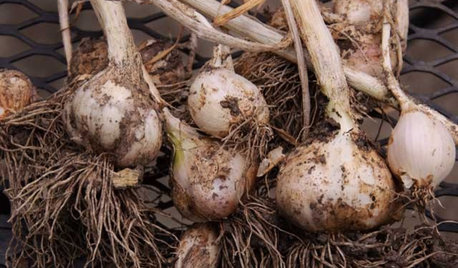
Hi. I need some advice. I have a small backyard garden and always rotate location of garlic. I am re-arranging my garden [you know, like moving the furniture :)] and wanted to seed garlic this fall in the same spot as last year, ie, seeded in 2015 and harvested just now.


What do you think? Does it really matter? Thanx.

Comments (18)

  • 10 years ago

    Thanks for your advice - it makes sense. My crop was wonderful, all cloves were so big, no disease, so I will try again in the same spot.

  • 10 years ago
    last modified: 10 years ago

    Rotation in small spaces is always a problem. Like Zeedman says so long as no problems show up you should be able to rework your space and reuse it. Sorta like dividing, fertilizing and planting back ornamental perennials in the same hole.

    The worst that can happen is some potential problem shows up and you have to forego garden garlic for a couple of years, but you can then use containers with fresh potting soil for that, while waiting for a natural purge of your normal garden. Some folks do so well in containers that they never go back to in the ground. (Not me so much, however...)

    There is also enough time between garlic harvest and replanting to have a second short season crop that can often help break cycles of problems, as well as being either green manure or taking the benefit of an addition bed preparation .

  • 10 years ago

    Tks for all your info, and I'm glad you brought up the matter of green manure. I was wondering how you would handle it when you (or me, actually) harvest your garlic on August 10th but your first frost will be about Sept. 21. That is hardly enough time for your cover crop/green manure to make much headway - though I am trying this year for the first time. You are a bit south of where I live and I doubt your frost free period is much longer than where I am.

  • 10 years ago
    last modified: 10 years ago

    You may not have enough time for a green manure crop; so it would be either organic matter from another source or skipping a year's crop to grow a green manure one (sorta what the old fallow year was meant to do, but better). For small spaces you would do better with the former.

  • 10 years ago

    Howdy. Thanks for your comments. I was wondering how large a cover crop has to be, to be useful when it finally dies of frost.


    I seeded a combo of mustard & clover about 10 days ago in my (I hope) garlic bed, and they are doing okay - maybe 2" in height for the mustard. Elsewhere in my garden, the mustard cover crop is growing like crazy, so if we have 3 more weeks of frost free, the cover crop will be maybe 6 inches. I am watering and thinning.
    Q: How would I plant the garlic cloves if the mustard/clover is still alive? Just poke a hole with a tool and insert the clove, or do I have to kill the whole crop or what.


    Thanks, Old Dutch.

  • 10 years ago

    I know you were not asking me, but my 2 c's on the cover crop...

    Mustard is a good cover crop, because it will die in the winter - no competition the following Spring. Clover can be problematic. If it survives (white clover in particular), it quickly form a dense root mass that is difficult to remove without damaging any nearby garlic roots. Depending upon the type of clover planted, you might need to pull it before planting the garlic.

    Peas might be a better choice as a quick cover crop... they probably won't have time to mature, but you can harvest some pea shoots (they are delicious). Plant them densely. The peas will die, leaving behind some added nitrogen... and you can plant the garlic right through it.

  • 10 years ago

    Hi, Zeedman. I appreciate your 2 cents on the cover crop. I seeded red clover. My thinking is that it will be too small to survive the winter but really, I don't know. In any case, I better pull everything before I put the cloves in, if I'm going to have any garlic! I suppose the pulled mustard & red clover will provide a bit of mulch and then break down.


    I know how entrenched white clover is. There's a bit on my garden paths and my goodness, it has to be dug and pulled and struggled with. The roots travel in every direction.


    About peas. I've collected some little vetch seeds that grow as wild vines around here. Do you know anything about it?


    Many thanks for your help.

  • 10 years ago

    Agree with zeedman about peas over any of the hardy clovers, of which red clover is definitely one. A bit earlier in the season green beans would have been a good cover crop, too. There are other annual legumes that can produce significant organic matter and set some nitrogen as well. I would not recommend using the local vetch seeds, unless you want to fight them and their descendants for years.

  • 10 years ago

    But to set nitrogen, don't you have to chop the beans in before they flower?

  • 10 years ago
    last modified: 10 years ago

    No, but you often have to inoculate them at seed planting time to get the best nitrogen fixing started. Inoculants are specific to particular types of legumes; so be sure to get the right one for what you plant. Any frost will kill the green beans; so that is when you chop, plow or till them in. It takes much more cold to kill winter peas, but they can be turned or tilled under while still green far enough ahead to normally give garlic beds a bit of time to settle, at least that is the case here in zone 4. You have a much tighter schedule out in the Prairie Provinces, with winter coming on earlier and harder than here. Pretty much any legume will set nitrogen on its roots, and any plant still green at all plowed or tilled under carries some nitrogen with it besides.

  • 10 years ago

    Old Dutch, thanks so much for all that info re inoculant. I would probably order from Johnny's Selected Seeds as they have so much info in their catalogue in general.


    Nothing to do with garlic: I have wide borders of poor, sandy, no-humus soil around the edge of my garden so maybe I will seed all kinds of cover crops in the spring, then dig/till it all in and see if that improves it.


    When I pull my peas out I see there's little round white balls there - might that be where the nitrogen is stored? Thx.

  • 10 years ago

    Those white balls are the nitrogen-producing nodules. That is a good sign - it means that the nitrogen-fixing symbiotic bacteria for peas is already present in your soil. You would probably gain little to nothing by adding inoculant for your peas, IMO, that is one expense you could do without.

    It occurs to me that there might be no need to pull the peas out. The first deep freeze will kill them; once they are dead - and the ground not yet frozen - you could just clip off the tops (leaving the roots in place) and plant the garlic. As the pea roots decay, they will release their nitrogen for use by the garlic. After planting the garlic, you could even use the pea vines for mulch... they too would release some nutrients as they break down.

  • 10 years ago

    Many thanks to you & OldDutch for all your knowledge and advice. I'll get some garlic yet by next August come hell or high water...

  • 10 years ago

    There is one caveat here otherwise zeedman and I pretty much agree and that is being up in Zone 3 in the Prairie Provinces, that first really hard frost that it takes to kill the peas often brings with it the first snow which then never actually melts completely off until the next spring. I would suggest planting your garlic cloves inside the still green peas ahead of their freeze out. Here in Zone 4 in the Twin Cities heat island I can still work my beds and plant garlic (and tulips) into the middle of October. I strongly suspect Zeedman has as much as an additional two weeks on me. I suspect your ground is generally frozen hard by the time I plant. Once that happens in your area you won't be able to plant anything. You have to make allowance for that difference between us and you. That is part of the reason I suggested a tenderer legume for you, one that goes with the first light frosts to give you more planting and bed prep time between first frost and actual freeze up.

  • 10 years ago

    Thanks for all the additional info. But hard freeze of the ground doesn't usually happen by mid October, just as a point of interest. I can usually seed garlic in October. I don't understand advice I see all over the place to seed garlic 6 weeks before frost date. What the hey...


    In any case, I'm not sure about all this, but we are supposed to seed our cloves with enough time for roots to develop.


    I'll take your advice about tender legumes for future reference. Many, many thanks. - Blue Skink.

  • 10 years ago
    last modified: 10 years ago

    "... Here in Zone 4 in the Twin Cities heat island I can still work my beds
    and plant garlic (and tulips) into the middle of October. I strongly
    suspect Zeedman has as much as an additional two weeks on me.
    "

    Pretty close, since my killing freeze averages about October 5th, and the ground usually doesn't freeze until early November.

    I'm not sure what to think about the recommendation for planting early enough to get root growth. Obviously, that would reduce problems with frost heave - if the cloves were planted close to the surface. I once planted garlic very late, in mid-November (long story). The ground was completely frozen; I used a cordless drill & auger bit to drill planting holes, and planted about 3" deep, covering the cloves as best I could. I doubt there was any root growth before Spring... but the following year was one of my best garlic crops ever.

    6 weeks before frost seems way too early, you would probably get some leaf growth, which could increase winter kill.

  • 10 years ago

    That's what I thought (re 6 weeks prior to fast planting). Much laughter here about your mid-November sowing!


    I guess that root growth in the fall is the whole point of fall sowing: the greens will then push through by April or May (here in my climate) and we'll get good sized garlic by early August. If you seed your cloves in the spring, then the first month of thawed soil is devoted to root development.


    However, that doesn't explain your good garlic crop from November sowing. Maybe it is the seed garlic's exposure to moisture + total darkness (irrespective of temperature) that promotes the initial root growth?