Software
Houzz Logo Print
limeandlemon5

Early blight on tomato plant

10 years ago
last modified: 10 years ago

I recently posted a question here on why there are brown spots all over my tomato leaves. My plant has early blight. I did as instructed-cut if any diseased leaves and spray with fungicide. I did it, but the early blight continues to spread. What should I do with it? Toss it in the woods? We are getting lots if rain, does that effect it? I hate to see the disease spread, because I still have tons of unripe tomatoes and flowers in the plant.

Comments (19)

  • 10 years ago

    As was probably mentioned in your other post fungicides are not a cure, they are a preventative and once infected, can only slow down the progress of the disease not stop it.

    So you continue the same practice, removing badly infected foliage and spraying regularly. Once a plant is infected that is about all you can do, string it along until the fruit can be harvested. Then you pull and toss the plant.

    Next season if you wish to prevent it then you need to set up a regular weekly spraying program from the day of planting.

    Dave

  • 10 years ago
    last modified: 10 years ago

    Yea, early blight is a disease that I end up getting on most of my plants, eventually. As dig says...it is pretty much a death sentence. Early in the season I fight it...then after many harvested fruits, I just give up. Keep your bottom branches pruned up. That is where mine always starts...and works it's way up the plant. PS Yes, rain (moisture) is often a cause or at least makes it worse. https://www.planetnatural.com/pest-problem-solver/plant-disease/early-blight/

  • 10 years ago

    Thank you.

  • 10 years ago

    Early Blight is a chronic, annual, widespread disease that most gardeners have to deal with, sometimes every year. The fungus is airborne and so spreads easily. Given the right environmental conditions of temp and humidity - Bingo! - Early blight.

    Our choices are basically learn to live with it or aggressively pre-treat to prevent it as much as possible. The middle-of-the-road approach is a combination of tolerating it and trying to slow it down as much as possible with fungicides.

    But once there it cannot be cured and it will spread and you will lose some crop as a result. So plant as many plants as you can, space and support them as much as possible, use either organic or synthetic fungicides, and then cross your fingers. :-(

    Dave

  • 10 years ago

    rgreen is correct....I did mis-speak when I said it is a death sentence. It can be a death sentence...sometimes I actually wish my plants would die. haha. I do have a couple plants now that are just "hanging in there". I suppose you could say the severity of the disease can be a "mixed bag".

  • 10 years ago

    I agree, early blight IME isn't really that big a deal.

  • 10 years ago

    I got rid of my tomato plant yesterday. To late to stop early blight.

  • 10 years ago

    It really depends on how early it hits. If it arrives toward the end of the summer, plants usually survive fine until frost, especially with spraying.

  • 10 years ago

    It was too late to stop it. It was effecting the whole plant. The spray didn't help.

  • 10 years ago

    mottogear: I got rid of my tomato plant yesterday. To late to stop early blight.

    Plants can live relatively well for months with the disease with proper management. Eventually, they end up "bald" on the bottom from all the pruning, but a tomato plant bears fruit from the bottom up anyway and doesn't really need that bottom foliage by August or so. Even when it's not diseased, I end up pruning off bottom foliage for airflow as the season progresses and because older leaves eventually poop out from simple age. As I pointed out in your other thread, once your plant gets the disease intervention is not a cure but is management of symptoms.

    Anyone growing tomatoes in North America anywhere except the desert should expect early blight to be a common occurrence. In most of the midwest and eastern seaboard, it's basically almost inevitable--rarer to go a season without seeing it than with. Septoria is the same way on most of the east coast. So learning not to give up on plants once they are no longer pristine and accepting that disease management, not cure, are just a necessary part of tomato growing is essential for any gardener who wants to harvest tomatoes for the full available growing season.

    Even early blight resistant hybrids are not immune--they just get it later and have less severe/slower disease progression once they do get it.

  • 10 years ago

    mottogear: It was too late to stop it. It was effecting the whole plant. The spray didn't help.

    Sorry, you posted this while I was typing my last response. If the plant was that severely affected, I guess that's that. Although I've seen people keep almost completely defoliated plants alive until existing fruit can get to mature green for harvest, but that's obviously a personal choice and really depends on the degree of maturity of existing fruit and how badly you want that harvest.

    But just to be totally clear once again, no spray commercially available to home gardeners will stop early blight. That's not a realistic expectation.

    If weather conditions cooperate by being nice and arid and spraying is diligent, it can have the appearance of stopping but will most likely kick back into gear when the weather gets wet.

    You can delay plant death with spraying and pruning. If you catch the disease early enough, you can keep it alive a long time. If you spray from day 1 of plant-out regularly, you can possibly prevent and definitely delay onset of the disease. So now you know what to do if you decide to grow tomatoes again and will be able to intervene sooner for a better chance at plants that live until frost.

  • 10 years ago

    I didn't catch it in time. I think it as going on for several days. It was bad.

  • 10 years ago

    "I think it as going on for several days. It was bad."


    Are you sure it was early blight? Normally, early blight has a very slow progression. While I suppose, under very wet conditions, it could spread over a plant within a week but I've never seen that happen. The average progression is closer to one leaf every several days... sometimes less, sometimes more.


    This year, the plant which got infected first, was also the best producer. I guess it first showed symptoms back in June. While infected, it produced AT LEAST 35, probably closer to 40, tomatoes averaging well over a lb. each. Every one of the tomatoes reached ripeness - or at least blush. That particular plant was one that eventually succumbed to the disease, but who cares, that was some plant!


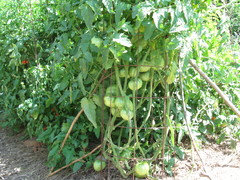
    That pic was taken on 7-11-16. You can see how much infected foliage had to be trimmed by that time of the season in comparison with nearby plants. The plant lasted until the first days of August and was removed when it had completely died. It was a cutting taken from a volunteer that started in an indoor plant into which I had thrown, what I thought, was some bad seeds.


    I suppose the spores were on the plant from the beginning. I do think though, that the plant was so 'busy' with production that it had no 'strength' to fight off the blight. In any case, the plant lived for at least 2 months with the blight. I should say though, that we did have an uncommonly dry summer.

  • 10 years ago
    last modified: 10 years ago

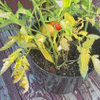
    I actually wonder whether the plant collapsed from massive nutrient deficiency. This is the original post. I may have misunderstood when mottogear described the plant. He gave me the impression that the pale foliage was a normal characteristic of the plant, but it's possible that it's not supposed to look like that and that the plant was starving to death. As discussed in the late blight thread, both nutrient deficiencies and water problem can mimic disease. I should have asked about motto's fertilizing routine.

    It's also possible that the plant both had disease AND was underfed (which happens a lot this time of year) and that it was severe nutritional deficiency that actually did it in so quickly.

    I'm not familiar with the variety. A google search indicates that it's some Burpee hybrid, and the "ice" describes the fruit color, not the foliage color.

  • 10 years ago
    last modified: 10 years ago

    After seeing that thread, but without knowing the characteristics of the variety, it does look a bit pale. Perhaps there were a few issues happening. While a VIGOROUS plant can keep ahead of early blight progression, a plant that is resource deficient is going to have less chance. Like my plant that was producing so much, plants only have access to x-amount of resources and must make do with what is available. If resources are low, they have less chance of succeeding.

  • 10 years ago

    When I first got it, it had darker leaves. But then it got weaker somehow and had lighter leaves. I first found the disease a couple days ago. Then, yesterday, the whole plant almost was infected and dried up. I use fertilizer every month and a half.

  • 10 years ago
    last modified: 10 years ago

    mottogear: When I first got it, it had darker leaves. But then it got weaker somehow and had lighter leaves.


    Leaves getting lighter is almost never a good sign with tomatoes. Knowing that now, I would say that your plant probably should have had normal-colored leaves but was just suffering from massive nitrogen deficiency, among other nutrient deficiencies.

    Every month and a half is insufficient for a container plant, especially when it's fruiting. Long-term nutrient deficiency can end up looking a lot like disease. A plant can go a long time in a deficient state but eventually will succumb, and rather suddenly. It could have needed food, or, as rgreen says, it could have both deficiency and disease and been weakened enough by deficiency for disease to kill it rapidly.

    Once they start fruiting, I fertilize my in-ground plants biweekly if using granular and weekly at least if using liquid. Container plants get liquid fertilizer in a very diluted state every time I water or I alternate between a few heavy feedings and a few flushes with lots of water.

  • 10 years ago

    Thanks.