

More warm decor
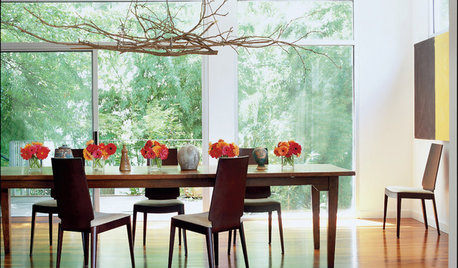
We recently saw the use of a warm color palette in Tim Gunn's apartment.
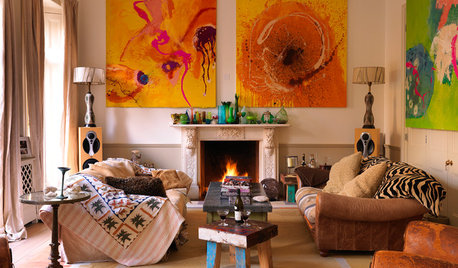
Here's Marc Jacob's apartment also in a warm palette.
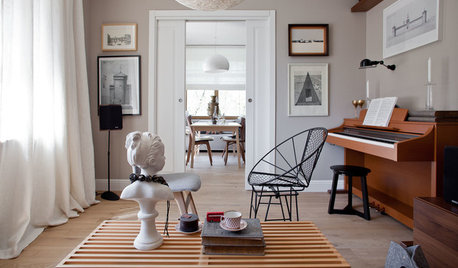
Then there's designer Rob Stuart's apartment with warm tones.
Could this be a trend?
Comments (45)
 10 years agolast modified: 10 years ago
I love the faux bamboo furniture in Mr. Stuart's apartment. Thanks for sharing!
 10 years ago
It's been around for a long time, modern classic and they recognize that.
Related Professionals
Gainesville Interior Designers & Decorators · Myrtle Beach Interior Designers & Decorators · Corpus Christi Interior Designers & Decorators · Sierra Vista Interior Designers & Decorators · Concord Interior Designers & Decorators · McAllen Kitchen & Bathroom Designers · Grand Junction Kitchen & Bathroom Designers · Victoria Kitchen & Bathroom Designers · Tallahassee Furniture & Accessories · Rome Furniture & Accessories · Covington Furniture & Accessories · Charlotte Furniture & Accessories · Nashua Furniture & Accessories · San Bernardino Furniture & Accessories · Olympia Furniture & Accessories 10 years ago
Did Traditional Home ever move away from a mostly warm or colored palette?
I like Marc Jacob's apartment a lot.
- 10 years ago
Imagine that my house could be "in". I do love it when my preferred color palate moves closer to the latest trend..it is great fun to pick up a few new accessories with ease vs the usual SEARCH. I appreciate the vibrancy of deeper colors. I am just so bored with gray/tan/beige/BLAH!!
 10 years ago
Annie, thanks for posting these! My home is painted in similar tones and I've always liked it. We are about to list the house and the agents I've spoken to told us to paint out everything white or change to a more trendy grey palette. It would cost a fortune to change everything but is doable to stick with the current colors and touch up. I think I will stick with the current colors.
 10 years agolast modified: 10 years ago
Thanks for sharing Annie! I like Marc Jacob's apartment but for the life of me can't understand why...with all the art, they made focus of this one for the fireplace. Sorry, but I find that sort of art being classed as "world class" an insult to artists around the world .
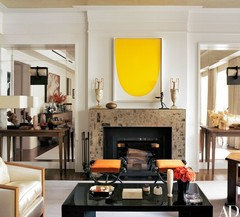
Pile on the artworks. Every room in the home is punctuated with world-class pieces worthy of the finest galleries. In the living room, a 1962 painting by Ellsworth Kelly hangs above a custom-made mica mantel and a pair of Giacometti bronze stools.
 10 years ago
The colors are warmer but I still see that most of the walls are light colors. The last time warm colors were popular I seem to remember that walls were darker and more saturated. Like any return of a trend, it will probably be tweaked in a way that differentiates it from the prior versions.
 10 years ago
I liked the Jonathan Adler's one the best, thank you for sharing these photos!
As for trend, I think warm palette was, is, and will be around always, as also cool palette:) You just pick what to be inspired with. But as long as the nature around us has it somewhere-it's a classic:)
 10 years ago
I'm sure the masses will eventually tire of greige and something different like warmer tones will rise again.
 10 years ago
I like all of those. Marc Jacobs' is as I pictured it would be knowing his fashion design esthetic. Thanks for posting!
Annie Deighnaugh
Original Author10 years agolast modified: 10 years agojterri, I agree with you about that artwork. I always think that the piece should show a minimum of artistic talent...not something I could do with a stencil.
I remember a piece they had on loan at work one time that was a big black square...it was supposed to be an homage to singer Bessie Smith. I found all the creativity in the description of the art and none in the work itself.
- 10 years ago
(greige is actually pretty warm color. I love it a lot-and I always have warm colors in my homes. It's a constant. I just prefer them. I love all the colors, but the overall feel will be always warm)
 10 years ago
That was the only piece of art in his apt. I liked! The nudes I found garish. That yellow architectural piece to me highlights the other elements in the room. It isn't so much art as it is decoration, which highlights the rest of the room and makes it into art. Well, that's my take. I liked the other apt. because it was a great example of how to maximize function and storage in a small space but make it look like a warm welcoming home instead of an extension of your office.
- 10 years agolast modified: 10 years ago
Hi Pink, it's not that I don't think there is a place for that sort of art, I just think it is almost a joke to the art world at being rated "world class". Here is one of his paintings that sold for 1.6 million. Some sold for much more.
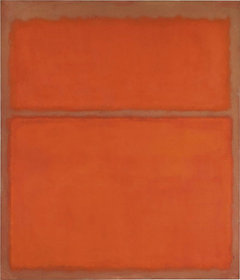
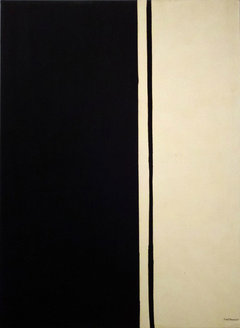
Or, this Rothko sold for 28 MILLIION!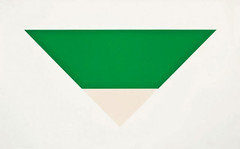 Or, this Newman at 84.2 million.
- 10 years agolast modified: 10 years ago
I admit that I don't understand the value of some modern art. Why is one work worth millions that, as justterrilynn said, could be replicated with a stencil or a ruler?
ETA: Thanks for the explanation, Palimpsest. I was posting my query at the same time.
- 10 years agolast modified: 10 years ago
Yes, and who you know. I know of a certain collage artist who fell into favor amongst a small group of women in high society. The artist is only a tic above moderate talent, and, really a fake individual. However, all through the late eighties and nineties he made an absolute killing. I recently saw a mention of this person and art so the I guess is still somewhat popular.
- 10 years ago
I had a patient once who graduated from The Academy here in Philadelphia in the same class as a very famous artist based in Manhattan, who owns an island somewhere, and has had monographs published about his works. My patient really has the same technical skills but paints in a purely religious genre. My patient was a janitor who lived in a room at the church in exchange for custodial services and had absolutely nothing. He pretty much gave his painting away, because he didn't think he should have churches pay a lot for his work.
It is definitely who you know and how you market yourself.
But I still stand behind the notion of who did it first and best, no matter how simple or banal it may seem.
 10 years agolast modified: 10 years ago
I'm going to WM tomorrow to by some paints and canvases! I can do this! :) I'll only ask 14 million dollars. Oh, and I know the local bank president and a decorated war hero.
ps...that Newman guy can't even draw a straight line ;)
Annie Deighnaugh
Original Author10 years agowho did it first and best
Well, I suppose being a first counts for something, but it's hard to discern what "best" is in some of these pieces. Maybe it's who did it first and was able to pawn it off on someone for a ridiculous price.
Reminds me of when John met Yoko over her piece "Apple"...it was literally an apple on a pedestal and she was asking £200 for it. I guess she did it first, but I'm not sure I'd pay that much for something I can pick up in a store for under $1.
- 10 years agolast modified: 10 years ago
For some, the above paintings is of course an investment but mostly it's what I think of as shallow art.
Shallow art has its place though in decorating but in my opinion it should never hold a spot of great prominence. For that, the art should speak to you and you should feel a bond to it. When people walk into your living space your art will reveal something about you, mix that impression with your decor and real magic happens. It doesn't matter if your decor and art picks fall into everyone's tastes or looks magazine worthy. If you think to much about that you will have a heck of a time finding art for you and your home. A lot of the time it's easier to pick art you love first and then decorate around that.
Although I really like Marc Jacob's home my first thought about the fireplace room is that Marc must be a tiny bit shallow.
- 10 years ago
Well, I dunno, you still didn't put the apple on the pedestal, you thought it was just something to eat.
Fluxus, which was part of the collaborative that Yoko Ono was a part of was really sort of an experiment in "anti-art".
What she was really doing, I think, is pointing out the absurdity of being able to charge 200 pounds for something so mundane just because it was being elevated as art. I don't think she really expected someone to pay that much---the artistic statement wasn't the apple, it was the ridiculous price attached to it.
The sixties was also a period of art and culture in crisis. People created things that were ephemeral, would deteriorate, would change as people experienced them. (I think Ono did a piece on the floor of the gallery that everyone walked on, for example). One artist (his name escapes me, I think I block it out) shot himself, crawled through broken glass and fire, locked himself in a gym locker for days--and filmed it all. Obviously there is a fine line between artistry and mental illness.
The other thing is that artists really do not completely control their own fame and they don't set their own prices. You can try to be as commercially successful as you want and try to set your prices however you want, but if nobody is going to buy it, nobody is going to buy it. And still, many artists become more famous after they are no longer productive, or dead.
Art will sell, just like anything else, only what people will pay for it. Peggy Guggenheim amassed much of her collection by giving people money for rent and to each. Albert Barnes's collection was criticized as junk by the established art world at the time he was curating it. Now of course the art establishment finagled a way to control it as a financial asset because it is literally priceless.
And, like anything else. the art market is self-correcting. There was a big fallout in the art market in the 1980s, and it may happen again. The other factor now, though is that there are people who have so much money that well... $1M, $10M, $50M---the differences between those sums may not be all that significant.
I think the biggest con of the American millennial art period was Thomas Kinkade, now that is the Emperor's New Clothes for sure.
- 10 years agolast modified: 10 years ago
Yes, it is a strange time in art land. Things have and are changing greatly and much of that is due to the internet. In the past one had to have their art represented / promoted by a gallery. It was literally the main goal of every artist to have their works in known galleries. Although that is still a goal it's not what it was back in the day. There are few galleries investing in promotions but still want 40 to 60%. Today's artists have to do their own self promotion, in most cases even with gallery acceptance. Today's artists can't just sit back and paint because the other part, self promotion, is almost another full time job. It is a good time to buy art you love though.
There is sort of a movement going on to do a fixed $2.00 a square inch "starting" price on original paintings that would then go up from there depending on skill and popularity. Right now though some are pricing by the linear inch at a starting price that brings more money on small works. It's all a bit up in the air right now so if you found something you really liked below those prices you should jump on it.
- 10 years ago
I think this discussion is just another level of our decor discussions. If you don't understand why someone would pay $1 million dollars for a painting of a circle, that's okay. It's not your bank account, it's not your wall, it's not your room. We are all free to choose a paint color that everyone else thinks is foolish. Others can have an opinion about it but the opinions don't really matter.
- 10 years ago
Yes I agree d_gw and I hope my opinions aren't being mis- interpreted. It's all good, investing is good. If a painting of a circle for a million dollars speaks to you, that is also good. I think what I'm trying to say (and not very well) is that your art picks (if not purely investment) should be a window into you.
 10 years ago
No question that the warm tones will come back in vogue. It is a business, after all, and god forbid that consumers should be satisfied with what they have! For me, it feels a bit too much like my parents house, which is just what my kids will say one day when they see industrial chic or anything with patina!
- 10 years ago
justerrilynn, my post came after yours but it wasn't directed towards you at all. I am really enjoying your posts :)
- 10 years ago
I think part of the equation lies in the disparity of wealth distribution. In 2012 Marc Jacobs' net worth was reported to be about $100,000,000. So whatever these paintings cost are a certain fraction of his net worth. It might be along the lines of a more typical middle class person spending a couple thousand dollars on an original painting which they well may do.
25 years ago now, I was running an errand with a friend of mine and she picked up an outfit that consisted of a jacket, skirt and blouse after they had been tailored at the store for her sister in law.
As she hung the blouse in the car she said "This is a really beautiful blouse, really well made for $90."
I said "The price tag says $900, not 90" so it should be beautifully made". Of course then we looked at the other price tags and the cost for the outfit was around $5000. (Which would be almost $9000 today).
Very extravagant, except that she realistically had at least ten times the money as the typical upper middle class person, so it was like someone buying a good dress suit for $500, which they may do.
It doesn't seem nearly so extravagant to me, when I try to put it into context of what financial situation these art buyers are coming from.
- 10 years ago
I know at least several people who highly prefer modern art, go to museums to see modern art, and to exhibitions dedicated to modern art. They don't buy modern art , but they obviously enjoy it a lot, and try to see it at every opportunity. they're not shallow; they are able to see that something that i'm not able to see.
now, after visiting more exhibitions, and looking at more modern art, i also appreciate things i didn't before. some art still never speaks to me, but i definitely became more curious about art a bit different than the one i love.
justerrilynn, of course your art should be a window into you. but it doesn't mean that all the other people who come to your place, would love to open the curtains on that window, and peek inside. some will, some won't. and maybe some people are totally fine with others never fully opening these curtains.
- 10 years agolast modified: 10 years ago
Yes I agree and maybe I should have specified "when people you like and like you" come into your home.
As far as finding art that speaks to you ... some people have a hard time recognizing the signs. For most, it's not an overwhelmingly joyous feeling akin to giving birth and seeing your child for the first time. It's more lingering and subtle. If you have looked at a lot of art but have an image of one in particular come into your mind at odd times you might want to examine that. You may want to stop and think "why"?. A lot of people will just ignore those fleeting mind images because they have it in their head that something more miraculous is meant to happen.
April, you might enjoy this group for modern art on FB .
https://m.facebook.com/groups/131397896914993?tsid=0.3209802615805406&source=typeahead Annie Deighnaugh
Original Author10 years agoFor me, it's not a function of how much money I have...it's more a function of what the price is relative to the benefit I will receive from it. I've seen some nice looking switch plates, but they were like $100 each. While I could afford it, I never pay enough attention to any switch plate to ever derive that much pleasure from them. The $1.50 from home depot do me just as well. I ignore them too.
And an expensive piece of art that is easily replicated will never give me satisfaction...instead it will irritate me as every time I saw it, I'd think, I could've done that myself for a song.
- 10 years ago
I always stand by art should be what you love, not what color goes with the room. That painting brings my ideal to a whole new level.
- 10 years agolast modified: 10 years ago
"And an expensive piece of art that is easily replicated will never give me satisfaction...instead it will irritate me as every time I saw it, I'd think, I could've done that myself for a song."
Just so.
In your opinion, because minimalist abstraction or expressionism or whatever this is, technically, has no value to you, you don't really consider it a valid artistic expression. At least it sounds that way.
And that's fine, because there are a lot of people that agree with you.
But, you couldn't easily replicate it because it's not a stencil and two colors of paint, and you couldn't do it yourself, because even if you were able to create a forgery, it would still not be that Ellsworth Kelly painting.
Yours might be a decorative object that was close enough to satisfy you, but yours wouldn't be a real piece of art. Not to someone who cares, that is.
And this is why I objected in the same way when they would create a functional copy of some sort of abstract art with a roller on a decorating show and call it art--that's not, that's a decoration.
That's all well and good. My SO worked an event at the Barnes Foundation and one of the private guests at this function came out and said "Could you get one of the drivers here now? I'm leaving because I really don't get what the big deal is"
(About the most priceless single collection of art in the world).
Great, if that's the way you feel, that's the way you feel. There are a lot of things in modern culture that people place great stock in that I know nothing about because I care to know nothing about them.
But it's rather censorious to judge what someone who appreciates something like this should pay for it. As if somehow you are smart enough not to be taken in. If you had decided to pay $100 for a light switch plate, I think you'd find it unreasonable that people criticize you for it, and say that's money that would be better spent on something of more consequence.
And, by the way, since you could afford to spend $100 per switch plate, but only spent $1.50...did you add up the $98.50 you saved on each switch plate and donate that to charity? Since you could afford it?
I don't really mean that, but isn't it annoying?
 10 years ago
I remember the craze for Robert Kinkade's paintings and many of my friends couldn't wait to have at least a print of it and I thoroughly hated all of them. That was a commercial ripoff for people who mistook deliberate false and shallow sentimentality for something worthwhile and I had to bite my tongue a lot. When I see modern art that goes for outrageous prices nowadays I think of all the starving and mistreated animals that could be saved, the environment that could be improved, the birth control and education that could be provided, the young people that could be saved from ghetto lives, the old people that could be given the caretakers they need, and on and on. Very good modern art can be had for reasonable prices. Allow the artist to make a very good living, but who needs 100 million dollars?
Warm colors provide a nurturing and comforting environment, but that doesn't mean the colors have to be cliche or the design lackluster. Many colors thought of as cool can be warmed up and that gives you endless possibilities.
- 10 years ago
Ellsworth Kelly never made $100M on this painting. It was painted 54 years ago. The people who've made money on this painting are the investors and the galleries who've bought and sold it since.
 10 years ago
Warm tone's have never been out. Terri, I agree about the art. To me it comes across as pretentious.
 10 years ago
I especially like the first and second homes. What I like about all 3 (although not so much in #3) is the rooms are mostly neutral with color added in. That has always been my preference. I adore light, neutral walls and larger furniture pieces, bed covers, etc. and then let accessories bring in the color. While blues/greens make my heart sing, you can use those colors (and yes, even neutrals) and still have a room that feels warm and cozy. The use of natural light, lots of texture and plants/greenery help accomplish that.
Annie Deighnaugh
Original Author10 years agoYours might be a decorative object that was close enough to satisfy you, but yours wouldn't be a real piece of art. Not to someone who cares, that is.
Granted there are many things in the world that escape me (including the ability to see fencing, even in slo-mo!) But just as Yoko was poking fun at the art world with her apple which any one can acquire for far less, I suspect there's a lot of baseless pretentiousness around contemporary art. Including "experts" who couldn't even tell that the work was done by a monkey or a toddler.
I've also seen a lot of art that has displayed real talent and skill, but because it wasn't marketed, it wasn't valued. (And look where marketing has gotten the presidential race!)
I remember an article by Malcolm Gladwell about wine connoisseurs where, when served the wine at the same temperature in a dark glass so they couldn't see the color, even the experts couldn't tell which was a red or a white, let alone the particular kind of wine or other characteristics. They also served them the same wine in dark glasses but told the tasters one was red and one was white. They used descriptors appropriate to each color (reds were oaky, full-bodied; whites were fruity and light) even though it was the exact same wine.
So I revert to valuing the piece of art for the pleasure it could give me -- including any pleasure I derive knowing I created it, real art or not -- not as an investment for future gain, or a name-brand piece meant to impress others or a demonstration of my financial situation.
- 10 years agolast modified: 10 years ago
I like some modern art like I like some IKEA. I also love well made furniture even though I usually can't afford it. In my mind "world class" Art is, well, real art. While it doesn't nessasarily need to be oils one does have to appreciate the time, talent and years of study that goes into a piece. First you start with the drawing, then a few umber coats (drying time), then a few dead layer coats ( drying time) and then several coats of color (more drying time) then the clear coat. It's a long process. Compare that process to two colors of fast drying acrylic. While the art may be nice...I'm sorry but to me not "world class".
Saying that though if I had say a blue boldly patterned sofa and I needed to pull a bit of blue to the other side of the room...a modern canvas with a couple of wide blue brush strokes might be perfect on a little side wall.
- 10 years agolast modified: 10 years ago
I agree, there is a lot of baseless pretentiousness about a lot of things. And art, particularly contemporary art, goes through its tulip crazes.
But I don't think that the baseless pretentiousness usually originates with the artist. It originates with the dealers and buyers and sellers of works at some point after which they've been created.
Ellsworth Kelly was exploring a form of expression that was being explored at that time. I don't think he was trying to see what sort of scam he could get away with. Jackson Pollock, once he had exhausted his own interest in drip painting asked whether what he was creating were actually paintings.
Just because a piece of art or whatever the work at hand is, reaches a level of value that is incomprehensible to most people does not diminish it's value as a work, because it's become a commodity as well.
Would this painting, or any painting be more palatable to you as an artwork if the price was $100? If you bought it for $100 would it have less meaning to you as a piece of art if it became worth $100,000?
Are the elderly people who bought Nakashima furniture directly from George Nakashima supposed to attic their now incredibly valuable dining room table because it's now viewed as a symbol of acquisitional power by some people who will pay $75,000 for a dining table that they paid $600 for?
I don't know, maybe people buy these things because they like them first, and can afford them, not necessarily just because they can afford them. Many people who collect do collect unknown artists as well. That's actually where paintings like the one over Marc Jacobs' mantle started.
ETA: Would you feel differently if the painting was a recognized realist? A DaVinci etching?
Annie Deighnaugh
Original Author10 years agoJust because a piece of art or whatever the work at hand is, reaches a level of value that is incomprehensible to most people does not diminish it's value as a work, because it's become a commodity as well.
Rather, IMO, just because a piece of art has become incomprehensible in price does not enhance its aesthetic value. The apple is still an apple.
Theodate Pope's parents had the good fortune to collect a kind of art that was disdained in it's day because they liked it...not because they thought it would become valuable. So they had a couple of Monet's Haystacks gracing their home as well as Manet, Degas, Cassatt. But had those works of art never gained a caché, I doubt the place would be a museum today.
The DaVinci is an interesting question. In Paris, while people were absolutely mobbing the Mona Lisa, St Anne with the Virgin was quite accessible. Yet in Florence, when we suffered severe art overload...even with all of that...the works of Michelangelo stood out from everything else. So I guess, yes, in some cases it would matter, but then again, I wouldn't be shocked at any price for a Michelangelo or a DaVinci as they are in fact priceless, and worth every penny.
- 10 years agolast modified: 10 years ago
The Mona Lisa is only famous because it was stolen. It was not particularly singled out for attention before that.
My argument is that esthetic value is not necessarily related to monetary value. And esthetic value is in the eye of the beholder. Just because something has no value to you personally doesn't mean it should have no value at all.
Annie Deighnaugh
Original Author10 years agolast modified: 10 years agoYes I get that, and I'm suggesting the obverse that just because others value a piece of art highly doesn't mean it will enhance its value to me. However, I do know that for some other people, simply the fact that others desire it or laud it, or the fact that it's expensive, adds value for them.
And for me, art needs to demonstrate some modicum of talent from the artist for it to hold any interest at all.
- 10 years agolast modified: 10 years ago
You won't get any disagreement from me on that.
Philadelphia (several forces collectively speaking) blocked the sale of a piece to someone who it was felt, was buying the piece as an investment and as an "attraction" for another of his investments.
But I feel like I am getting an underlying sentiment that someone who buys minimalist abstraction is doing it less because they like it and more because it's expensive and to show off. That the abstract fan is somehow more prey to the Emperor's New Clothes syndrome than someone who favors realism.
I dunno, maybe the opposite is true. The person who is buying purely to show off buying power, may instead want the most obvious pieces by the most recognized and universally accepted artists, so everyone would be aware of what they had.
In reality, I think there are going to be people in both groups.












palimpsest