Software
Houzz Logo Print
nick_ball

Shrub identification

10 years ago
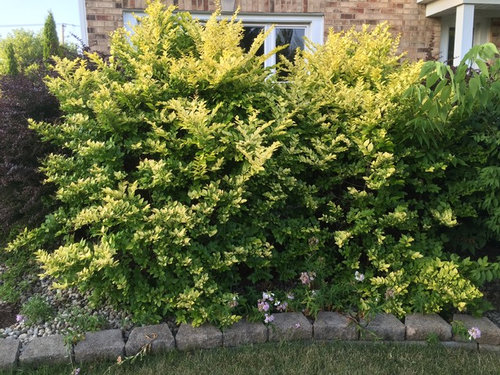
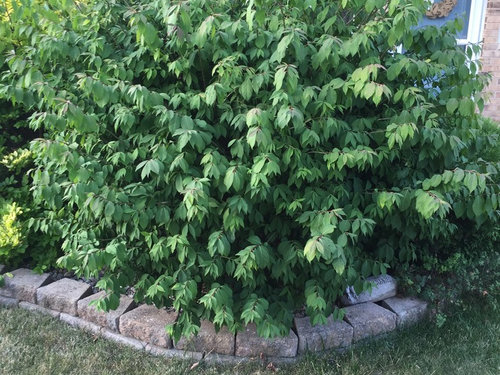
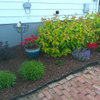
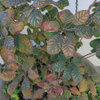
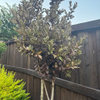
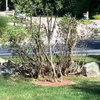
Can somebody id these for me please and let me know when the best time to trim them is? These guys are starting to get out of control and I want to cut them back without harming them.

Comments (19)

  • 10 years ago

    Big turtle, how would you suggest trimming it?

  • 10 years ago

    first one is ligustrum sinese, which should be removed. the second one is euonymus alatus, round it over when it is dormant.

  • 10 years ago

    We don't know where you live, Nick, but in much of the US Euonymus alatus (the second plant) is an invasive species.

    The Privet (Ligustrum but you can't distinguish the species from this distance) can be cut back however you like. Just cut back to a branch junction. You could even cut it to the ground and it would grow back. FWIW Ligustrums are also invasive in many areas.

    Although meatballing ('round it over') appears to be to some people's taste, it destroys the natural habit of a shrub and really only suits certain small leaved shrubs in formal situations or topiary. Neither of your shrubs is going to be 'harmed' by anything you do to them short of drenching them in herbicide.

  • 10 years ago

    "Big turtle, how would you suggest trimming it?"

    I would recommend taking the winter to learn some proper pruning techniques- where to cut, how to direct growth etc.- and do the pruning in the early spring using pruning shears and small loppers. Link below.


    Proper Pruning Technique

  • 10 years ago

    I have personal experience with removing privet, not a fun task. Drench it in herbicide as floral_uk suggested. I personally think the natural form of euonymus alatus looks weedy.

  • 10 years ago

    sharpen the shovel ... get out the sawzall with a tree blade .... and get rid of both .. and plant some more mini conifers ...


    the base problem.. no matter how far you cut them back.. they have a huge root mass .. so its not going to take long to regrow ...


    both are borderline invasive in many areas ....


    ken

  • 10 years ago

    euonymus alatus can be easily controlled within the landscape. Privet is another story. I would remove the privet and replace it with an abelia or flame azalea.

  • 10 years ago

    I don't know if Abelia can handle Zone 5a, apparently where the OP lives.

    Mike

  • 10 years ago
    last modified: 10 years ago

    "Euonymus alatus can be easily controlled within the landscape."

    As floral mentioned Euonymus alatus is invasive in much of zone 5, including here in New England and in the midwest. I don't know what Logan means by landscape (his yard?), but birds eat the fruit and then deposit seeds into the wider landscape. Driving around much of the east coast in autumn makes it clear that it is invasive since the bright red (sun) or pinky cream (shade) tones of the autumn foliage show up then. The privet pictured and the red barberry that I think I see peaking out of the left side of the first photo are similarly invasive, so whoever planted the yard had a nice eye for foliage color but didn't choose the best plants for the space or for the wider landscape.

    If it were my yard, I would cut both to the ground (along with the barberry/Berberis japonica if that's what it is), paint the stumps with brush killer, and replant with something more suited size-wise to the space and friendlier to the wider environment. If you tell us where you are in zone 5 (Great Lakes, New England, plains, etc all have different soils, moisture, etc) you will probably get some good alternative suggestions such as Physocarpus/ninebark 'Tiny Wine' instead of the barberry.

  • 10 years ago

    Japanese barberry (berberis thunbergii) and Burning Bush (euonymus alatus) will not cause a problem for the OP. The privet (ligustrum sinese) has the tendency to take over even well kept landscapes.

  • 10 years ago

    Logan, apparently you are misinformed about the risks of invasive plantings. It is not that the plants will "cause a problem for the OP" - most homeowners never notice issues within their own gardens with invasives. The real issues come when these plants "escape" cultivated/maintained gardens and invade natural habitats. And one of the characteristic features of an invasive species is its ability to disperse widely, often by seed carried by birds and other wildlife. Both the burning bush, barberry and privet have an extraordinary ability to do so, hence their inclusion on MANY states' invasive species listings!!

    The problem with invasive species is not speculation and their control costs millions of dollars annually.......generally taxpayer (yours) dollars!! To recommend to anyone to plant these species in areas where they are established as problematic is highly irresponsible!! In some cases, the examples stated above are prohibited from sale - that translates to illegal to plant, sell or maintain!!

    Please refrain from glossing over this issue or making these highly inappropriate suggestions!!

  • 10 years ago

    it is the OP's decision. I have barberries, burning bushes, autumn olives, and mimosa trees. I am not going to remove them just because they are invasive. barberry, burning bush, and mimosa are great ornamentals. Autumn olive provides food, fixes nitrogen for other (even native) plants, and it makes a good rootstock.

  • 10 years ago
    last modified: 10 years ago

    Sigh.........you buy 'em books and buy 'em books and all they do is eat the pages :-)

    It is NOT always the OP's decision!! Depending on location, the plants you list as "great ornamentals" are prohibited from sale or planting.

    FWIW, I do not believe you are knowledgeable enough or sophisticated enough to be offering valid advice on these matters. You will get a lot of disagreement from a lot of highly experienced horticulturists on this topic. And you cannot paint the invasive plant issue with a broad stroke - it is very regional in nature and various states/municipalities have quite stringent rulings. Which you apparently choose to ignore (most are listed as Severe Threats in NC).Invasive species that SHOULD NOT be planted in NC.

  • 10 years ago
    last modified: 10 years ago

    It may be the OP's decision, but I want the OP to know that if they plant them that they are making problems for other folks. You may not care, but other people may be more sensitive to the overall picture. Beyond the legality, I think most people want to be good neighbors; I don't plant invasives for the same reason I don't play loud music when neighbors are sleeping or pour oil down the sewer, neither of which cause me direct problems. They are for the greater good.

    I live on a property with woodlands filled with invasives: shrub honeysuckle, buckthorn, Japanese barberry, Autumn olive, etc., most of which aren't plants that were ever intentionally planted here. They were planted by birds from ornamental plantings before folks know enough about invasives to avoid them. We spend quite a bit of our outdoor time removing these plants.

  • 10 years ago
    last modified: 10 years ago

    The worst alien origin invasive plants take over and can be a huge headache. Out here we have way too much Irish ivy and Himalayan blackberry. And Bohemian knot-weed can be quite a bear also. One poster from back East put up a picture one time that showed Japanese honeysuckle all over everything on most of their lot. Well established infestations of dominating, woody or otherwise perennial weeds like these can require bulldozing of a site in order for quick removal to be accomplished.

  • 10 years ago

    I will leave it up to the OP. Burning bush, chinese privet, and barberry are commonly sold at garden centers. It is obviously not illegal to sell them here.

  • 10 years ago

    The invasions cannot be stopped, it's done. You can remove the invasive plants from your landscape, but they will continue to spread on our roadsides and in our forests.

  • 10 years ago

    Yes multiple different well known bad actors are still being produced and sold in quantity by growers located in regions where these are nuisance plants. New selections of Norway maple, winged euonymus and especially Japanese barberry continue to be made and put on the market, as though there was no problem at all - although I have seen some mention in promotional literature of certain dwarf Japanese barberries being fruitless.