Software
Houzz Logo Print
jemboysch

Rethinking Winter protection

10 years ago

The past 2 years I've spent many hours protecting my mopheads during the cold months. But I've come to the conclusion that more importantly, I must protect my bushes from the spring freezes or all my hard work is in vain. In my area (10 miles from Jersey shore), we get many days in mid - late winter where temps hover close to 50 degrees. This warmth stimulates the new growth and then BAM a freeze comes and kills off the new growth and emerging buds. So I'm going to focus more effort this year on covering my bushes when these freezes occur. This means more "weather watching" for me. My questions for those who may know;

Does freezing of the dormant buds damage them? If not, why am I protecting them at all?

At what temperature will new growth be stimulated?

At what temperature does damage to new growth occur (32 degrees)?

Do bed sheets really protect well enough?

Thanks in advance!

Comments (11)

  • 10 years ago
    last modified: 10 years ago

    If you are feeling thirsty for knowledge, Michael Dirr's book on Hydrangeas may well have the temps at which different hydrangeas suffer bud damage or death from cold temps. Not saying that Luis isn't right about multiple factors, but Dirr's book has information about hydrangea trials and breeding, how parentage affects progeny etc. In the trials of new plants many factors are assessed that the average gardener never thinks of.

    Luis, if you don't have it I think you'd find it interesting and I don't know half of what you know about hydrangeas.

    Personally, I don't have the time, energy or spare bedsheets to protect tender plants every year in late fall for the winter or in spring from early frosts. If it is an exceptional event, such as a late april freeze when plants are heavily budded then I may try to get to ones that are front and central to the view. More power to you!

    jemboysch thanked Marie Tulin Boston burbs z 6a
  • 10 years ago

    Oh, yes. I agree. The 2004 book is a very good one.

    jemboysch thanked luis_pr
  • 10 years ago

    I bought an enormous roll of burlap years ago and have found hundreds of uses for it. Recommended!

    jemboysch thanked cearbhaill (zone 6b Eastern Kentucky)
  • 10 years ago

    In spring as shrubs are starting to grow, sheets will only give a few degrees protection. If the temps dip down into the teens to low 20's then a sheet won't do much at all - you will need more insulation in that case. We used to this with azaleas (quilts, cardboard boxes, some sheets) which just became too much to do so no more covering for at least the last 20 years - we win most years (lose some years) with the vagaries of Mother Nature.

    jemboysch thanked hc mcdole
  • 10 years ago
    last modified: 10 years ago

    Right on. On a night that chilly, I'd rather be inside reading a book than running around the garden throwing quilts and boxes on plants!

    jemboysch thanked Marie Tulin Boston burbs z 6a
  • 10 years ago

    COMPLETELY dormant buds won't feel the effects of much of anything down to -20F, *especially* on established specimens with large root balls and many stems with large buds.

    Conversely, buds that have broken dormancy (even if you can't see it) will instantly die after a night with temps approaching 25 F for several hours. You might not see the effects of death for a week or more, at which point the buds will turn brown and rot or will remain green but will crumble in your hand (freeze dried).

    The crux of the issue here is that there ISN'T MUCH YOU CAN DO to avoid Spring freezes *EXCEPT* keep the plant completely buried in something or otherwise removed from outdoor conditions until last danger of frost has passed.

    Best chance (as I've mentioned before) is dig up all the hydrangeas you have and drag them to a bare foundation wall, mound them up, and place hay or a tarp over them, then remove and replant *after* last frost. This method is fail-proof.

    My adaptation:

    1. Leave macs that bloom reliably on new growth in-ground
    2. Dig up all other hydrangeas that don't and mound them up against a foundation
    2b. Let some of these live in large 20+" pots
    3. Move all dug-up hydrangeas (and some potted) against a foundation wall. Other potted hydrangeas can go in garages or basements *if* you have room
    4. Order bails of hay in October and mound them up around the base of the hydrangeas. The heat of decomposing material won't allow root ball freezing even when it's -20 out.
    5. Apply a tarp over the top of the pile to protect the stems from late freezes.
    6. Remove all materials after last chance of frost. The new growth might be delayed but you will be the one with flowers come July, not your neighbors.

    jemboysch thanked October_Gardens
  • 10 years ago

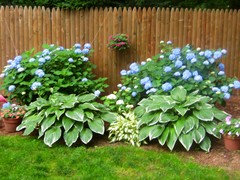
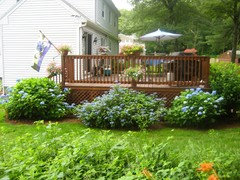
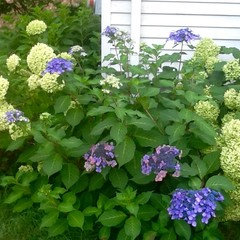
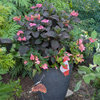
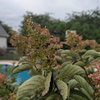
    1. Springwood love your enthusiasm but for most of us just to much work.... the last few yrs my macs (12 ES series) have been late bloomers (Sept.)...twist &shout being the best....I guess I have a choice let Mother Nature play her game or go with the whites...some pictures from 2013
    jemboysch thanked hyed
  • 10 years ago

    Hyed, great photos! Thanks for sharing. Springfield, thanks for the temperatures info. I have to agree with Hyed on digging up my hydrangeas being more work than I can commit to. I have been transferring some of my non-bloomers to containers and they've performed much better after wintering in the garage. I'll keep trying.

  • 10 years ago
    last modified: 10 years ago

    In previous years, this forum used to be frequently visited by a GW member ego45 - George.
    haven't seen him visit here in recent years but George lived in CT and
    routinely protected his vast collection of hydrangeas each winter. He, and as well as another former member, hayseedman, were very generous in their detailed descriptions of how to winter protect hydrangeas in cold climates.

    Essentially what George did was to construct loose chicken wire cages around the perimeter of each shrub
    and then fill each cage completely with shredded leaves or straw. This
    was left in place until after any late spring freezes, then removed.
    Hayseedman dug his and stored inside bags filled with leaves. Both
    shared wonderful photos of their in-full-bloom hydrangeas each year, so
    the process must have worked successfully!!

    I have included a couple links to these archived discussions on winter protection and overwintering. I will say that I am fortunate to live in an area where NO winter protection is necessary, so I have no firsthand knowledge of this myself :-))

  • 10 years ago
    last modified: 10 years ago

    Thanks Gardengal. You are fortunate. :) I think I've read both posts. I've tried the chicken wire method. Problem was when I removed the protection after what was forecasted to be the last frost date, I found white, leggy growth that I didn't feel was sturdy. Also, this method wasn't an easy task and I'm not getting any younger. Hayseedman's method is definitely more work than I care to do. . I'd like to remove the protection earlier and I guess I'll need to be willing to react when we're hit with a late frost. I'll stick with layering of leaves & pines boughs as I have the past few years (Hydrangeas in the North) except I will be more conscientious and use sheets & blankets when Spring temps drop. Springwood, I apologize that my autocorrect changed your name to Springfield.