Software
Houzz Logo Print
gle2011

Starting Over; Curb Appeal Help Needed

10 years ago
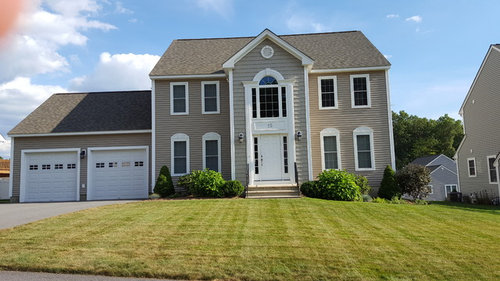
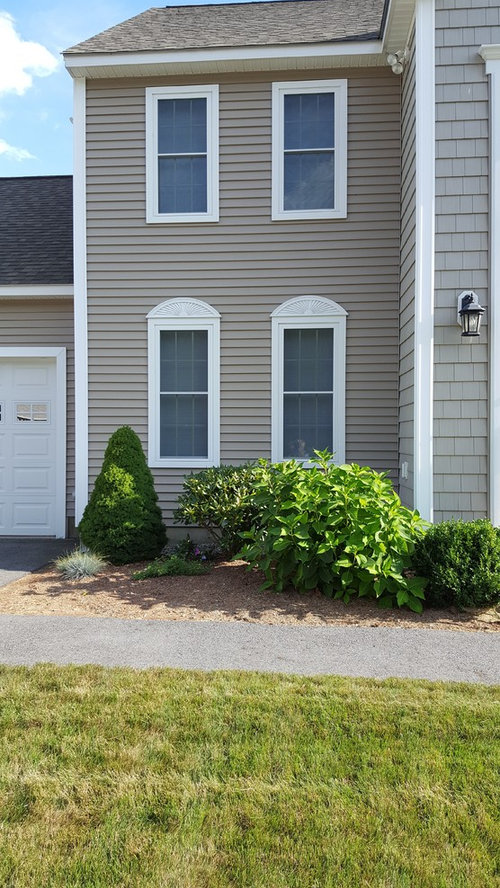
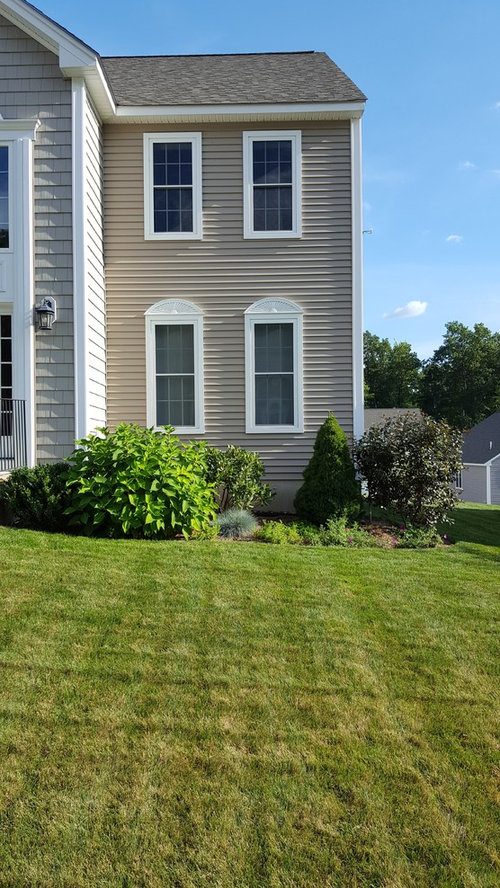
We purchased our new construction home 5 years ago in central Massachusetts zone 5 and would like to remove the builder provided shrubs and start over to create more curb appeal. The house faces north with the sun rising in the back left side and setting in the front right side of the home. The shade provided from the house shades the area from morning sun. The photos I have attached were taken at 5 pm yesterday (August 26, 2016).


The plants on the left side of the house are (from left to right ) a Dwarf Alberta Spruce, a Rhododendron, an Endless Summer Hydrangea, and a Boxwood. The same plants are on the right side with the addition of a Sand Cherry.

If any of the plants could be used that would be great; if not we'll find a home for them somewhere.

I also posted the same information in Landscaping Design.

I don't know how to link between post sites. Sorry

Thank You


Comments (27)

  • 10 years ago
    last modified: 10 years ago

    Rhododendron and Hydrangea are great plants and certainly have a place in your garden.

    Personally, I think boxwood is a terrible choice in New England. Boring and prone to disease in our area.

    Dwarf Alberta Spruce is great but may get too big for that spot. One problem you will have is your windows are very low...anything is going to get too high without trimming.

    Perhaps sky pencil holly in the corners?

    One mistake a lot of people make is thinking they have to stick all their trees and shrubs next to their house. Most trees and shrubs don't actually do well that close to a house. Think outside of the border. Put a couple trees in the middle of the lawn. Put a border of small flowering trees along the road. It looks like you have the benefit of no overhead power lines...that is *HUGE* and lets you ignore a kit of "rules of thumb" regarding size people say on this forum.

    Am I correct in thinking you don't have overhead power lines? Are there good or unsightly views in any particular direction? Is the area windy or swampy? In theory you are supposed to plant evergreens north of the house to block the north wind. (for energy efficiency). That limits your options a bit...Norway Spruce, Concolor Fir, Alaskan cedar?

    If you go with conifers, you ave to worry about spruce spider mites. If you go with deciduous trees you have to find one resistant to Asian longhorn beetles. Perhaps Tulip tree (although it may be too big for that close to a house) or Tupelo (although it is slow growing?)


    I'd advise you to look for older neighborhoods in you area to see what looks good and what looks ratty after a few years.

    If you just bought a house, now is the time to buy trees and slow growing plants. You will probably futz with the perennials and change them periodically over the years. A two year old sapling planted now will cost a tiny fraction of what a 10 year old tree you plant in a decade will...and will have a better root system making it more resistant to wind and drought. Plus you have far more options because you can buy them mail order and aren't limited to trees that can survive being transplanted at an advanced age.

    gle2011 thanked edlincoln
  • 10 years ago

    There are no overhead power lines and no unsightly views.

    We do have nice breezes in summer and it can be windy during the winter; usually from west to east.

  • gle2011 thanked NHBabs z4b-5a NH
  • 10 years ago

    NHBabs thanks for finding and re-introducing last years post, As you can see the area has become increasing less pleasant to look at and something needs to be done. So we have decided to just start from scratch. We like the idea of a tree flanking the right side of the house. Our preference would be an airy deciduous variety. Our concerns are; if we use the ES's how do we hide the sticky look before they leaf out in early spring.

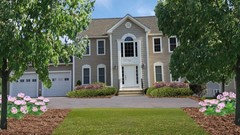
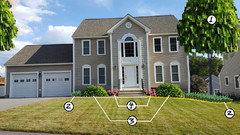
    We like the ideas presented in the two photos shown below; but we have little experience in selecting plants and trees that would provide those type of looks. And we are not sure if being only 40 feet off the street if we are set back far enough accomplish the look in the first photo.

    So if you could please recommend plants to achieve these designs and share your opinion on the set back issue it would be appreciated.


  • 10 years ago

    Photoshopped designs are notorious for being able to place plants where they wouldn't remotely begin to fit in real life. So it really helps to be able to have some idea what a plan is going to look like. Neither of those designs are realistic, but they are unrealistic in different ways.

  • 10 years ago

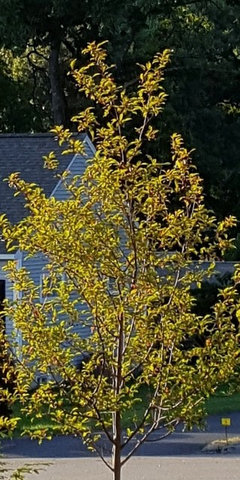
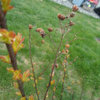
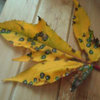
    can anyone tell what type of tree this is?

  • 10 years ago

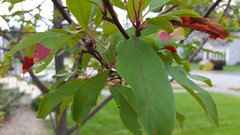
    We'd need a close up of the leaves to identify that tree.

    If you don't have overhead power lines you can plant trees pretty close to the road. 40 feet easy.

    Another tree suggestion...beech. Either copper beech or American Beech. Gorgeous but slow growing.

    gle2011 thanked edlincoln
  • 10 years ago

    Okay thanks; I'll try to post one asap.

    I am looking for suggestions for a tree to anchor the right hand side of the house.

    thanks

  • 10 years ago

    Small fruit tree of some kind, perhaps a cherry (not a good choice due to disease issues) or perhaps a crabapple. There are types of crabs that are disease resistant, but this tree has an airy look because it's young and you really don't want only a small tree like this. The chart linked gives size and shape, bloom color, and disease resistance.

    I might use a small flowering tree somewhere, but you really want a tall tree over on the right side of the house to be in scale with the house as Mad Gallica suggested. The first tree that the term airy brings to mind is Heritage river birch AKA Betula nigra 'Cully'. It gets to 40' by 70' tall, but will take a few years to get there. Perhaps Katsura or Honeylocust or one of the disease resistant elms would fit the look you want. If you like honeylocusts, consider the thornless types, selections of Gleditsia triacanthos f. inermis. Or look at a dawn redwood (Metasequoia). Any of these will need to be placed far enough from the house to have space for their ultimate width, probably about halfway between the road and the house, and you may want to consult with your neighbor since it will branch over their yard.

    Alternatively use a columnar or fastigate tree closer to the house, more like where the second drawing puts it. However, I really don't like the pruning as high as Yardvaark has made it. He feels all trees need high pruning.

    There are a bunch of world class botanical gardens and arboretums (arboreta?) in MA. Go visit Arnold Arboretum in particular since it has an unbelievable set of trees of good age to get a feel for the choices, many of which can be found at good local nurseries. If you go in September you'll get an idea of their summer look, and if you go in October you will know about fall color, and in November you can see the winter look.

    gle2011 thanked NHBabs z4b-5a NH
  • 10 years ago
    last modified: 10 years ago

    People are suggesting small trees. Without overhead power lines you have space for something big, and a house this size demands it.

    The major things you have to worry about in your area are Asian longhorn beetles, spruce spider mites, and snow.

    Look up lists of trees resistant to Asian Longhorn beetles.

    What about Tupelo, American Beech, copper beech, tulip tree, concolor fir, Norway Spruce, Alaskan cedar?

    Anyone who knows western mass know if she is cold enough for balsam fir to do well or warm enough for Alaskan cedar to do well?

    Trees Resistant to Asian Longhorn Beetle

  • 10 years ago
    last modified: 10 years ago

    I like the Tupelo, Heritage River Birch and Katsura trees. I Googled them and read the spread is 15-35 ft. Based on the tree selected; how far should they be planted off the corner of the house?

    Any foundation plant and ground cover suggestions?

    Should I remove the Sand Cherry?

  • 10 years ago
    last modified: 10 years ago

    I like the sand cherry. As far as foundation planting season...what about sky pencil holl on the corners?

    As far as ground cover...bear berry and wintergreen look good in the winter but are slow growing and expensive. Cinnamon ferns are pretty and cheap. Unfortunatey most cheat fast growing ground covers are horribly invasive.

    gle2011 thanked edlincoln
  • 10 years ago

    the sand cherry is just off the corner now..

    Not a fan of sky pencil holly; thanks for the suggestion.

  • 10 years ago

    EdLincoln - the fruit trees weren't suggestions - they were answering the ID question and addressing gle2011's apparent interest in them.

    "how far should they be planted off the corner of the house?" Take half the mature width of the tree, add 5 feet in case it gets larger than expected, and plant there, so for a 35' wide tree, about 20'-25' off the corner of the house.

    "Any foundation plant and ground cover suggestions?" I gave a lot of info and suggestions in the previous thread if you can go back to that. I was thinking more like what is along the house in sketch 1 above (ignoring from the drive court outwards) with Checkmate rhododendron for the evergreen and either your Endless Summer Hydrangeas if they bloom well or a H. paniculata for the deciduous shrub if given my preference, and then a row of perennials of some kind as a facer at the front.

    Groundcover (2) could be a perennial Geranium × cantabrigiense 'Biokovo' or similar with spring flowers and nice fall foliage color, or Carex 'Ice Dance', or a gold shade grass like Japanese forest grass 'All Gold' and under-planted with bulbs such as daffodils planted in clumps of at least a half dozen.

    Shrub (3) should be evergreen for winter interest, and I'd use an evergreen rhododendron or Mountain Laurel/Kalmia, but be sure to choose one that suits the size available so it's not too short but still stays below the window level.

    Flowers (4) could be your Endless summers or some large long-blooming perennials such as Helenium 'Mardi Gras' or a bright yellow evergreen used to provide color instead of flowers.

    I'd put a small tree off the left corner of the garage if you have any space there, and perhaps a Cornus alternifolia/ pagoda dogwood where Yardvaark put a large tree (1) or a large shrub like a physocarpus/ninebark or Viburnum.

    I'd get rid of the Alberta spruce or at least move them into the back yard, and I'd also move the purple leafed sand cherry to a less prominent spot. Both are too vulnerable to disease to have front and center.

    gle2011 thanked NHBabs z4b-5a NH
  • 10 years ago

    I would start with a paver walkway and design around that. Any kind/color of pavers, any kind of walkway: curved or straight or blocked or courtyard. Once you establish your walkway, you can create an experiential landscape as you walk through the path(s). You could add conversational areas, a gazebo or trellis, a tree swing, a child's bench, lighting, anything. You don't have to do it all at once, but the path will set the stage.

    Will you have a dog? Or go for walks around the neighborhood? Or chat with neighbors? Or will the neighborhood kids play in the front yard? It seems like there is a lot of space that could be put to good use.

    gle2011 thanked Jane
  • 10 years ago

    Thank you all; these are some great suggestions.

    I will put a plot plan down on paper to see what I can come up with,

    I'll post the plot if anyone is interested in critiquing it.

  • 10 years ago
    last modified: 10 years ago

    Just wondering if I could use zebra ornamental grasses to flank the stairs; or are tall ornamental grasses inappropriate with Colonial style homes?

  • 10 years ago

    A couple of problems with large grasses here. One is that are full sun plants. It has been discussed before that we don't really have a good feel for how much sun the front of the house gets, anything less than 6 hours will be problematic. The other issue is that large grasses get large. My zebra grass is about 8 ft tall, and at least 6 ft wide. There isn't that kind of space near the steps.

    gle2011 thanked mad_gallica (z5 Eastern NY)
  • 10 years ago

    I'll second mad_gallica's comments about grasses and their need for sun. We have a 'Gold Bar' zebra grass that does get huge.

    Another consideration with grasses is that many of the the taller ones hollow out in the center as they age and then have to be dug up, cut up, and replanted. Grasses also send out runners and spread, so I don't think that will work against the stairs.

    gle2011 thanked moliep
  • 10 years ago

    Are you on well water? Is your water from the Quabbin (Mass. Water Resource Authority) or a Town aquifer or local source ? Does your town or city have water restrictions in place right now?

    If I were starting a garden in MA (or several other parts of the country) I'd plant taking increased drought as a given. We've had less snow and less rain over the past decade. I'm not saying you need to plant yucca and desert plants; just don't buy really expensive trees that cannot go more than 3 weeks without watering.

    Here in Lexington MA, even with the MWRA (Quabbin reservoir) as a water source, we've been asked to 'scale back' water use because of severe pressure drop.

    I have a katsura and belatedly found out it does not like dryness when it dropped its leaves a month and half ago. I have several other trees I'm not willing to let die because of drought. I'm sure our water bill will be in the thousands this year.

    If nothing else, I hope this post drives home the fact that choosing landscaping materials appropriate to your climate and environment is part of design considerations.

    gle2011 thanked Marie Tulin Boston burbs z 6a
  • 10 years ago

    PS May I suggest you put your zone next to your name so readers have to go back to your very first post to find out where you live.

    gle2011 thanked Marie Tulin Boston burbs z 6a
  • 10 years ago
    last modified: 10 years ago

    Hi Marie,

    I live in Holden and as of last Monday we are under a mandatory water ban.

    Outside watering of lawn, shrubs, trees, or plants is permitted only by hand-held device, such as a hose with a spray nozzle attached. Lawn irrigation and oscillating sprinklers are not permitted. The only exceptions to a Level 3 Mandatory Water Ban are for commercial agricultural, floricultural, or horticultural uses at one, principal, permanent place of business.


    Thanks

  • 10 years ago

    Close-up of the tree asked about earlier in the post for identification

    Thanks

  • 10 years ago

    With that water ban you need to be realistic about how many newly planted trees and shrubs you can care for. Any and all trees and shrubs you plant need to be watered into november, deeply and well. As long as theres not a complete outdoor watering ban you can manage.

    However, I strongly recommend you look at drought resistant varieties of tees and shrubs. They also need careful watering for 2 years (at least) while getting established but are less likely to decline and fail when there's a drought in later years. that's when, not if.

  • 10 years ago

    I'm finding the drought apocalypse rather confusing. Is sand really that bad? It isn't something I've personally ever dealt with, but it is the only major difference I can think of between here and Boston. Here, drought doesn't have a long term effect on established plants so long as they have not been regularly watered. If they are addicted to a watering regime, they haven't put their roots where they need to in order to survive droughts, and are dependent on their human caretakers.

    Years ago, a lot of people were pushing xeriscaping hard. However, there wasn't a realization that plants have upper ranges regarding rainfall as well as lower, so a lot of the plants adapted for 20 inches of rain absolutely could not handle 60. The local Master Gardeners even had handouts on that.

  • 10 years ago

    What about a redbud tree to anchor that right side of the house?

    gle2011 thanked suzabanana (6b Boston/N. Shore)