Software
Houzz Logo Print
splinter1804

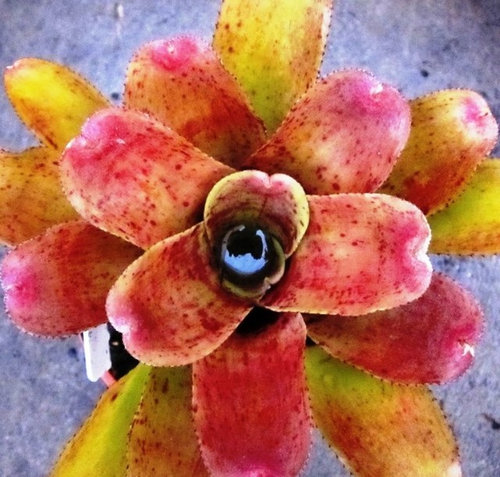
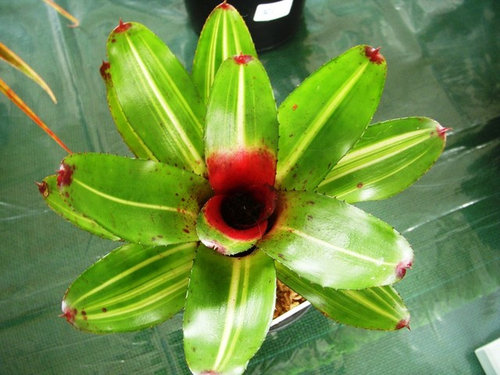
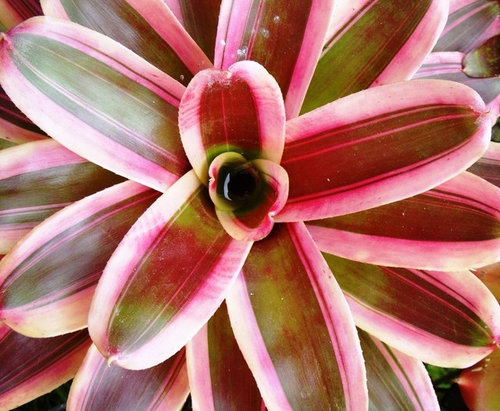
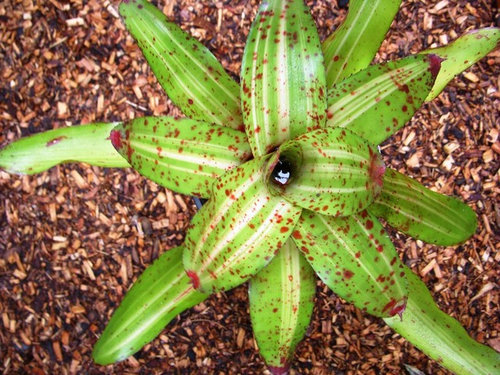
Some smaller type Neoregelias

9 years ago
Hi everyone - I was once asked, "what is the definition of a miniature Neoregelia?"

Although all of the plants shown in these pictures were classed as miniatures when I bought/swapped them, I don't consider some to be true miniatures according to show judging standards. According to these standards in our local Bromeliad Society in N.S.W Australia, a Neoregelia must be under 200mm/8" in diameter to be classified as a miniature. This is confusing, as it is possible to grow larger plants "very hard" in small pots and starve them of food, whilst exposing them to the elements, and still keep under the 200mm/8" guidelines when in actual fact they aren't really a miniatures at all.

Conversely you could take a plant which was just under the size requirements and by feeding it up and growing under premium conditions you will easily exceed the size requirements even though according to the heritage of the plant it is a miniature.

I don't know how to overcome this discrepancy, except to say that it's up to the growers to use all of their skill to make sure their cultural methods are such to maintain the required size.

In the meantime, whether your plants are large or small or conform to regulations or not, just enjoy them for what they are.

Neoregelia 'Aleena'

Neoregelia 'Flirtation'

Neoregelia 'Pepper' x 'Royal_Flush'

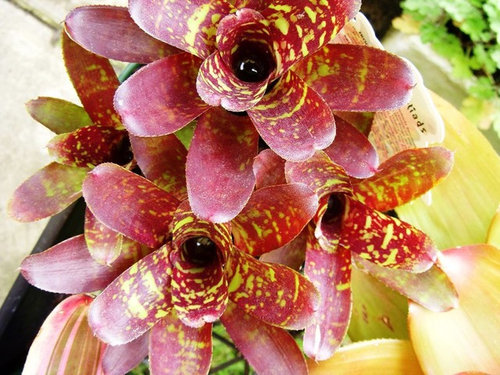
Neoregelia 'Raspberry Cream'

Neoregelia 'Reyenalla Rebel'

Neoregelia 'Pheasant'

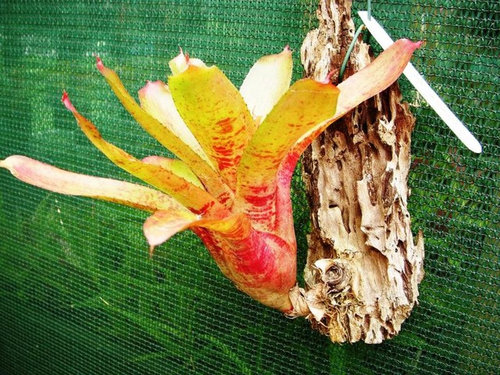
Neoregelia Strawberry Cup This plant was taken as a small pup and mounted on this scrap of "grub eaten" Ti-Tree wood just to see how it would grow, and it obviously likes it.

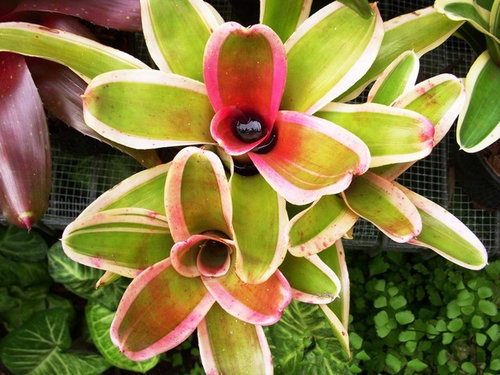
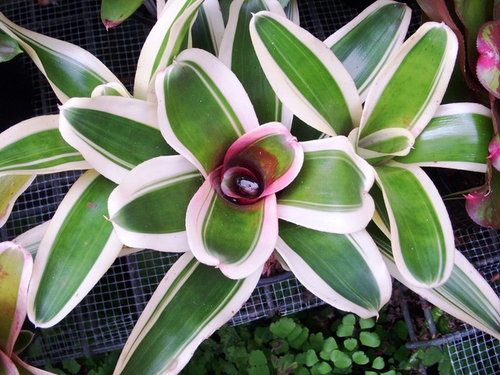
Neoregelia 'Strawberry Cream' - I use this and the next picture to show the important part light plays with the foliage colour of these plants. The plants in the two pictures below were identical divisions from the same Mother plant and were planted one year before the pictures were taken. The top plant had been grown in "good" light beneath 75% beige shade cloth on the well lit side of my yard. and the lower one grown in "poor" light beneath 75% green shade cloth on the opposite shady side of my yard.

Neoregelia 'Domino'

All the best, Nev.

Comments (10)

  • 9 years ago

    Thanks for that info! I was unaware of the existence of miniature neoregelia, but here are my two smallest ones:

    The smaller one in the first photo (taken today) is about 4-1/2" diameter on the new plants, and about 7" diameter max on the mother plant. The one in bloom (taken Aug 21) is on average 7-1/2" diameter. Some of the old leaves eventually get a bit longer.

    Not sure if these are miniatures, but that was not what I wanted when I bought them at Marina Garden Center, where I get a lot of my bromeliads. I bought them because they were less expensive than the larger ones, and I thought they would grow into the large plants that cost more. The small broms that they sell are all listed as "Neoregelia (Assorted)" with no other name. I've had them for over a year and they have had time to make pups but not grow into larger plants.

    As you said, I will have to appreciate them for what they are, whatever that is. They are good about multiplying, and so they have that going for them.

    I bought a new plant similar to your Strawberry Cream last week, but it is definitely not a miniature - at least the one that I bought is not.


  • 9 years ago

    Good things come in small packages.

    Thanks for the pix.

    tj

  • 9 years ago

    Hi everyone.

    Lars – Base on the sizes you
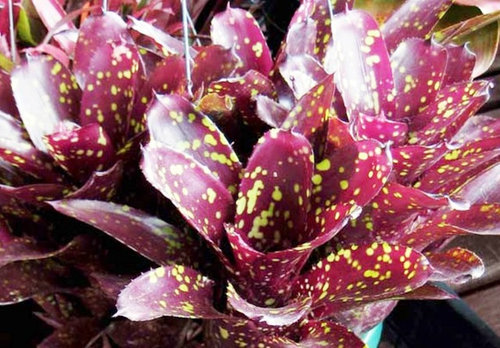
    provide, your first two plants are definitely classified as miniatures and are a couple of very nice looking examples. Unfortunately I can’t help you out with definite names but
    the plant in your first picture looks very similar to, but not the same as the
    one I posted previously called 'Reyenalla
    Rebel'
    .

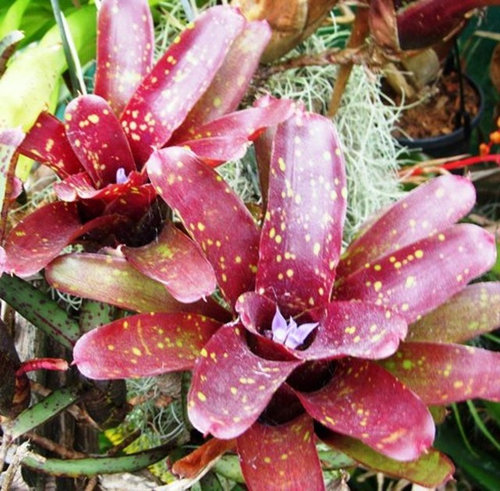
    The plant in your second picture
    is familiar to me also and could be one called Shamrock. You can see a pictures
    for comparison below but don’t be dissuaded by the amount of spotting as this
    is variable “plant to plant” as is the colour which also varies depending on
    the amount of light it’s grown under. I’m
    also posting a picture of my plant as well as one of another grower who planted
    three pups taken from different areas of his property and planted them together
    in the same basket to show just how varied this plant’s colour can be.

    See also:
    http://registry.bsi.org/?genus=NEOREGELIA&id=7032#7032

    Neoregelia 'Shamrock'

    Neoregelia 'Shamrock' - Pups taken from different growing areas


    Miniature Neoregelias show their true
    beauty when growing in a basket or suspended pot where they can either bunch up to make
    a fantastic display or “spread their wings” and branch out in all directions.
    Many of them grow on long stolons which make them even more of a feature and
    these types can often reach out some distance from the original plant.

    The other thing they have in
    their favour is that they are easier and more resilient to grow than their
    larger brothers and sisters. To give an example, a friend of mine recently
    posted the picture below on another forum and she says, “This mini has been sitting on the ground for
    a few years. I have just cleaned up the garden and lifted this up. No roots had
    gone into the ground and the pot had long gone”. The accompanying picture shows
    just what they can do with very little care.

    Name unknown but possibly one of the many Neoregelia 'Fireball' hybrids.

    In my previous post I gave what
    the expected show standards are regarding size, but when we look at the
    original species, these are mostly much smaller and many are tubular in shape
    often with a span of less than a couple of inches.

    Some grow very close
    together to form a clump while others grow on stolons, which are the woody like
    rhizomes that join one plant to another; some of which can reach up to six inches or more in length allowing the whole plant to spread a considerable distance from the
    original plant, like the plant in the picture above.

    Regarding size, there are also some
    that are positively “tiny” by bromeliad standards and one of the smallest is
    the species Neoregelia lilliputiana. To better demonstrate the size, the plant pictured below is growing in a 3” pot.

    Neoregelia lilliputiana

    The other thing that makes this
    plant different to most other Neoregelias, is the flower size and the fact they stand well
    clear of the central cup and are much larger in proportion to the size of the plant. This makes them readily accessible and popular with hybridisers which could explain why there are 124 of
    its hybrids recorded on the B.C.R.

    I’ll finish with some pictures
    showing how these miniature Neoregelias look when allowed to grow into a large colony type plant
    which hopefully will encourage more growers to try some of these little gems of
    the bromeliad world.

    Neoregelia 'Fireball' - (Note the long stolons) - This cultivar has a very interesting history, See:
    http://registry.bsi.org/?genus=NEOREGELIA&id=4351#4351

    Neoregelia 'Alley Cat'

    Neoregelia 'Mini Skirt'

    Neoregelia 'Fireball' hybrid

    Unknown miniature hybrid showing the spreading habit made possible with stolons

    All the best, Nev.

  • 9 years ago

    Hey. I love your 'Flirtation and Raspberry Cream'....any chance you like to swap a few pups,......maybe for pups off my Darth Vadar.. I posted some pics. of him today. I have a few other minis. One called 'Blueberry Muffin', that looks a lot like the plant in the second pic. that 'Lars' posted. Lemme Know. Stan

  • 9 years ago

    Hi everyone.

    Stan - What a pity we're not neighbours as I have plenty of spare pups of the above plants, however living in Australia makes it too difficult to export to you.

    All the best, Nev.

  • 9 years ago

    Great info and more great pix. Thanks again Nev.

    tj

  • 9 years ago

    Some fantastic miniatures in an array of gorgeous colors Nev! Thanks for posting. Do you ever have mosquito issues there with all the water-filled vases around? Is there something you can spray in each one to kill the larvae?

  • 9 years ago

    In love with "mini skirt"

  • 9 years ago

    Hi everyone.

    Dave - I personally don't have a problem with mosquitoes
    breeding in the vases of my bromeliads as I occasionally spray with a natural
    insecticide called Clensel and I think the repellent properties of the citronella
    ingredient keep them away.

    See: http://www.newapproach.com.au/?wpsc-product=clensel-insect-mite-killer-750ml

    I also previously found the recipe below in a bromeliad
    journal from the NZ Bromeliad Society, it was made up, used and shared around by
    a (late) member of the society. Fortunately it can now be found on line

    at: http://bsnz.org/articles/47-mosquitoes

    As well as the above, it also cleans your brom’s and
    makes them look clean and fresh and is a great product which is non-harmful to
    other garden creatures.

    I hope this is of help to you

    All the best, Nev.

  • 9 years ago

    I see here in California the small Neo's are used more and more as groundcovers. I have a clump of potted Fireball I keep moving around and around..One spot in summer gets too hot,or in winter not enough light to keep them red. So,I move them. I like them red all year.

Sponsored
AIS Renovations
Average rating: 4.5 out of 5 stars15 Reviews
Custom Craftsmanship & Construction Solutions in Franklin County, Ohio