Software
Houzz Logo Print

Comments (9)

  • 10 years ago
    last modified: 10 years ago

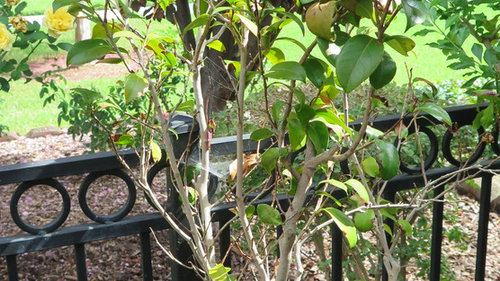
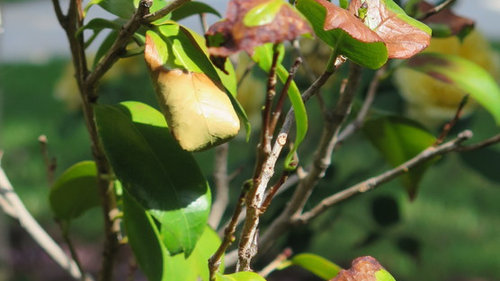
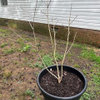
    The camellia is growing in a mixture of a E. B. Stone Azalea, Camellia and Gardenia Planting Mix and Al Tapla's gritty mix.

    Should I go back to straight Planting Mix? In light of the current condition of the camellia, should I change the potting mix now or wait until the fall or winter?

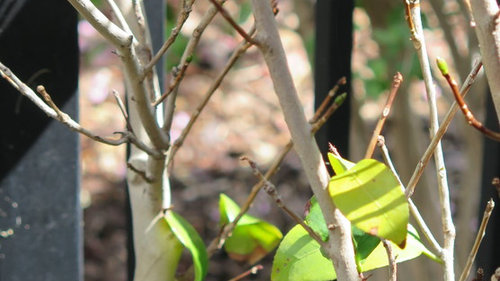
    Should I remove the brown leaves and the leafless stems or reduce the height of the camellia (it's about 4 feet tall)?

    The container has been located, for many years, under a patio cover with lattice panels so the camellia receives filtered sun throughout most of the day.

  • 10 years ago
    last modified: 10 years ago

    I am not particularly picky about any of those potting mixes. They are all close enough for government work so unless the potting mix is one that has not been replaced in many years, I would leave it alone. The best time to replace the potting mix -because it can be disruptive to the plant- iMHO is when the shrub is dormant and that means in winter.

    Leaves that are completely browned out can be cut off. Partially browned outs can either be left there is they are mostly green as they will help the shrub produce chlorophyll.

    I would not reduce the height until after leaf out in the Spring. That leaf out will give you an idea of what branches are dried out or not (although you can always carefully scrape the bark to see if the cambium layer is green).

    Japonica leaves -I do not know if yours is one- are very sensitive to sun. I have some in a protected location but their leaves get direct sun for 1-2 hours around 11am-1pm. The leaves still scorch in some summers.

  • 10 years ago

    To me it also looks like a drought stress. This pot is WAY too small for this size of plant. When did you last time upgrade the size of it? I bet it's rootbound and a reason why you cannot keep up with watering. There is no soil left to hold the moisture. So: move it to larger pot, keep well watered and shaded from direct sun. Hopefully it will recover.

  • 10 years ago

    Gary, I'm going to throw a monkey wrench into the discussion and suggest that over watering can also cause those same symptoms.

    I hope you know that the quality of your potting mix is very important; whether you make it or buy it, the growing medium must be very coarse textured and fast draining or our plants may simply fail to thrive or worse. I prefer to purchase my potting medium all ready to be used....bark fines are the primary ingredient.

    If the potting medium can't drain properly after a thorough drenching, then chances of exhibiting signs of excess moisture/lack of oxygen

    I'm not sure how anyone can determine that the pot is too small for your plant from the pictures you've shared. But have you ever root pruned it prior to repotting into the same container with fresh potting soil? Root pruning can be singularly instrumental in maintaining the vigor of any long term container plant, including woody trees and shrubs. I've maintained numerous woody shrubs for many years in small containers by employing this simple procedure.

    And Gary, I think that I spy a heavy infestation of very fine webbing in both of your images. Does your plant have a heavy population of spider mites?

  • 10 years ago
    last modified: 10 years ago

    My camellia is about 4 feet tall and it's in a 15-inch pot (holding a little over 1 cu. ft. of a combo of gritty mix and acidic potting mix). Because that growing medium drains so quickly, I water the camellia every two or three days. The camellia is under a patio cover with lattice panels so it gets filtered sun for most of the day (from 9 or 10 AM on).

    At the top-left corner of my third photo is a spider web (not the very fine webbing of spider mites).

    I suspect the plant is negatively reacting to that growing medium so, after posting this question:

    • I washed all of that growing medium from the roots
    • I re-potted the camellia in a straight potting mix that is "perfect for acid-loving, shade-dwelling plants like azaleas, camellias, and rhododendrons".
    • I cut of all of the dead branches/twigs and removed all of the completely-brown leaves.

    I realize that now (Sept 6th) is not the ideal time to be anything with my camellia, I thought it wouldn't live until winter.

  • 10 years ago

    I just hope that your choice of mix isn't some sort of sedge peat. Be sure to water on an as needed basis, not by calendar. Water thoroughly, then allow to dry out. If the mix is fast draining, repeated rainfall won't hurt it.


  • 10 years ago

    This is the new planting mix my camellia is now growing in:

    http://kellogggarden.com/products/masternursery/products/?s=acid-planting-mix

  • 10 years ago
    last modified: 10 years ago

    Gary, you said it it's been in a container in that location for years. Has it always had these symptoms in the summer? To me, it most certainly looks like leaf sun scorch more than anything, assuming you don't have a heavy hand when fertilizing and it doesn't look like it. I had the exact same symptoms in my area with a camellia (San Fernando Valley, which has the same unrelenting sun as Riverside). If your current mix is anything like E.B. stone acid loving mix, then I wouldn't say it's "Perfect™" for your camellia - why believe the silly marketing? More on that later. Depending on the variety of camellia, even "filtered" southern California afternoon sun can be too much in the summer, especially for a young camellia. A lot of bright sunlight can still penetrate through those lattice panels depending on the time of day and cause leaf scorch. There are varieties that can tolerate our afternoon sun, but the names escape me. In my area, the camellias that grow well here all get total afternoon shade either from a larger tree or are planted in a shady portion of the property. There is one massive camellia bush/tree in my neighborhood that flowers profusely in full shade (under the canopy of a larger tree).

    My camellia is now thriving after I moved it from the ground to a shaded patio area that only gets morning and early evening sun. It is now planted in a large pot of 5-1-1 mix with some gypsum not dolomite. Miracle-Gro Shake 'N Feed® Flowering Trees & Shrubs Continuous Release Plant Food is scratched into the first 3 inches of the mix. It has a 18-6-12 (3:1:2 NPK ratio) and I use it for all my acid loving plants potted in containers. It's a cheaper alternative to Osmocote which also has a less ideal NPK ratio. I also add an appropriate amount of vinegar with each watering, our high pH water can quickly creep up the alkalinity.

    Your camellia would probably prefer to be potted in something larger. When you were washing off the previous soil media, was it heavily rootbound?

    I'm wondering why you mixed the E.B. stone acid-loving mix with gritty initially. E.B. stone acid-loving mix, like most of their products, is a rip-off, since it's mostly recycled forest products, unscreened partially composted fir bark fines, peat moss, gypsum (poor execution of 5-1-1?). I have used it in pots in the past, since the bark is already aged, the mix decomposes quite quickly and the drainage becomes poorer than it already was. Hardly the " Perfect™ " mix.

    RE: watering, I would check the mix with a thin wooden dowel placed to the bottom of the pot between the trunk and the edge to see whether it's really dry before watering, not just at fingertip depth. Even in the hot summer, I only need to water every 4-5 days.

Sponsored
More Discussions