Software
Houzz Logo Print
figsinhawaii

Planting a Meyer lemon in native soil

10 years ago
last modified: 10 years ago
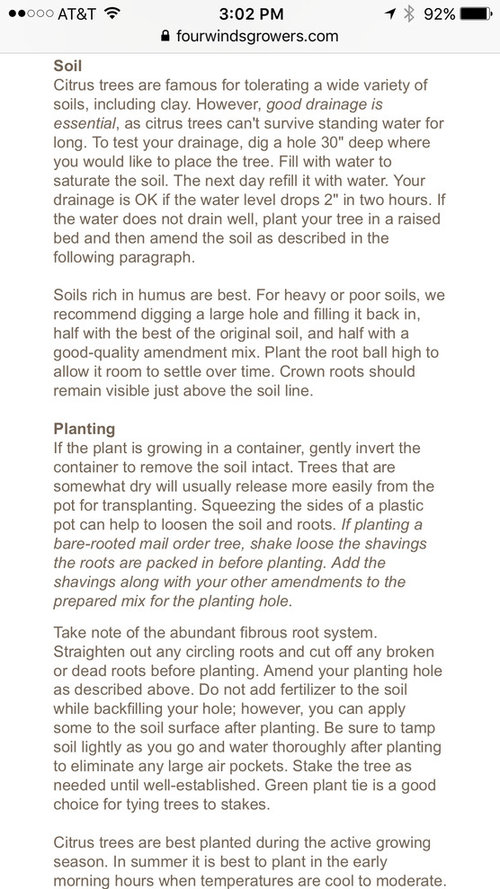
Hello. As we speak, I'm outside digging the hole for my Meyer lemon tree that is going in the ground. Last night, as I was browsing the internet for tips, I read that Four Winds recommends that for citrus that's going to be planted in heavy, non-draining soil, that a raised mound should be made. I'm getting ready to start the "drainage" test to see if this is necessary. If so, I'll be on my way to buy materials for this mound.

As I'm digging, I believe that my soil is thick and heavy, in some places, it looks like plastic because the soil is so compact. Has anyone ever build a mound for their citrus? I'm curious to whether in-ground trees are resilient enough to just adapt to its soil that it's planted in.

Here's the guidance from Four Winds regarding the soil and planting. Also, a pic of my heavy soil. Any thoughts?

Comments (13)

  • 10 years ago
    last modified: 10 years ago
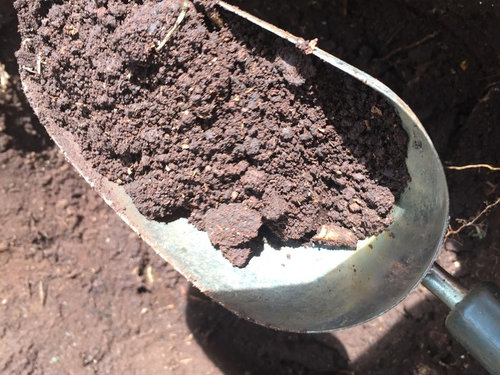
    I dug my hole (only as big as the container that the tree is in now) and seriously, at the the bottom of the hole there is earth that is SO tight and compact, it really does look like a block of plastic (the color and look of a black plastic nursery pot). Every time I dug a bit deeper, I had to break up that block of soil that was there. Once I scooped that out, there was just another layer of solid soil. It LOOKS like a rock, then I jam my shovel in and it breaks. I wish I had taken a pic while I was digging so that you could see. Right now, I'm just waiting to see if the water level will get any lower because I filled the hole with some water to see if it will drain properly.

  • 10 years ago

    to give the citrus a headstart I would dig a hole twice the size of the root ball n amend the soil . even without it would be fine but by amending u r optimizing the immediate soil condition

    figsinhawaii thanked devsense
  • 10 years ago
    last modified: 10 years ago

    Ideally (obviously), I'd like to plant the tree in the ground, "as-is," which should be determined by the drainage test according to Four Winds. I did what they said and filled up the hole yesterday. Now, today, I have to refill the hole and if it drains 2 inches in two hours, then my drainage is ok. Sigh.. honestly, I'm worried because that solid mass of soil at the bottom of the hole looks like Ft. Knox; I can't imagine anything breaking into that (the roots). I didn't want to continue to dig deeper (in an effort the break the soil down more) because I was trying to really stay within the parameters of digging the hole as close as possible in size to the current pot the tree is in.

  • 10 years ago

    With most plants if you dig the hole the same size as the container, the roots will continue to grow as if they are in the container. The roots will grow in the area of lease resistance. If the walls of the hole is the same as the walls of the plastic container, the roots will continue to grow in a circular pattern. If you did deeper than the container you will need to plant on a small mound to allow for the planting hole to settle. You do not want to plant a level and then have the hole sink and cause water to stand around the base to the tree. I have seen trees grow for 3 or 4 years and when they die and you pull them up the roots are all still within the planting hole.

    I say all this on my experiences in Texas. But I would think that the same principles would apply for all areas. If you had good loose soil digger larger than the container would not be a big deal. The soil would be loose and roots could penetrate and grow out. But with tight, hard soil it is hard to get the roots to leave the good soil from the container.

    figsinhawaii thanked garybeaumont_gw
  • 10 years ago
    last modified: 10 years ago

    Gary,

    RE: "I have seen trees grow for 3 or 4 years and when they die and you pull them up the roots are all still within the planting hole."

    Oh wow, this is disheartening! I was hoping that a citrus' roots would be strong enough to just bust through tight, hard soil. This is frustrating because my mango tree, which is planted not far away from where this lemon tree will go, certainly didn't have soil this hard and this tight in its area. When I dug the hole for the mango, it was relatively simple and I wasn't concerned about the soil at all. I really don't want to choose another spot for my lemon because I don't want to consider not giving hubby his bbq area!

  • 10 years ago

    I would follow devsense suggestion and dig the hole twice as large as the pot. If the citrus tree is having circular roots, cut slits 1/4 inch up and down in 4 or 5 places. This will cut the circular roots and they will stop growing in a circle. Try not to have shear sides. Make the hole a little irregular so when the root hits the harder soil it will not just turn and make a circle again. It doesn't hurt to dig up the soil around the area you are going to plant the tree as long as you do not go deeper. If you go deeper just plant on a slight mound to allow for the soil to settle.

    The trees that I saw die were dug with a post hole digger that was the same size as the pot, very shear sides. The roots never realized they were out of the pot. They were pine and tended to have circular roots that would choke out the other roots, but it can happen with other trees.

  • 9 years ago

    My soil is Georgia red clay. If you time it right (or wrong), you're more chipping and scraping the soil rather than digging it, because it feels like concrete. I dig a wider hole and use a mound. It helps if you mulch heavily. I prefer that the earthworms do the work than me.


    So far I have 3 in ground citrus trees that are all doing well. I mix a small bit of topsoil into my native soil, because I can't have random holes in my yard to take soil from for the mound.

    Also, you want to spread the roots out when you plant it in the ground. If you spread the roots, dig a good hole, and use the mound, you should be fine. These plants are tough.

  • 9 years ago
    last modified: 9 years ago

    Gary, my apologies, I didn't see your response on Tues. Thank you so much for your responses, especially for your very specific advice.

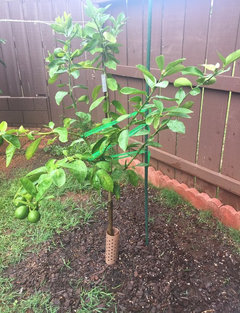
    Gary, Devsense, and Nembden, thank you all for your advice. A friend of mine came to my house yesterday (palm tree expert) to pick up a mango tree that I gifted him. Being a sweetheart, he trimmed my overgrown neem tree and just because he was in such high gardening spirits, he put the tree in the ground for me. He was just tired of hearing me second guess everything about this tree (lol... I'm definitely a citrus newbie). There's a slight mound and he assures me that my soil is good. I'm only familiar with my own soil, but he works with palms all over the island and he assured me that my soil is good. There are so many soil variations thought the islands. I won't be home 'till after dark, but I'll post a pic over the weekend.

    Thanks again everyone!

  • 9 years ago

    That is great! Please show us pics when you can!

  • 9 years ago

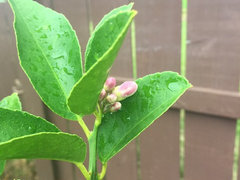
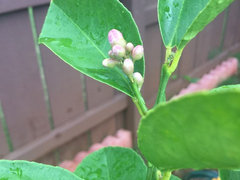
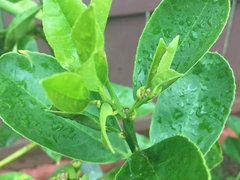
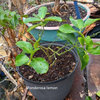
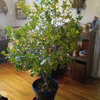
    Hello, I wanted to share an update. It has been just over 3 weeks since the Meyer went into the ground. New leaves and blossoms emerged a few days ago. Teeny-tiny signs of growth! If I could go back in time, I'd buy a much smaller tree. BUT, I do love it. This tree's branches are so long and lanky... I'll just have to wait until the rest of the tree catches up with it and hope that it bushes out a bit. Time to start fertilization for this guy. Some of the leaves look a tiny bit splotchy. Any thoughts or suggestions?

  • 9 years ago

    Your tree looks great Figs!! I can't believe so soon after planting it is already sprouting. You must be doing something right! I don't know about fertilization for in-ground trees, but others here will help you! It will be a beauty...and think of all the lemons you will have to cook with!!

  • 9 years ago

    Thanks Laura! Over the weekend, I'm going to head over to a local nursery that sells supplies. I'll see what fertilizer they recommend.