Software
Houzz Logo Print
blitz28179

Having HUGE sucess spreading bermuda with this method

10 years ago
last modified: 10 years ago

Hi Guys. Wanted to share with yall my bermuda spreading method.I am having HUGE SUCCESS doing it this way.

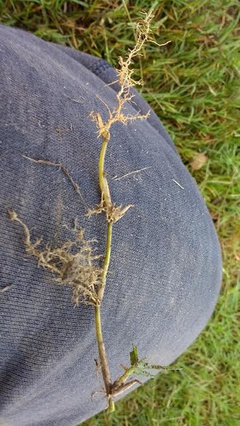
Ive got a huge mulching bed that borders my bermuda grass.I edge this bed but bermuda still growns in it.Well the last 2 years ive started getting on my knees(thats the hard part to my method) and pulling these bermuda sprouts and then taking them and digging a hole in areas of my yard that I want it to grow.I then take these bermuda sprouts I pulled and throw them in the hole and cover them up and water them in.The hole doesnt need to be deep.I use a hand hole/cultivator..Doing this has
allowed me to spread bermuda all through my yard .Theres times when I do this that after a week after I transplant that some of the bermuda sprouts will turn brown like they are gonna die, but then a week later they have new growth and take off lol.I would guess my success rate at doing this is like 97% or higher.I rarely have any sprouts that die.I always mulch the area I am
pulling these sprouts from so the soil is very rich and the bermuda LOVES
IT!!.The rhizomes just stick to the mulch and take off, plus its easy to pull the bermuda sprouts up since the mulch is lose and the ground is rich. Its pain in the butt to do it like I do it but the results have been pretty good.At
the rate I am going I figure I will have my yard(front and back) 100 %
bermuda in 2 years from now.Pallets of bermuda sod ranges from $300-$500
in my area So I am saving ALOT of money and the yard is starting to
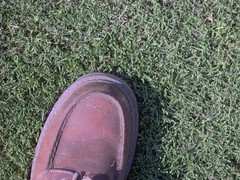
look like a first class golf course :)..I am in georgia so we have had a bad drought this summer.I have no irrigation system but been watering alot by pulling a water hose around.But the bermuda is still looking good..I also raise my bladw up pretty high as it gets hotter.My shoe disapperars almost when I walk in it.So I keep mine probably higher than the average person.I noticed alot of people keeps mowing thiers low and thier bermuda yard looks rough.In this heat i am learning if you cut it to low where it browns that it takes awhile for it come back cause of the heat and drought.I try not to make that mistake.

Like I said the only downside to my method is you have to get low ,which requires getting on your knees for long periods of times and it can be time consuming.

Another tip is to lightly mulch the area you transplanted with hard wood mulch.If golf courses knew what I did they wouldnt be using sand ,they would be using mulch to fill there bad areas! Bermuda loves mulch and mulch holds moisture for a long time.

I LOVE bermuda!!! It looks so nice and neat looking,Even when it goes dormant it looks so golden looking(almost shines for the first month in dormancy).Less work for me and my mower too.I look back at all those years I use to call crab grass my lawn.That stuff will kill you and your mower.I am addicted to walking barefooted on my bermuda.It feels better than carpet lol

Comments (37)

  • 10 years ago

    Another note I should have mentioned is my yard sits on a hill.The mulching bed I am pulling these bermuda sprouts from is a trench/edge.When it rains it turns into a water way (like a gutter).That could be another factor why bermuda loves it.I can take and make this edge nice and neat by cuting and pulling all the bermuda sprouts.But in 2-3 weeks I will have to do it again(can be over whelming sometimes).I do notice in this heat/drought it has slowed down alot though.Once I get my yard 100% bermuda I will not be doing this anymore or I could start my own bermuda sod farm hehe

  • 10 years ago

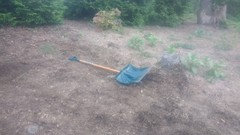
    Heres a upclose picture of the sprouts I am talking about.

  • 10 years ago
    last modified: 10 years ago

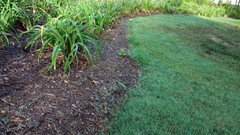
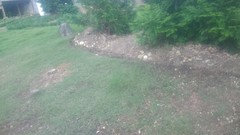
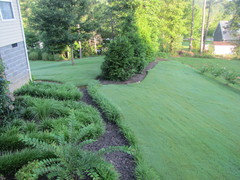
    And heres a picture of one of the sides of my bed(the other side of the bed is 100% bermuda that borders it).You cant really tell but theres an edge there .As you can see the bermuda is all in it.I took this pic on aug 11 th.

    This side of the bed last summer was nothing but junk grass with no bermuda in it ...In one year Ive been able to spread all the bermuda you see in the picture along side of the bed out to about 5 ft out.The sprouts I planted last summer I am using for sprouts for this summer.Crazy lol

    Another thing I am learning is the way I do this transplanting is it encourages more lower growth, which is what you want. It will spread fast.What I mean is you wont have to mow these newly transplanted areas I am planting until after a full year it seems.

    One other note;My water bill averages $20-$30 in the winter.In the summer it averages about $60-$70, Just to give you an idea of the watering I do.My yard is pretty big too(almost 2 acres).Most would think I have lost my mind for tackling the stuff I am doing in my yard hehehe

  • 10 years ago

    Looking good!

    What you're doing is called sprigging. Another thing you can do is get a Pro Plugger, pull some plugs from healthy areas, transplant them to bare areas and watch is spread.

    http://forums2.gardenweb.com/discussions/4153492/bermuda-plug-question?n=4

  • 10 years ago

    Great refresher on a tried & true method, thanks Randy! I think you're right about it loving mulch.

    We'll have start a write-up on proper edging methods & border construction for Bermuda soon. I've had great success this year combining a 3" physical barrier with over hanging rockwork for a one-two punch.

  • 10 years ago

    Save yourself some work. Wait til next Spring, verticut your lawn and use all that material to sprig in other areas. You will be done in a day. Your entire lawn will love you for it.

  • 10 years ago
    last modified: 10 years ago

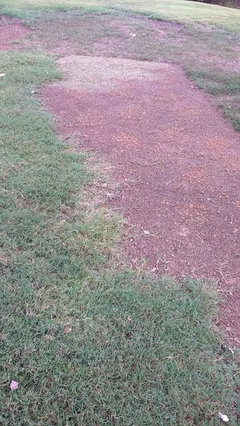
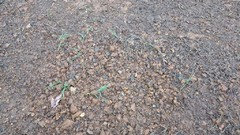
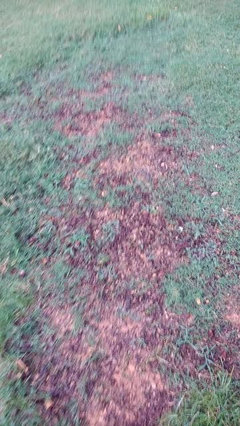
    Thought I would post some more pics.This is an area I did last week.You can see all the junk grass I am disposing of at the top and right of the picture.If you look closely you can see the holes where I planted the bermuda sprouts.The below picture is a closeup of one of the holes I am talking about..I am hoping this area will fill in by dormancy time.Gonna be close


    Heres a closeup of the same area above

  • 10 years ago

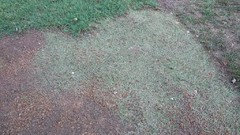
    Heres a spot I did 4-5 weeks ago.It was a small area that was taken over by crab grass.I removed all the crabgrass and dug about 6-8 holes and put in the bermuda sprouts and covered them up.4 weeks later and its about filled in.Some areas fill in faster than others.Ive got a few areas that is going VERY SLOW.

  • 10 years ago
    last modified: 10 years ago

    I also dropped my mower blade and took out alot of the top of my law.This is parts of my yard that has already been established.I bagged all the clippings and had an idea.I will now use the clippings as a top dressing for the area I am trying to sprout these bermuda sprouts.

    Heres a pic of the top I am taking off my lawn

    Using the clippings for a top dresser on these areas I am trying to establish bermuda.Hoping it will speed the process up

  • 10 years ago
    last modified: 10 years ago

    Not sure if you have ever used milorganite before or not but it can be very helpful in turf establishment and for improving stressed areas. A light top dressing of milorganite could aid growth tremendously. I have used this method on drought stressed spots and have had excellent results.

  • 10 years ago

    Thanks turflife,I just googled it and the reviews are really good for milorganite.Will be giving it a try(36 lb bag is $12.98 at home depot)

  • 10 years ago
    last modified: 10 years ago

    Not sure if you have ever used milorganite before or not but it can be very helpful in turf establishment and for improving stressed areas.

    There's nothing special about Milorganite, except it's very expensive for what it is. Any fertilizer will do.

  • 10 years ago
    last modified: 10 years ago

    As a general use fertilizer, milorganite is not economical but here are a few good points: 1) low % of Nitrogen is good for spoon feeding turf (spoon feeding = applying low rates of Nitrogen more frequently) 2) Nitrogen in milorganite is slow release 3) 4% Iron for darker green. Also I don't know of any other fertilizers that can be used straight as a top dressing, that would be especially detrimental with a traditional synthetic. To me milorganite is like granulated compost.

  • 10 years ago
    last modified: 10 years ago

    1) low % of Nitrogen is good for spoon feeding turf (spoon feeding = applying low rates of Nitrogen more frequently)

    You can use quarter or half rate with any synthetic and accomplish the same thing.

    2) Nitrogen in milorganite is slow release

    Only 60% is slow, 40% is water soluble. Same as most other synthetic fertilizers, maybe slightly higher on slow, synthetic is generally 50/50. As opposed to synthetic though, temperature has a big impact on when that slow nitrogen is released.

    3) 4% Iron for darker green.

    A lot of synthetics have iron as well, Scott's Green Max, Lesco etc.

    Also I don't know of any other fertilizers that can be used straight as a top dressing, that would be especially detrimental with a traditional synthetic.

    All starter fertilizers can and should be applied right on top of the seed. If you're talking about covering the seed in Milorganite, that would mean 4-5 times bag rate, and since 40% of Milorganite is synthetic nitrogen, it's the same as dumping a bunch of synthetic fertilizer on top of the seed.

  • 10 years ago

    I don't necessarily agree that it's the same. Synthetic will burn, Milo or other organic will not

  • 10 years ago

    I don't necessarily agree that it's the same. Synthetic will burn, Milo or other organic will not

    Only if grossly over-applied will synthetic burn. I applied synthetic at up to twice bag rate with no ill effects. If grossly over-applied, Milorganite will burn too since 40% of N in Milorganite water soluble/synthetic. It used to be only 10% synthetic, not anymore.

    Agree on the "other organic" part, corn, alfalfa, can't burn the grass with those.

  • 10 years ago

    I still wouldn't pour synthetic on a new transplant, but would not hesitate to do so with milo. I normally use this product for the purposes were discussing here, topdress rather than a light application. I bury the grass in


    question then step on it to break up the pellets. A quick watering & it takes about a week for the worms, fungus & bacteria to turn it into magic.

  • 10 years ago

    I still wouldn't pour synthetic on a new transplant

    Neither would any other reasonable human being

    ... but would not hesitate to do so with milo.

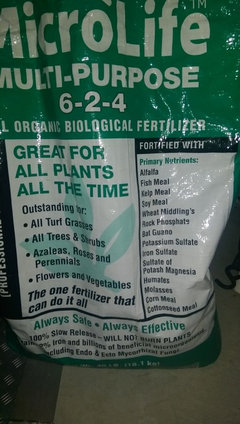
    You should hesitate to do so with milo. It's not the same as Microlife. You would need at least 8-10 times bag rate to create a topdressing with Milorganite, which would be the equivalent to ~6 lbs of N per thousand. Now if it was 100% organic (like Microlife) it might not be a problem, but with Milorganite that's 2.5 lbs of synthetic fast-release N. I'd be concerned. Again, 3-4 years ago when it was 10-15% WS you could get away with it, today I'm not so sure since they've been raising the percentage of WS every year.

  • 10 years ago

    I wonder why they're raising it...Maybe the residents of Milwaukee are devouring fewer nitrate-heavy hot dogs & swilling craft beers rather than the good ol PBR? I guess that's an uncontrollable variable when your business model is based on poo

  • 10 years ago

    Because it's cheap. Urea can be had for $0.60 per pound of N, retail (I don't know what the WS nitrogen in Milorganite is urea based, just an example).

    Ignoring other stuff in there, if you pay $13 for a bag of Milorganite and 40% of the 1.8lbs of N is synthetic, that means you are paying ~$12 per pound of organic N.

    If they stick to 90% organic N, you would pay $8 per pound of organic N. That's a 50% increase in cost per pound of organic N by using 40% water soluble nitrogen.

    They are basically "stretching" the organic N and making more money off of it. It also means you are paying 20 times more for a pound of organic N than for a pound of urea N.

  • 10 years ago

    You want a job in the 401k business? That kind of math is exactly what we get paid to do every day. Substitute "match" for organic N & "salary deferrals" for Urea N and you're dangerously close to being an actuarial consultant

  • 10 years ago

    I'm not arguing against the use of synthetic fertilizers at all or that milorganite is an economical choice for nitrogen but I do feel it has some specific uses.

  • 9 years ago
    last modified: 9 years ago

    Just an update .My bermuda is really looking good this year.I will try and get some pics soon..All those areas I sprigged late last summer had me worried late february as I couldnt see any of the bermuda I sprigged.Well fast forward to today.All the areas are now visible with bermuda and spreading :)

    I would guess I sprigged close to a quarter of an acre of my yard last summer.Planning to do the same this summer on my pursuit to have my yard (front and back) 100 % bermuda without spending a dime

    Only thing I need to work on is weed control in the winter months.I had to do alot of uncessary work on weeds that took over in feb-march.I dont want to do that again next yr.Some of the worst areas was areas where I sprigged last summer.

  • 9 years ago

    I know this is an old thread, but if you want to use milorganite type products, consider that different regions of the country often make their own version. In NJ we have Oceangro, which is very similar. However, 90% of Oceangro is slow release. It is also much cheaper than milorganite.

  • 9 years ago
    last modified: 9 years ago

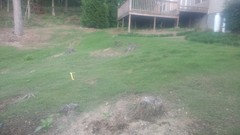
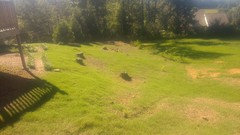
    Sprigging my back yard .This has been my project since April..I almost have my whole back yard covered with bermuda. As you can see last fall I had alot of trees taken down..I plan on removing the stumps over the winter time.Heres some pics of my progress


    This is a spot I just sprigged

  • 9 years ago

    Very nice! I've been relocating celebration sprigs into my 419 all year as well, but not with the same success.

  • 9 years ago

    Heres another photo from another angle..My property line runs at an angle..I also had success in transplanting about 8 crepe myrtles.They was suckers that started growing in places I didnt want them to grow in the front yard.I dug them up while getting much of the rootball as I can.All of them dropped thier leaves but in about 4 weeks they came back with new leafs and growth.You can see them in the back ground, on my property line


  • 8 years ago

    Update!


  • 8 years ago

    Nice pix. I'm not sure how I stayed out of the discussion 2 years ago, but kinda glad I did now.

    Nice to see with the stumps gone. I have some questions.

    Where do you live?

    What did you do that was the most successful part of this project?

    Have you blocked the bermuda from creeping into the beds?

    What fertilizers are you using and when?

    Did you do anything to level the soil as you went along?

    What is your final mowing height?

    Here is an ancient picture from my Gardenweb archives. I believe the poster was querkyquercus.

    He mows at 5/8 inch high. He describes it as walking ON the grass, not IN the grass. But he went to a lot of trouble to level the surface so he never scalps. Also, and maybe this is obvious, he uses a reel mower to get it that low.

  • 8 years ago
    last modified: 8 years ago

    I live in North georgia near dalton

    I would say removing the trees was the most successful thing.Its probaly something most people wouldnt have done, being that they was so close to the house .

    I havent completely blocked bermuda from the beds but have a technique that seems to be working pretty good..The beds in the middle/back where the green spiral trees(thujas) are, I used a step edger and edged both sides and went pretty deep.Probaly 4-5 inches.The bermuda still crawls in there but being so deep it never grabs/roots..I take my weedeater every two weeks and edge it by turning it upside down and it cleans it up nicely.I can let it go for 3-4 weeks and have some really nice sprigs to plant somewhere else.I got one more spot in the front I am currently sprigging and I will have my whole yard,front back and side 100 % bermuda.The bed closest to the camera I am using monkey grass as a border and its really doing great also..All the monkey grass was divided .I would take 1 big clump and make 5-8 smaller plants..The monkey grass was divided a year part.Thats why some plants are bigger than the others..The smaller monkey grass plants, the bermuda will creep through in that area but not to bad.

    So far this year I have used a 10-10-10 and miloganite(used these together as a cocktail) as my first fertilizer when the bermuda was about 75% green..6 weeks later I applied a 45-0-0, I am about to apply a 34-0-0, this weekend.

    As far as the leveling goes I do have alot of uneven spots.I did do some leveling.Like the stumps, I removed all the stump material and added dirt/compost in those holes..I do notice I have some dips in some of the areas where stumps was removed , but nothing to bad..One of the reasons my bermuda looks so good is because I mow my bermuda really high..Been doing it this way the last 3 years and REALLY happy with the results as you can see by the picture..Mowing high I can get away with unlevel spots without creating scalp marks..I also think that mowing high has really contributed to all the coverage ive been getting.The back yard filled in so FAST!

    Current mowing height is 3 1/2 inches,I will be at 4 by September.

    I think mowing low is overated..So much more work.You have to buy an expensive reel mower, all the $$$ you have to spend to keep it level, you have to mow more frequently.If I had a 5,000 square ft lawn I may try it but I got over 25,000 and live on a steep hillside.Mowing at 3 1/2 inches I mow every 7-9 days depending on rain.If you walk in my grass your shoe almost disappears. It still feels great when you walk on it barefooted this high.

    Only downsides I have found mowing this high is 1. When spring comes I have alot of clippings when I scalp it down to 1 1/2 inches.I dont do it all at one time but bring my deck down slowy for a month leading up to when it starts coming out of dormancy. 2) I had two high traffic areas over the winter.When it goes dormant it will lay down and not stand back up at this height..Right now I can walk on it but it quickly stands back up

    Let me know if you have any other questions

  • 8 years ago

    Also I forgot to mention ,The back beds where I used a step edger that is also like a gutter.If you notice that my downspout is lined up with it so when it rains it comes out the downspout and flows down that bed edge..It actually can flow 3 directions, to all 3 edges I made with a step edger...In heavy downpours it really gets to flowing good because of the slope.Although it usually flows down just one on a slow rain but have seen it when it rains heavy flowing down all 3 edges which looks kinda cool.

  • 8 years ago


    Good info. Thanks.

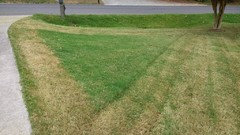
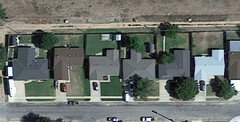
    There is a bermuda lawn in Pampa, TX where the guy mows
    high. It is clearly THE standout lawn in the entire neighborhood. I
    wanted to talk to the guy but he was hard to find at home. Here's a
    picture. The lawn to his left is also bermuda, but it is mowed low...and
    apparently not watered deeply and infrequently.


  • 8 years ago

    dchall that photo looks like a game of Tetris. :o)

  • 8 years ago
    last modified: 8 years ago

    @Dchall, We had a severe drought here two yrs ago and my lawn stayed a nice green color the whole time at the 4 inch height.The majority of other bermuda lawns in my area during that time looked really bad.

    98 % of lawns in my neighborhood and within a 2 mile radius of me are crabgrass lawns right now.I have no competition

    This is the time of the year when people keep mowing their bermuda lawns low instead of raising their cutting height and their yard will have more scalp marks than green.Cant stand to see that.When I mow mine and I get a scalp I get heated hehe

  • 8 years ago

    Very helpful. Thanks. There must be some midrange mowing height where bermuda becomes leggy and opens up to weeds.

  • 8 years ago

    I've been saying it for years, there is not one perfect height for Bermuda. It is a progression from low to high to manipulate the stem to leaf ratio. High cut works fine as long as you do it the right way!

    Looking great Randy!