Software
Houzz Logo Print
bossyvossy

Which is more likely to survive flood?

10 years ago

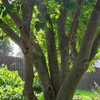
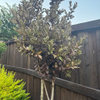
Holly or chamaecyparus? It is not a flood prone area in my yard but when it rains it is the first to get soggy. It has excellent drainage but still i'd like to know which of the above would be more likely to survive wet feet for 48 hrs or so

Comments (17)

  • 10 years ago
    last modified: 10 years ago

    Can't speak for Chamys, but when you are talking hollies, you will have to specify which ones. Some do not do well in overly-wet soils, like any of the so-called Blue hollies.

    You'd probably want to shoot for hollies that are used to moist or swampy conditions, such as our native yaupon, glabra, cassine or opaca. Some hybrids of those, such as the x attenuatas, should be able to take extra water as well ('Savannah', 'Eagleston', 'Greenleaf,' 'East Palatka').

    Are you looking for a tree or a shrub?

    Clemson U. - Plants for Wet Areas

    For other ideas, there are the magnolias, and of course Southern Wax Myrtle.

  • 10 years ago

    Dave, that is a great link, thanks. Interesting a number of the plants they list are planted in this particular bed and doing well. It isn't a bog or even wet, but I'll say this is the last bed I'm concerned about in times of drought. Conversely, we've had two historical floods in my area and as said before, water receded in 24-48 hrs. I had no losses due to wetness. So it appears that so far my plant selection has been bang on for this bed.

    The Ilex is Ilex vomitaria Scarlet's Peak. The only Ilex I tried growing before was the sky pencil and it was a joke b/c it hates clay, even amended clay, soil. Scarlet cost me $$ so I want to make sure I plant optimally.

    As the the chama. It is Limerick, a golden one.

    With proper planting and care, both plants should do well in Houston. But one spot can get wetter than the other.

  • 10 years ago

    48 hours.. how many times a year ...


    im thinking that in self described well draining soil.. i dont really know what difference it would make.. that the soil is wet for 2 days ...


    e.g. in my sand... it would be dry in a week regardless ....


    ken

  • 10 years ago

    Ken, I'm begging you. can you PLEASE go slower, I know and appreciate you know a lot but it is hard for me to understand you. I so enjoy and learn from your postings but add a few more words so I can learn more, understand you better, pretty please, sugar on top.

    Are you saying that sandy is sandy, so I need not worry about excessive rains drowning either plant?

    we had two rainy spells this year that covered this particular bed. Normally, and most of the year, I have zero water standing. However, there is a lot of construction and we've been told a lot of houses that were not in the flood plain before, are now part of the flood plain, mine included.

    I want to hear from you. thanks.

  • 10 years ago

    i guess part of the issue is that.. i am not agreeing with your use of the term 'flood' ... for what is happening ....


    you have some standing water for a rather short period ... its not like you are needing to start building an ark ... lol ...


    ken

  • 10 years ago
    last modified: 10 years ago

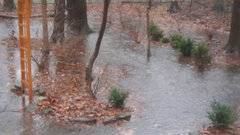
    we have flooding in heavy rains and I don't think it's killed anything..late winter then early spring..still trying to figure out a solution..at least it's not getting to our house..

  • 10 years ago

    the holly

  • 10 years ago

    i used to have standing water at the old house.. at snow melt ... when the ground hadnt yet quite thawed ... might last a week ... and then boom.. one day it was gone ... when the soil thawed ...


    i often wondered if it mattered.. that the plants were dormant at the time ... and surely there wasnt going to be much of any soil diseases going on with 33 degree soil .. lol ...


    do understand ... i can discuss the issue of drainage ... but i have no clue what it might all mean in z9 TX .... as noted above .. soil temps are never going to be what i have worked with...


    nichols.. if it isnt broken.. what solution are you looking for????


    bossy.. i guess my bottom line.. to your original question would be.. one of each .. and see what happens ... besides .. as a collector.. who needs more than one of anything.. lol ... and perhaps therein lies the rub ... you are thinking about a monoculture investment.. and worried should you choose the wrong plant ... diversify.. and cut your odds of devastation ....


    ken

  • 10 years ago
    last modified: 10 years ago

    ken..would like to "shrink" the surface area by digging a swale..or trench..maybe more than one..to collect the water..there is no escape route for it..we have so much work already..just haven't done it..also no heavy equipment..too many trees..the sellers made no mention of it..checked off "no drainage issues" in a disclosure..hey I read you're a lawyer..go after them for me haha..just hope someday that a potential buyer wouldn't be turned off..we won't lie..it's actually a wonderful setting..

  • 10 years ago
    last modified: 10 years ago

    Thank you Ken for coming back. I understand better now. I continued researching and it appears that unless under water for a week or longer, plants will recover, esp. ones that thrive in moist, easy draining. BTW, I do have one of each.

    I will plant that chamaecyparis in this area and hope for the best. The holly was planted in location where standing water is not an issue. I think both plants will be fine.

    thanks all for your input, It is greatly appreciated.

  • 10 years ago
    last modified: 10 years ago

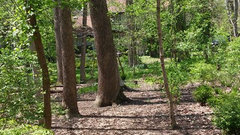
    bossy, that looks like a dappled shady spot. If I had a spot like that - semi woodsy -- and wanted an evergreen screen that could take lots of moisture, I'd probably consider Agarista populifolia. (Agarista = Leucothoe) also known as Coast leucothoe, Fetter-bush, Florida leucothoe. 8-12 ft. high, arching branches. A beautiful US native.

    I have one but it is in dry shade and will never get quite enough moisture where it is. Best used where it has room for the branches to arch out naturally.

  • 10 years ago

    Dave those aren't my pics, will ck out leucothe

  • 10 years ago
    last modified: 10 years ago

    Oh, you're right! Well, is your spot sun or shade? Agarista is not fond of sun.

  • 10 years ago

    lots of sun. I have seen agarista around this area but we've never been formally introduced. I planted the chamaecyparis in the easy drain but low point spot and the ilex in spot less exposed to flooding. well, not really flooding as all drains within 24 hrs.

  • 10 years ago

    Only Chamaecyparis thyoides is tolerate of poorly drained wet soils. The other Chamaecyparis appreciate moist but well drained soils (virtually all of them are native to higher rainfall mountainous regions).

  • 10 years ago

    I should be ok then, thanks