Software
Houzz Logo Print
justincaseme

Kikuyu AZ-1 Lawn weed control

10 years ago
last modified: 10 years ago
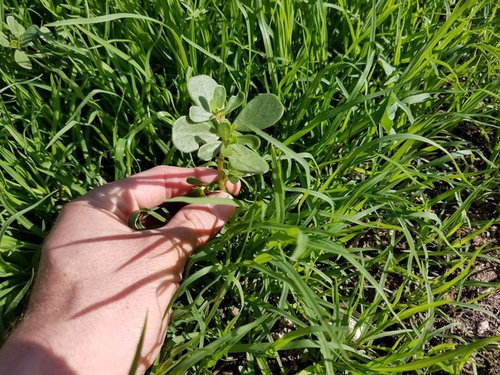
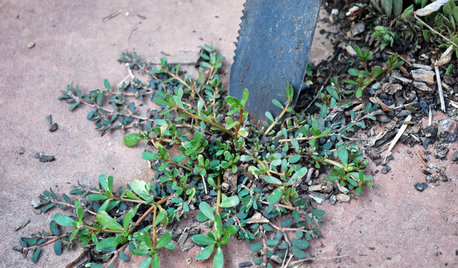
I recently planted a brand new lawn from Kikuyu AZ-1 seed. After 3 weeks, the new grass is beautiful - thin tall blades and a rich green color. I made the mistake though of only applying one treatment of herbicide to the ground before doing the planting. My lawn, particularly the backyard, is now infested with the weed Common Purslane (as my old lawn had been before). Whoops.

Kikuyu lawns in Southern California are rare, and the AZ-1 variety is even rarer. None of the locally available herbicides mention being safe for Kikuyu Lawn's. I found one online that is Kikuyu-safe but it's only sold in Australia.

Does anyone know of an herbicide, readily available in Southern California, that I can use to kill the Common Purslane (and broadleaf weeds), while not harming the Kikuyu AZ-1?

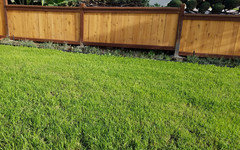
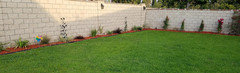
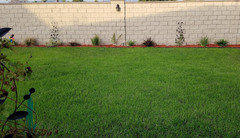
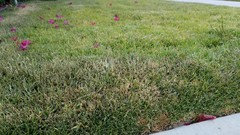
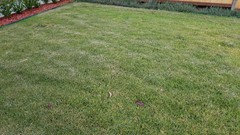
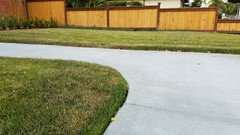
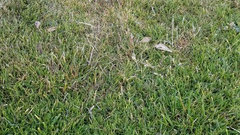
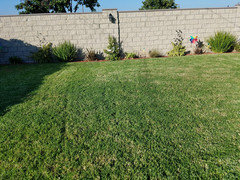
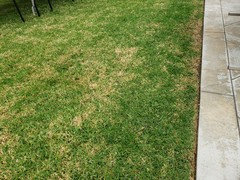
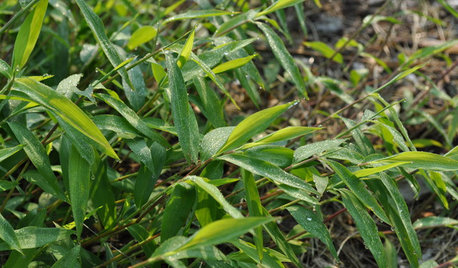
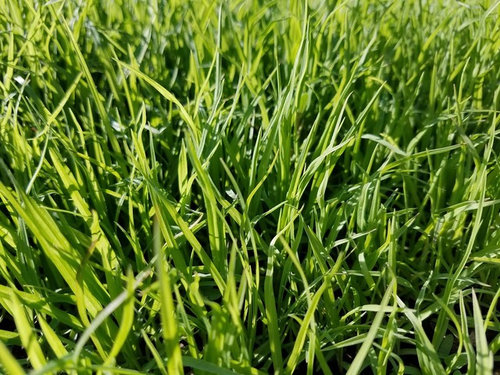
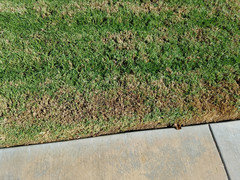
By the way, when I was first researching Kikuyu AZ-1 I had trouble finding good photos of it online. Most information on the web is about the Whittet variety. Here are some up close photos of AZ-1 from my actual lawn.


Comments (22)

  • 10 years ago

    I haven't seen any other Kikuyu AZ-1 lawns in my area. Thanks for the suggestion on Dismiss South.

  • 9 years ago

    Would you mind taking another set of pictures in the shade or under the clouds without a flash? There's too much contrast in your pictures with the sun shining. I just want to see a Kikuyu lawn.

    What distinguishes AZ-1 from common Kikuyu?

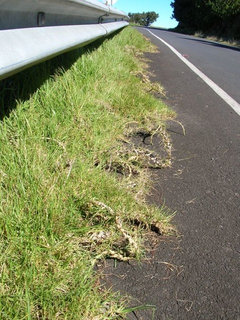
    Back in the late 60s and early 70s, the California department of ag was hydroseeding kikuyu along side of the freeways to control erosion. At the same time a different branch of the same department was spraying to kill kikuyu along side freeways as an invasive species that grew out onto the roads causing a loss of traction.

  • 9 years ago
    last modified: 9 years ago

    From what I've read, AZ-1 was bred to be slower growing than the standard Whittet variety, has thinner blades and a slightly darker hue. It is definitely a lighter green than my neighbor's Fescue. To my eye it's pretty and vibrant; if someone is expecting dark evergreen though then this would not be the lawn for them.

    It's November now as I write this. Having had the AZ-1 lawn for a couple of months it's proven to be fast growing compared to others I'm familiar with. It needs to be mowed weekly even now during the fall. This is a strength I believe as it repairs very quickly. It's easily one of the healthiest lawns in my tract, and much, much perkier than the Fescue or even St. Augustine sod lawns nearby, which may have gone dormant.

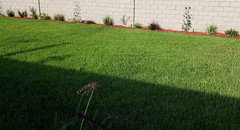
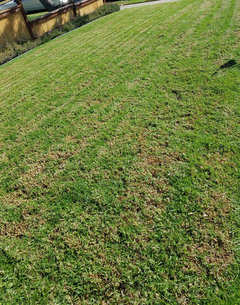
    Here are some additional pictures.

    dchall_san_antonio, per your request, here are some photos taken in the early evening.

  • 9 years ago

    That looks nice! Did you ever find a suitable herbicide?

  • 9 years ago

    Thanks for the shady time pix. Where do you live in SoCal? I'm taking notes for future reference.

  • 9 years ago

    Update - I've used a product on the front lawn called "Ortho Nutsedge Killer Ready-to-Spray". It's the only one that I can find locally (Lowes) that specifically says it is okay for Kikuyugrass... though no mention of AZ-1, of course. I applied it three days ago and the lawn is looking very yellow to my eye. I'm a bit worried. Is this normal? I've never used a weed control spray like this before.

  • 9 years ago

    Yeah, it's normal. The ortho product is pure sulfentrazone so it causes orange or yellow tinting of the grass for a few weeks. Great stuff though

  • 8 years ago
    last modified: 8 years ago

    Nice writeup. How did things turn out? How did your kikuyu respond to the ortho nutsedge product? I have an older Kikuyu lawn in north SD County as well and am looking to spray for spurge.

  • 8 years ago

    sjcorrea, would you mind starting a new topic for your kikuyu spurge issue? And if you could post some pictures of it, that would be great. I think of kikuyu as possibly the worst, most invasive, grass ever created. Clearly I need more information about its use in a lawn.

  • 8 years ago

    My in depth Kikuyugrass lawn renovation is being documented on the lawn forum. I am curious about justincaseme’s success with the herbicide he outlined above.

    http://www.thelawnforum.com/viewtopic.php?f=2&t=1320&p=24189#p24189

  • 8 years ago

    Hey, dchall_san_antonio and sjcorrea, yeah let me see if I can post some additional photos this weekend and provide an update. I'm really interested in this topic, and there's so little information about Kikuyu AZ-1 on the web that I feel like it's well worth continuing the discussion.

  • 8 years ago

    Awesome. My kikuyu is 20 years old and pretty much pushed out every weed except along the edges. I’m looking forward to your update and any learnings you have made over the summer.

  • 8 years ago

    sj, after reading your topic on that other forum, I have renewed confidence that kikuyu is still the worst and most invasive grass ever created.

    justin, your lawn looks a lot better than sj's lawn. I suspect he has a common variety of kikuyu while your AZ-1 is better behaved. Let's hope yours doesn't revert.

    What is your mowing height?

  • 8 years ago

    dchall, thanks for such a helpful and constructive opinion. Hopefully you could add to the main scope of the thread and provide some insight into Kikuyu weed control??

  • 8 years ago

    sj, if you had the wild kind of Kikuyu, I would suggest spraying Weed-b-Gon on the broadleaf weeds and any grass killer that does not contain DSMA or MCPA on the grassy weeds. Read the labels on WBG because the chemicals sometimes contain MCPA. But even if the Kikuyu might be damaged, it would return quickly from the surrounding undead grass. Since you have a hybrid or at least a better behaved variety, I would test the herbicides carefully. I know back in the late 60s and early 70s the California Department of Highways was spraying the Kikuyu along side the highways to kill it. I don't know what they were using or if they were successful.

  • 8 years ago

    One year later, latest on my unusual Kikuyu AZ-1 lawn:

    • Back lawn was experiencing the most weeds so I did another application of "Ortho Nutsedge Killer Ready-to-Spray" and, a few months later, an application of "Scotts Turf builder weed and feed". Both products caused the Kikuyu to yellow. It was pretty concerning at first however, the weed count dropped significantly and the Kikuyu recovered to its' pre-spraying condition after several weeks, both times.
    • Front lawn began getting large swarms of tiny white flies. I sprayed the lawn with "Organocide Bee Safe 3-in-1 garden spray". This seemed to reduce the white flies considerably and didn't have any noticeable affect on the grass. It's been about 4 months and recently the white flies have returned. Likely time to re-apply.

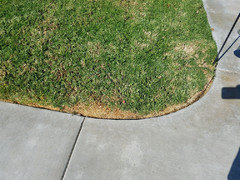
    Things are going just OKAY with the Kikuyu. Check out these photos. In both the front and back, I'm seeing more and more browning. Is this to be expected? It was pretty green in the Spring but, seems to have a lot of yellowing the rest of the year. Considering the climate of Southern California and, the regular watering, I would have expected the Kikuyu to be green for most of the year. Is this just how Kikuyu works or do I need to do something different to maintain it?


    Related, I don't know if this is a factor, but very early in the morning, say 5-6am, I notice tiny black slugs on the grass. Could they be causing the browning?


  • 8 years ago

    I would stop spraying the flies. They do no harm, but the spray does.

    Slugs can be killed literally overnight by applying ammonium sulfate fertilizer at the bag rate. Don't think they could cause the browning. Do the grass blades look chewed?

    More specifically for the browning, it looks like too much water. What is your watering schedule? How often and for how long do you water?

    Also you never answered the question as to where you live? SoCal is not enough info. SoCal has every zone and soil condition, so location makes a difference if we're helping people.

  • 8 years ago
    I'm in the Whittier area. That's a good point about watering. I have had it set to 10 minutes at 6 a.m. for the last couple of months.
  • 8 years ago

    That's the way you water fescue in SoCal. Kikuyu in Whittier should go for 2 weeks, easy, with no irrigation in the heat of summer. The reason the state used it in the roadways is that it needs minimal care. Here's the basics of watering for normal turf. With kikuyu you should be able to stretch it out longer.

    • Watering: Deep and infrequent is the mantra for watering. This is for all turf grass all over the place. Deep means 1 inch all at one time. Put some cat food or tuna cans around the yard, and time how long it takes your sprinkler(s) to fill all the cans. Memorize that time. That will be the time you water from now on. My hose, sprinkler and water pressure takes 8 full hours to fill the cans. Your time will likely be less. I like gentle watering. As for watering frequency, that depends on the daytime air temperature. With temps in the 90s, deep water once per week. With temps in the 80s, deep water once every 2 weeks. With temps in the 70s, deep water once every 3 weeks. With temps below 70, deep water once a month. Note that you have to keep up with quickly changing temps in the spring and fall. This deep and infrequent schedule works in Phoenix and in Vermont, so it should work for you. The reason for deep and infrequent is to grow deeper, more drought resistant roots and to allow the soil to dry completely at the surface for several days before watering again. If it rains, reset your calendar to account for the rainfall.

    With kikuyu you might be able to go cold turkey with this watering. Do the can test for a full inch and watch to see if/when it starts to look wilted. It's going to go a lot longer than you think.

  • 7 years ago

    dchall_san_antonio, I think you were right about the watering. Keep the tips coming please ;) I've gone to a two week interval and I don't see any negative affect whatsoever. The browning of the grass still hasn't improved but, it's been less than a month. Do you think it just needs more time or, maybe it's another issue?


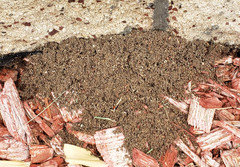
    Another consideration - I usually have at one active ant mound somewhere in the yard (black ants) but, rarely more than that. They get knocked down pretty quickly during the mowing process. Could ants be a factor in the browning?


    Here's a photo of today's mound. This time they set up shop in the planter instead of the grass -


    On a side note, I just put down some Scott's Turf Builder granuals yesterday. Will see if that makes a difference.

  • 3 years ago
    last modified: 3 years ago
    I'd like to plant this. Can you share where you bought the seed? Also, how is the grass doing?

Sponsored
Miller Woodworks
Average rating: 5 out of 5 stars23 Reviews
Franklin County's Trusted Custom Cabinetry Solutions