Software
Houzz Logo Print
gw_oakley

Help me find a light bulb

10 years ago

I'm trying to find the perfect lightbulb equivalent for a 100w bulb. The two bulbs in the kitchen always starts to put off an ugly yellow color after a couple of months and I change them out because the light is ugly. I never paid attention to the K's (color...warm, daylight, cool) until now.

The K number is for warm, daylight & reading. I want a bulb that can be used anywhere. If necessary, I'll get one type for the kitchen and another for table lamps.

I read for a brighter light in K's, I need to get a number from 3500 to 4100.

The bulbs I'm using now has a K number of 2800 which is considered warm.

The kitchen sink light needs a round bulb. A twisted light can go elsewhere.

Will you help me pick out the lightbulb of my dreams? :)


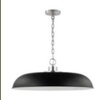
Amazon light bulbs


Comments (17)

  • 10 years ago

    When you say round, do you mean an A lamp (typical light bulb shape) or a globe lamp (the really round ones)? Does it need to be dimmable? Do you have any objection to LED lamps?


  • 10 years ago

    Of the ones on Amazon, I'd go with this A-lamp based on lumen equivalence, color temperature, CRI, and reviews. Some of the others that matched my (mostly your) other criteria didn't have reviews at all. The main issue that the negative reviews to have sounded like it was caused by incompatible dimmer switches (the bulbs flicker). So if the lights are on a dimmer this could be an area of concern. If they aren't, I think these will work. for you.

  • 10 years ago

    My favorite light bulbs are GE Reveal - the light is really nice - bright and clear but never glaring. GE Reveal at Target 4/$9.59

  • 10 years ago

    depending on how much of the light bulb base shows..This might work.

    http://www.homedepot.com/p/Westinghouse-Candelabra-to-Medium-Base-Socket-Adapter-7036100/204749848

  • 10 years ago

    The amount of light a bulb gives off is the lumens rating. Wattage is the amount of electricity it uses and the K refers to the color of the light.

  • 10 years ago

    And CRI is how well it renders colors.

  • 10 years ago

    Cawaps, there wasn't a link in your post above. Yes, A-lamp. Now I'm more confused than ever! It seems the K value and CRI value are the same. Both determine the color of light, right?

    I've used Reveal, but because our furniture floats in the LR, I want a bulb that's brighter. Several lights in the LR are on dimmers but I hardly use the dimmers in there.

    Would you post the link to the bulb you found? I'll worry about dimmers later. The table lamp on the dimmer is 3-way, so it's pretty good.

    I want the brightest light possible with no warm or cool colors. Cool gives off a bluish hue, right?

    Two questions. What causes a light bulb to turn yellowish over time, and do the clear light bulbs give out more light?

    It bothers me immensely when I notice the bulb putting off a yellowish hue over time.

  • 10 years ago

    Oakley,

    Based on your requirements, I would recommend a tunable light bulb. My recommendation would probably be the LIFX bulb. Here is a review of the bulb from Tech Hive. They are a little pricey and are technology based but it allows you to dial in the temperature you want based on the room you are operating in. I find that the numbers are great, in terms of Kelvin, but the furnishings in each room have an impact to. If you are looking at A19 light bulbs, this would be my recommendation. I know amazon sells them and you could try out one to see if this works for you. I am not aware of A19 bulbs that are true color rendition. I know there are MR16 bulbs that are true color rendition from companies like Soraa.

    Good luck!

  • 10 years ago

    My outdoor (and bathroom) lights are 100 watt-equivalent, 5000k ("daylight" to the extreme) LEDs.... it's a bright white light. Although kelvins don't actually make a light brighter, the human eye perceives lights with higher color temperature to be brighter. So, if I replace the bulbs with something around 2500k but the same lumens, they might still appear brighter. I think that is where some confusion comes in. (My husband insists that the same exact bulb with a higher color temperature is brighter.)

    Mine are all LEDs but previously were CFLs. I don't notice yellowing, but maybe because the color temp. is on the extreme side of the spectrum? 2800k would look yellow-ish to start with. So... definitely increase the kelvins to get a whiter light. With that said, 5000k with that kind of wattage-equivalent/lumens (1500 lumens, in my case,) could be too bright for kitchen lights... You never know until you try. :)


    https://www.amazon.com/gp/product/B00YEMKJE2/ref=oh_aui_search_detailpage?ie=UTF8&psc=1

  • 10 years ago

    I have been a light bulb buying fool lately ! I have been getting them from ebay for much less than other sources . We want strictly cool white to pure white . Not so far to be blue but a beautiful white light . We do not like yellow or pale light . I have multiple base types too . Candelabra E12 , medium sized E17, regular standard , GU10 , GU24. Wow gets confusing . But I discovered corn bulbs I had never heard of them but now I have them all over my house and like them. All bulbs are strictly led . The lumens are important because if they are not high enough the light will not be bright . My color choice is the 6000 range . Check ebay search , I Check for only USA sellers .

  • 10 years ago

    Example of corn bulbs


    Corn bulbs

  • 10 years ago

    Color temperature (Kelvin) and CRI are different. Color temperature is what color light the lamp puts out; CRI says whether objects that you view under the light appear to be the correct color. Old school incandescent lamps have a warm color temperature (2700K), but under them, pinks look pink and blues look blue and greens look green. Other lamp types, on the other hand, may to emit more light at certain points along the spectrum and less at others, which can distort how how colors appear (if the lamp isn't emitting light in part of the spectrum, an object can't reflect it, so the color looks off). Low pressure sodium lamps are an extreme example of this, as they only emit in the yellow spectrum. You see everything in shades of black and yellow, so LPS lighting is only used in very limited applications, like tunnels. CFLs were pretty bad on this front; LEDs are better but still not as good as incandescents on average. The one I recommended has a CRI of 84 (the scale is 1 to 100), which is pretty good. I'm looking forward to the day when you can easily find an LED with a CRI of 90+, which I believe is technically feasible but the market isn't there yet.

  • 10 years ago

    Cawaps,

    The LIFX bulb that I posted has a CRI of 89. Soraa makes bulbs that range from CRI 80 to 95. The Soraa are great bulbs for static Kelvin.

    Good luck!

  • 10 years ago

    Thanks everyone. Lots to choose from and I'm going to read about each bulb listed above.

    The corn bulbs are interesting!

  • 10 years ago

    Thanks, Homepro. Good to know about the LIFX lamp; I'll have to remember that if I ever have a color-critical application (CRIs in the 80s haven't been a problem for me around the house). I looked up Soraa lamps but only saw reflector lamps, not A-lamps. I haven't shopped for reflector lamps since LEDs went mainstream; it is in shopping for A-lamps that I've had trouble finding CRIs above 90.