

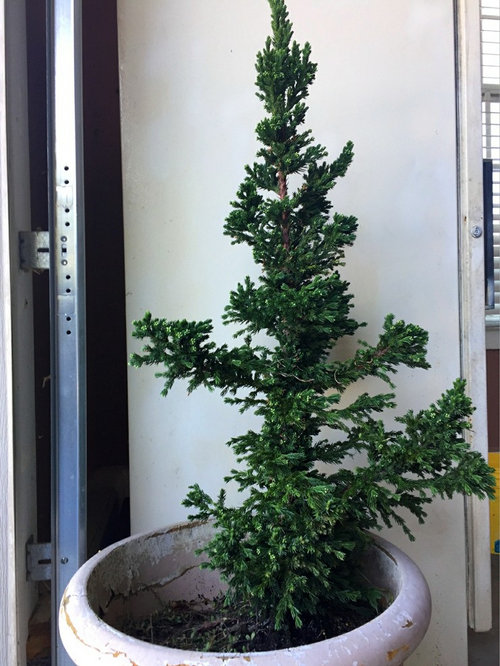
what can I do with this tree?
10 years ago
Sort by:Oldest
Comments (2)

Related Stories
HOLIDAYS10 Ways Your Christmas Tree Can Live On After the Holidays
Learn how to recycle your Christmas tree and reap benefits for the environment
Full Story
HOUSEPLANTSSee How Fiddleleaf Fig Trees Can Liven Up Your Decor
The tropical houseplant with big green leaves adds a cheerful and striking design element to rooms
Full Story
LIFEThe Polite House: How Can I Tell a Construction Crew to Pipe Down?
If workers around your home are doing things that bother you, there’s a diplomatic way to approach them
Full Story
THE POLITE HOUSEThe Polite House: Can I Put a Remodel Project on Our Wedding Registry?
Find out how to ask guests for less traditional wedding gifts
Full Story
LANDSCAPE DESIGNSmall Garden? You Can Still Do Bamboo
Forget luck. Having bamboo that thrives on a wee plot just takes planning, picking the right variety, and keeping runners in check
Full Story
OUTBUILDINGS12 Fun Backyard Forts Grown-Ups Can Love, Too
Kids might use them for secret meetings, but the word is out on these tree houses and playhouses that consider adult design tastes
Full Story
ARCHITECTUREDesign Workshop: How a Site Can Shape a Home
Create architectural poetry by looking to a site's topography, climate, trees and more to inform the home's design
Full Story
GARDENING GUIDESThese Hedges Can Add Interest to Your Winter Garden
Evergreen trees and shrubs provide structure and color in the winter months — and can attract wildlife too
Full Story
GARDENING GUIDESYes, You Can Grow an Edible Garden on a Hot, Dry Site
Difficult garden spots don’t need to deter you from planting trees, herbs and other delicious food plants
Full Story
GARDENING GUIDESTree Care: Common Tree Diseases and What to Do About Them
Learn to recognize trees that may be affected by diseases or pests so you can quickly take action
Full Story
Sponsored
hemlock140 Zone 8B
tapla (mid-Michigan, USDA z5b-6a)
Related Professionals
Middletown Landscape Architects & Landscape Designers · Fredericksburg Landscape Architects & Landscape Designers · Santa Fe Landscape Architects & Landscape Designers · Provo Landscape Architects & Landscape Designers · Amherstburg Landscape Architects & Landscape Designers · Murfreesboro Landscape Contractors · Nashville Landscape Contractors · Oxnard Landscape Contractors · Provo Landscape Contractors · Hot Springs Custom Closet Designers · Fort Dodge Custom Closet Designers · Greenfield Custom Closet Designers · Syracuse Custom Closet Designers · Utica Custom Closet Designers · Bronx Custom Closet Designers