

Newly installed solid Hardwoods started making popping noises
I had some hardwoods installed 2 weeks ago. The floors were acclimated in my home over 72 hours. The manufacturers instructions said 24. The store claimed they were in a heated warehouse.
The installation was sloppy we have large gaps next some walls and cabinets. I can see the plywood underlayment, not the moisture barrier.
Some section of the floor now make popping noises. Conversations with the store has gone nowhere. They said the walls are crooked and cabinets and that's why there are gaps. I'm not buying it. Million dollar homes don't have perfectly straight walls and cabinets. Also they claim the popping noises are because I turned on the furnace. The furnace has been on before, during and after installation due to some cold nights.
Now the store has threatened to send the account to collections and put a lien on my house if we don't pay the balance. The store manager came by to look at gaps, but has declared the popping noises "not a real problem" and will not even come out and look at it insists we pay. He also claims an agreement that I signed that says cracks appear when humidity is below 35% are not their problem. He is claiming it includes noises. The word "noise" does not appear on the agreement. No has measured the humidity. He even said he would hire a flooring inspector of his choosing and when they tell me there is nothing wrong with the flooring he will add the inspection to my invoice! I requested a NWFA certified independent flooring inspector that he pays regardless of what the report says and if it conclusively deemed not an installation problem I would pay the balance. It is almost $6000. Store manage says no. He wants me to pay for it.
Now what we are at an impasse. If I pay I guarantee I will never get my floors fixed. If I don't pay he will send to the account to collections. I have threatened to sue the store and their subcontractor who perfomed the installation.
Comments (44)
 PRO10 years ago
I second the questions raised by GreenDesigns. To be clear, a moisture barrier is NOT used over wood/OSB/plywood subfloors. So that's not something I would expect to see anyway.
The popping has so many possible sources (depending on installation type, anchor/underlay used) that you will NEED to get this inspected. And I'm sorry to say, but the store (as nasty as they are being) has every right to say all of these things...even the part about refusing to pay for an inspector.
This doesn't make your situation any easier to deal with. I'm sorry this is happening. I really am. Most homeowners do not know where things could have gone wrong so they need to hire an NWFA Certified Inspector to come out and give them an unbiased, professional, court recognised report.
The rule of the inspection is: S/he who is MOST upset by the product, pays for the inspection. The person who pays for it, OWNS IT. And to be honest with you 90% - 99% of wood flooring complaints are INSTALLATION related. Your worry about, "...guarantee I will never get my floors fixed" is an anxiety - not reality.
Can this be installation related? You bet! Could this be environmental? Yes. Could it be a combination of both? Certainly.
As for environmental (humidity etc), I'm sorry to say but that does not have to be in the "agreement". The warranty conditions and the business agreement are two separate entities. All flooring products have living condition requirements listed in their warranty areas. These will be listed on a website somewhere. The law recognises "websites" as publicly accessible documents and therefore allow them to stand in for "paper" documents.
I would bet your concerns have a LOT to do with installation - but be prepared for "not all". The humidity requires/heat/indoor living conditions/etc are all part and parcel of owning a home and are not part of the business agreement.
Hire the inspector before you get a lien put on your home. Once you have the document in hand, you have FIRE POWER....right now the store things you are blowing smoke.
As harsh as this seems, it is the FASTEST way to resolution. That I can guarantee.
Related Professionals
Orangeburg Flooring Contractors · Jackson Flooring Contractors · Bemidji Flooring Contractors · Butte Flooring Contractors · Kennewick Flooring Contractors · Sarnia Flooring Contractors · Ardmore Tile and Stone Contractors · Pueblo Tile and Stone Contractors · Fort Collins Tile and Stone Contractors · Olympia Tile and Stone Contractors · Amherstburg Tile and Stone Contractors · Toronto Tile and Stone Contractors · Vineland Kitchen Remodelers · Charleston Kitchen Remodelers · Plattsburgh Kitchen Remodelers
browniebear
Original Author10 years agoThe hardwoods is 3.75 inch solid maple plank on a plywood underlayment
They put what I thought is a moisture barrier on part of the floor. I called the flooring manufacturer and they said that their sales rep would call the store manager. Suddenly the tone has changed to let's start over and he and the installer will come to the house. I suspect this is just a tease. The flooring manufacturer Mirage has said the installer has incorrectly installed the expansion gaps
No one has measures humidity at any time. You don't need to have a whole house humidifier to keep humidity between the manufacturer's guides of 30 -50 percent. I have severe allergies and use humidifiers in the winter.


 PRO10 years agolast modified: 10 years ago
Aside of several good responses above, could also be something is beginning to dry out (heating being used) like the sub floor. That can cause nail pops. Can pull fasteners loose creating popping sounds. No such thing as a moisture barrier on a nailed or stapled floor. The terminology should be 'retarder' What good it does? It's always baffled me when any installation may place hundreds of puncture holes in this so called retarder.
"The flooring manufacturer Mirage has said the installer has incorrectly installed the expansion gaps."
That covers their butts for the most part regardless of what the real issue is.
Is this new construction?
Good responses. Cancork Nice job!I like the way you look at many sides to a story.
Lot's of possibilities.
- 10 years ago
Bond the lien. It should cost you a few percentage points. This will buy you time to figure out the complete issue and put the store and installer in their place. It can take years to settle a bonded lien.
- PRO10 years ago
My thoughts are similar to Cancork's. I can't imagine the store - based on the statements of the OP - would really want an independent NWFA inspection performed - hence the rough play - especially if the OP wrote one check for material and installation, then it is a high probability that the store is responsible - and they know it. Of the dozen+ possibilities causing the popping sounds only in certain areas, 90% of them are installation/installer responsibility related. Typically retailers (manufacturers) arrange for an independent certified inspection when they genuinely cannot interpret what the floor is telling them. I suggest, considering the information provided, that you take them up on the "loser pays" inspection scenario. I doubt they have all of the preinstallation moisture testing and if it is not documented, it never happened. Retailers who install or installers, should always provide & include the moisture/preinstallation testing results and diagrams to the end user to keep with their home stuff as long as they own the floor. After all, that is part of the installation deal if we (retailers & installers) are all honest about it. If you wrote one check for the material and a separate check to the installer directly, the store and manufacturer are likely completely off the hook (I think the official percentage is just south of 100% of the time) and you and the installer are responsible (usually north of 99% of the time).
browniebear
Original Author10 years agoI charged to a credit card a deposit of half the total. The store which is a regional chain uses subcontractors. I am more interested getting the floors fixed . I will see what the answers are to questions about moisture measurements
However should this be merely an act. I plan on getting the inspector.browniebear
Original Author10 years agoThe flooring pops all over the place
It covers 800 square feet in two adjoining rooms with alot of windows
Asking the flooring installer questions what's to stop him from saying I left my notebook at home and making up answers later.- PRO10 years ago
Nothing....but if the readings were done, you OWN them (they are yours and belong WITH your flooring; you paid for them - like health records). Offer to follow him back to where the note book resides...You would be HAPPY (;-) to follow him back into town to find that note book RIGHT NOW.
If you feel they will be that deceptive, have a someone there with you - taking notes of their own. It stops being a "he said, she said" event if you have a witness. Remember: S/he who takes the most notes, WINS. If in doubt, document, document, document. Documents WIN the battle. A witness who takes notes is doubly impressive...and makes the installer sit up and take notice.
browniebear
Original Author10 years agoOk because of the ridiculous excuses store manager I told the store manager I intend to record the conversation. And husband will be there
I also have email from an NWFA Certified inspector stating new flooring should not creak or pop. Unless you crank the heat to 82 degrees.
I have hired over a dozen contractors for renovating 2 homes never experienced such unprofessional and disrespectful treatment.- 10 years ago
Cancork has given some very good responses to your questions.
Of the many wood flooring species I have installed, the only ones that I ever had problems with were maple ones. Many do gap in winter and return to normal in summer...nature of the beast. However, you have real problems with the installation, which only the Certified wood flooring inspector will be able to identify and document.
browniebear
Original Author10 years agoOh the store has that one covered. They had me sign an agreement that says the humidity must be over 35% and if that the floor cracks and/or gaps but will close in the spring/summer. That isn't our problem. I bought a humidity meter. It is been reading 45-55 with the furnace on all day and all night. I never bought the stores B.S about the furnace being turned on. In fact when I leave the furnace on for longer periods the popping noise dissipates. LOL.
 10 years ago
Browniebear, not sure what legal knowledge you have. In some states you can record someone without their permission, as long as you are part of the conversation. In others you must have their consent. So if you're not sure, when you start recording, ask them by name if it's okay to record. If even one person involved declines (or nods yes instead of saying yes and won't verbalize their consent), I wouldn't risk it unless an attorney tells you otherwise.
Not an attorney myself. Personal experience.
- 10 years ago
I think one very important thing is being overlooked here.
All solid wood floors will undergo an acclimation period. During this time it's been my observation that they may make some noise. When we install unfinished solid wood we generally acclimate it for two weeks before we start sanding. During acclimation it's not unusual for the floor to make some noise. It's logical to assume that prefinished solid wood will go through a similar acclimation period. Since it is sealed on the top with the factory finish, this could take some time. Ideally prefinished solid wood would be removed from the cartons and stickered to allow airflow all the way around each board. Customers/contractors generally don't want to have their prefinished flooring sit in a conditioned house for a long period of time before installation. Since this is so close to the end of the job shortcuts are often taken. Was your flooring removed from the cartons during acclimation?
Expansion gaps at the edge of the floor are required with every solid wood floor. It appears that the gap you're complaining about is the expansion gap. This is normal and is generally covered with some type of trim. In your pictures I see what looks like a caulk line from the top edge of the old trim. Green Designs accurately mentions this in the last paragraph of the first response. I don't see how the expansion gaps warrant a complaint. If the walls are crooked in some places, the dealer should be able to show you where it's square to some walls to prove their point. Houses aren't perfect. Sometimes an installer has to compromise on one area to make another area look acceptable. If the whole floor is crooked, that's a different issue,
While you may have issues with the moisture difference between the floor and subfloor, there's a lot of conjecture going around here. At this point it would be wise to hire a certified NWFA inspector to do a proper inspection. They can determine whether the subfloor was installed properly, the floor was nailed properly, test the moisture level in the air, floor and subfloor, certify whether the floor is laid square and has sufficient expansion space, and comment on whether the floor noise is unusual.
browniebear
Original Author10 years agoI am going to hire an inspector. If the expansion gaps are not correct the manufacturer has told me the warranty is not covered and is stated in the installation guide also. I do not want 1/2 inch gaps as the guide specifies.But if I am going to spend money on an inspector I may as well include all issues.- 10 years agolast modified: 10 years ago
As long as the floor isn't touching the walls or cabinets it should have no effect on the noise issue you're having. If the floor expands to the point that it is going to touch a perimeter finish it's fairly easy to make a relief cut.
How did you plan to cover the mandatory expansion space?
browniebear
Original Author10 years agoThe real issue is the popping noise and whether it's normal to hear it and that it would go away. So far the consensus is no. The store won't do b anything without an inspection report and even then I think we would have to sue. The store has an F BBB rating. Yes I know I did not do my homework before buying.- 10 years ago
jfcwood also made a good point about solid naildown wood flooring making some noise during an acclimation period after installation. I agree with his comment saying there is a lot of conjecture happening here. Hiring an independent NWFA inspector will at least determine whether or not there is anything wrong with the installation and, if that determination finds nothing wrong, then you can avoid a lien and avoid going to court by paying the balance due.
browniebear
Original Author10 years agoWell after the store manager and installer visited my home. When they were there they did not deny there was squeaking noises. Now I receive an email from him saying here is no squeak and if you don't pay by Monday we are going to file a lien. When I said wait a minute we agreed that I would pay for an inspector and then go from there. Now they do an about face and threaten a lien. I haven't even gotten a late notice. When I said going straight to liens before even a late notice and collections. They said If I don't pay by Monday they will start collections. I said I would dispute it. This company has many BBB complaints about mysterious charges and poor quality work. Why I didn't check like I usually do I don't know. The store is Great Floors.
- 10 years ago
A lien is not the end of the world. It's a tool meant to protect tradesmen and businesses from people who decide not to pay. In my state there's a limit how much I could collect in small claims court and even if I get a judgement, the defendant can still refuse to pay. Then I have to attach something they own and foreclose on it. It costs money to record a lien so I try to avoid them.
I couldn't care less about consensus, not knowing the expertise level of those providing it. I've been in the wood floor business almost all of my life, working at my current company since 1985 and running it since 1996 and I can tell you definitively that it's not unusual for wood floors to make some noise during the acclimation period. I've seen it many times. My prior recommendation stands. The most important issues that an inspection would determine are whether the floor has the proper nailing schedule (generally determined with a magnet to detect the nails) and whether the moisture level between the wood and subfloor are within an acceptable range. An inspector with a proper pin-type meter can measure each and make that determination.
Another pertinent issue is with acclimation. You didn't answer my earlier question. Was your flooring removed from the cartons during acclimation? If not, the floor possibly wasn't given sufficient time to absorb moisture before it was nailed down. If it's going to do so, it will do it either before it's nailed down or after. If it does so after, the floor will have to force it's way to a position where there's an equilibrium between the expansion force and the fasteners. In doing so it will make noise. After doing so, the noise generally ceases. Of course the floor will move throughout it's life when the humidity changes but if the levels are controlled, these are smaller than the initial acclimation.
As to the issue where the floor is crooked. Is that the case at every wall?
- 10 years ago
Great Floors... omg. Horrible. Terrible. Run if anyone reading is considering them. Seriously.
browniebear
Original Author10 years agolast modified: 10 years agoJust received from Great Floors the "meter reading" prior to installation. They are photos of a meter of some sorts with the date written on the floor and an invoice that is illegible. I blacked it out anyway. You really can't verify that it was taken on the date or even in my home. They are strange. The subfloor reading is particularly weird. it less than 1. I don't believe these photos were taken in my home for several reasons. One the installer said he uses a timestamp when he took the photos, 2, the invoice is illegible, 3. my subfloor doesn't have those stamping marks.
- 10 years ago
If not faked, certainly very unprofessional. I thought someone earlier in this thread said multiple measurements at multiple points should be taken??
- PRO10 years ago
The readings are not "less than 1". The meter is upside down (the pin is at the top...so the meter has to be INVERTED to get a reading on an installed subfloor).
The subfloor reading I would interpret as "9.0" and "9.3". That means the wood readings will be inverted as well and should read "6.9". So long as the MC readings are correct and the tool used has been properly used, the readings indicate that the RH readings are LESS than 3% difference. And that is part of the requirements for a proper installation. It also indicates that the wood, at the time of install, was allowed to be installed at the time - regardless of acclimation time. Both materials were inside the allotted RH requirements. They were allowed to be married together with installation because they were within acceptable limits. Is it OSB or proper plywood?
What type of installation? Glue/nail/staple/cleat/float? Certain "fastening" can cause noise...we still don't know how this thing was installed.
At this point, the moisture readings have been provided at your request. Type of fasteners and whether or not OSB is allowed with that type of schedule is the next order of business. For me, the readings have been provided. On to the next dozen reasons for noise.
browniebear
Original Author10 years agostaples. The flooring where the popping is loudest I feel a ridge when walking over it with socks on no shoes. The installer claims 2 inch PRO10 years agoOn 1000 sq installers should data log 30-40 readings per for both subfloor and flooring. The more readings you take the more accurate it is. A few readings will not give adequate data and will most likely not be correct either.
- PRO10 years ago
Staples where used. Excellent.now we just need to know if staples were allowed (we need the installation guide....which means we need to know the manufacturer and the style you chose). And if OSB was used and if it was allowed. Excellent. Getting closer. We don't know the floor you purchased nor whether or not that is OSB in the photo/on your subfloor.
And yes, Ultimate is correct. A few documented readings does not a full RH schedule make....but the photos do indicate that SOMETHING was measured. It is a very good indication that they did something.
browniebear
Original Author10 years agoThe flooring is Mirage Prefinished solid. It says "They may be nailed down with cleats or staples over wooden subfloor, using specially designed hardwood floor nailer". We do not have plywood subfloors. It's looks like a bunch of chips of wood formed to make a board.
- PRO10 years agoYou can't nail into chip/press board. It has zero holding power which is why it has since been banned as a structural bldg material.
- PRO10 years ago
Mirage installation instructions clearly show "plywood/OSB" subfloors as an option. OSB has a nick-name = "Chip Board" because it looks like it is a bunch of "wood chips" glued together (which it is). OSB must be at LEAST 23/32" (18mm) thick if it is used as a underlayment. Nails or staples UP TO 2" long are allowed and are dependent on which nailer/stapler is used by the installer.
Ok. So. OSB is allowed - with a minimum thickness. And Ultimate is correct. OSB is a lower grade product that has less holding power than plywood.
So far, everything is on the "up and up" for this install. The only thing that MIGHT be an issue is the thickness of the OSB. That's about all I can say at this time.
If find it fascinating that as the HVAC gets fired up (the furnace is heating which means the furnace is drying out the air) the noise the floor is making is DECREASING. Hmmmmm. Interesting.
browniebear
Original Author10 years agoSo if the underlayment does not meet the thickness requirements whose fault is it. If it doesn’t it's just Ok that newly installed flooring sounds like a 100 year old house. My home is 14 years old- PRO10 years agoBy 'chip board' I was referring to K3 and not osb. Most builders in my area use the good osb impregnated with wax( Weyerhaeuser gold or advantech). I nail into osb often as long as it is thick enough. Anyways sticking to the point,pull a couple boards out and you may actually be able to see the problem...
- 10 years ago
Interesting - I am going through something very similar. Here is a video of the noises I have http://vimeo.com/102640276.
This is 3.5" wide site finish White Oak over 3/4" OSB. I have gone through the inspections, etc. It was determined that the subfloor was not properly leveled and secured and thus the fasteners are pulling out. I am still waiting for the legal process to play out (2 years now). browniebear
Original Author10 years agoDid you pay for the flooring and installation then sue. What is the legal situation. We are going to have a lien put on our home if I don't pay by tomorrow. They won't wait for the flooring inspector report. They have plenty of time to file a lien- PRO10 years ago
The determination of "subfloor" would be part of your contract with the installer/shop. If you PAID for new underlayment to be added (to match the requirements for the floor installed) then you are supposed to get "what you paid for".
If the underlayment upgrade was not part of your "job" (you didn't pay for it therefore it is not part of their contractual obligation to do it), then the subfloor that is THERE (in your home) is owned 100% by you.
The person who walked through your home and who assessed your subfloor (so they could write an accurate installation quote) is the person who you chat with about the "appropriateness of subfloor material at time of installation".
I can't tell you who is responsible for the thickness because I don't know what your job entailed. It all hangs upon the contract for the work. If you paid for new 23/32" OSB subfloor to be laid, then you should have received the product. If you did NOT pay for it, then the condition of the subfloor is, sadly and very frustratingly, on you.
Please check the contract and your purchase from the store to find out if your job contained "plywood" of any sort. And yes, some types of nails or staples can make some interesting noises when punched into wood (OSB is particularly upsetting because it can create more noise than others....but if it is the RIGHT OSB then it should be OK). But this is the very reason why many installers avoid OSB like the plague. In this situation it is allowed....but there are many independent installers who won't go near it....for this very reason.
- 10 years ago
This is where our circumstance is slightly different, We didn't identify the issue until after we moved in (and thus had paid in full).
browniebear
Original Author10 years agoEven though you paid we are in no better position. The flooring store will put a lien on my house if I don't pay. If rhe cost to repair and the amount I owe don't make it worth it to file suit we will be paying interstate and late fees to remove the lien. The store has reviews of people who complained having their credit card charged for the entire amount before job completion.browniebear
Original Author10 years agolast modified: 10 years agoWe hired a flooring inspector. The flooring inspector determined that the lack of expansion gaps is an installation problem. He is recommending cutting into the drywall and cabinets to create an expansion gap.
The
expansion gap absolutely needs to be corrected and this is very easy to
do. A jamb saw should be adjusted to
cut-in a 5/16” expansion gap along all walls parallel to the wood
flooring. This is all that a solid floor
needs for expansion around Puget Sound. (The manufacturer’s recommendation of ½
inch has to work everywhere across North America including areas where there is
greater expansion.). The jamb saw will also work at the bathroom paneling and
one side of the kitchen island cabinet.
A “toe-kick” saw can be used at the toe-kick areas of the cabinet, but
they only cut ½ inch deep and will take extra work. Paper should be run along the walls or the
base of the jamb saw must be taped to prevent scratching of the vertical
surfaces. With solid wood, an expansion
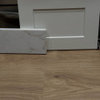
gap is only necessary at the parallel walls, paneling and cabinets.So what does a toe kick saw look like? We went through HE@LL to get them to come back and fix this. I paid an attorney several thousand dollars and an inspector $850.00. They signed an agreement to remove the lien only because the salesman didn't give me the lien disclosure notice.
If the fix isn't perfect. I don't plan to pay. Problem is the inspector's fix is cutting a gap smaller than required by the manufacturer. Not cutting that wide will invalidate the manufacturer warranty. What do we do?
- PRO10 years ago
The inspector has determined the problem...and has SUGGESTED a fix. This is not meant to be taken as an "absolute". It is to be taken as a "suggestion" that has a strong CHANCE of fixing the problem.
You as the HOMEOWNER have the right to ask for the fix to INCLUDE the PROPER expansion gap.
I suggest you make it CLEAR to the installer/company that you expect the PROPER EXPANSION gap to be created. It is then up to the shop to hire someone with enough skill to do the job.
A toe kick is a piece of wood that is finished to look like cabinetry...it sits at the floor; underneath the cabinets themselves. This will have to be ordered from your cabinet maker in the proper wood and finish to match your cabinets. This is a common requirement when fixing expansion gaps.
And BTW: you OWN the inspection. You have no requirements to share the document with anyone. You don't have to show the shop the SUGGESTED fix. You can tell them the inspector found the lack of proper expansion gaps to be the issue and that you now have proof of "improper installation". You can the proper gap applied by a PROFESSIONAL hardwood flooring installer.
Let the shop get back to you with ideas how to go about this. You do not have to share the "drywall cuts" that were suggested by the inspector. See what they come up with.
And I suggest someone is there during the repair. Just to be sure you know what was done, by whom and if it is satisfactory before they leave your property.
browniebear
Original Author10 years agolast modified: 10 years agoThanks Cancork for the advice. I hired an attorney who wrote a settlement proposal it includes removal of the lien by a certain date. Which has not passed yet. Part of the agreement includes confirming the manufacturer warranty has not been invalidated due to improper installation. The manufacturer has told me warranty is invalid because they didn’t create any expansion gaps in the first place. We are not going to show the installer the report
I am going to show him the agreement
I won't pay unless its done my way.








Cancork Floor Inc.