Software
Houzz Logo Print
woodyoak

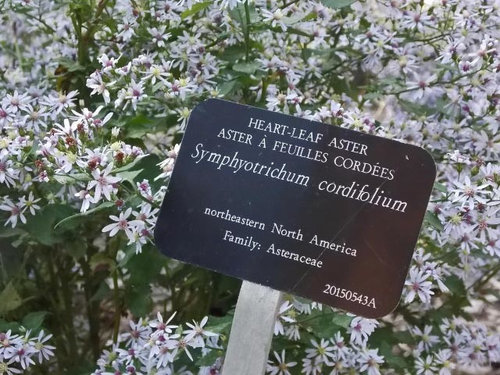
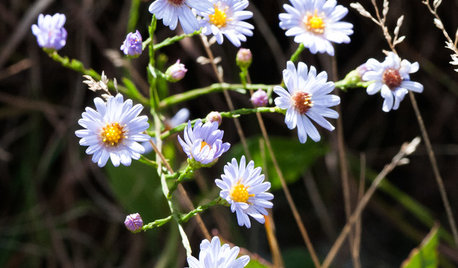
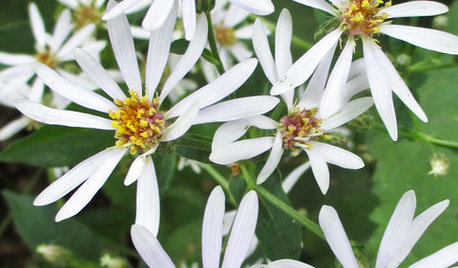
Heart-leaf aster

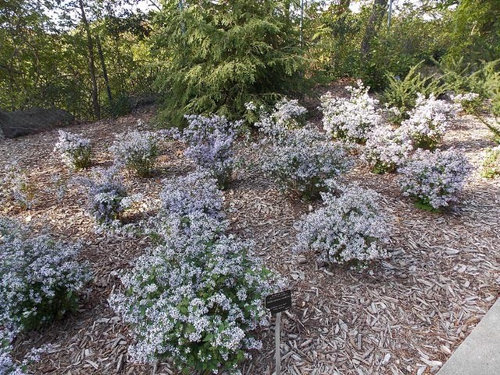
Does anyone grow this? (Symphyotrichum cordifolium) We stopped in briefly at the RBG rock garden this afternoon (on our way to check out a bird sighting to add to DH's life list.... didn't see it....) This cute little aster caught my eye - I hadn't heard of it before so I need to check it out - I'm worried that the cordifolium part of the name means it'll be a runner....! Does anyone have any experience with it?

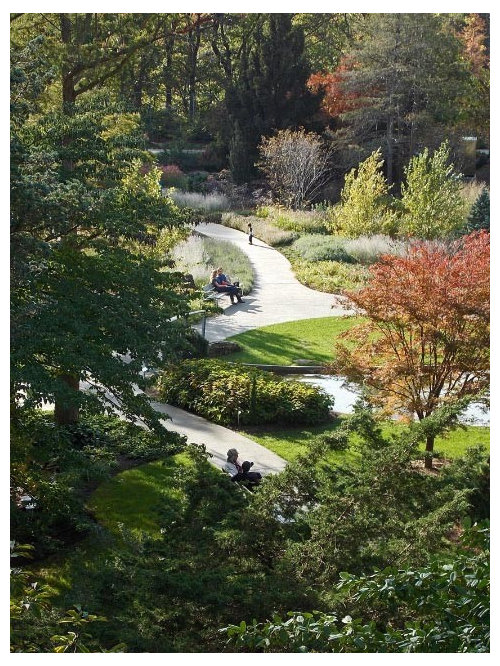
I was also looking to see if the fall foliage color season had started there yet, but there was minimal color:

Comments (8)

  • 10 years ago

    A quick check on it just after I posted tells me that this is very common and I do remember seeing it - just not as the nice, neat, small mounds like the ones at RBG!

  • 10 years ago

    Cordifolia just means heart-shaped leaf. I wouldn't say I grow it - it's more like it grows itself and I remove it where it's unwanted. It's not a runner in my garden (and field and wood margins). It has a rosette of basal leaves the first year and then sends up stalks of flowers in late summer the second season. I am not sure if they are short-live perennials or biennials; I tend to rip them out of the garden near the end of blooming because it seeds so prolifically, but I do like it for its late season mounds of pastel lavender and undemanding nature. Mine tend to be taller, so I wonder if the ones in the garden were given the "Chelsea chop" to keep them shorter and more mounding in shape or if it's a shorter selection.

  • 10 years ago
    last modified: 10 years ago

    Babs - I had associated the cordifolia with running because the Tiarella cordifolia spreads by runners....and the wild purple one I have send out thick horizontal shoots from the base. I should have looked up the meaning - good to know it means heart-leafed! The information I found on the Missouri Botanical Garden page said to cut them back three times by early July to keep them short and bushy. I assume RBG must have done that. I did that with the tall purple weed aster that seeded itself in - but I obviously didn't cut it back hard enough because it still got tall! The MBG site also said to cut the hear-leafed one down after flowering to limit seeding. I can't make up my mind whether to add some of these or not....

  • 10 years ago
    last modified: 10 years ago

    I've bought and planted it several times in the past; bought as (common name) blue wood aster.

    While the white wood aster (Eurybia divaricata) has survived (very well), the heart-leaf/blue wood aster has not.

  • 10 years ago
    last modified: 10 years ago

    A very popular symphiotrichum (sp?) in the UK is the cordifolius hybrid, 'Little Carlow'...which is an absolute winner. Sturdy, reliable - an excellent aster which I heartily recommend. If only allowed to grow a couple of asters. this would be top of the list.

    It took me ages before I got the point of asters - childhood associations with the end of summer and swathes of weedy goldenrod and pallid Michaelmas daisies, tainted my (lack of) appreciation. Naturally, like everyone in the UK, I had a.frikartii 'Monch' (or one of its numerous imposters), which has the virtue of early flowering...but usually, by October, I have had enough of dealing with the hundreds of pots at home and the allotment is, post harvest, a tip. However, I now have enough space to have a specifically late blooming area and, probably more importantly, I have the right sort of space for asters (I am not even attempting the Latin just yet so 'asters' is still the nomination for late summer blue(ish) compositae (or asteraceae) or daisies. Accordingly, I have revived an early allotment failure - the 'crazy daisy' garden. A mad mix of asters, various sunflowers, grasses, sedges, sanguisorba...and so on. This will be it's second autumn (1 year old) so just turning into it's creeping year. Excited!

    Also deeply alarmed because the streamside soil is deep, friable, - gorgeous stuff left fallow for half a century. A perfect lush environment for phragmites - like my allotment horror, couch grass, only on steroids - and nettles, massive vicious nightmares with skeins of thick yellow rhizome which roars through the pillowy soil.My trusty hoe and spade will attempt to tip the balance towards my choice of perennials...but we shall see. It was a fail at the allotment (too dry, too thin) and I am definitely not a stranger to plant murder...but we must keep on trying...and asters are, I hope, in the ascendant.

    I have to say though, 'Little Carlow' is definitely not little. It is a lanky 4footer.

    I am hoping for a pretty good autumn show here in East Anglia - we have had a long, hot summer (laughable for the US mind) and what is promising to be a glorious autumn.

    symphiotricum cordifolium and cordifolius seem to be used at random.

  • 10 years ago
    last modified: 10 years ago

    I think since the genus name ends . . . um, that the species name is . . . um as well. Not sure why - something to do with Latin I assume, though I know nothing about Latin other than a few meanings I've learned from scientific terminology. Perhaps someone more versed can add an explanation.

  • 10 years ago
    last modified: 10 years ago

    True NHBabs, the species part of the name must agree in case, number and gender with the Genus part (as an adjective would with the noun). The first two are typically the same with Genus names; nominative and singular, but the Genus name can be masculine, feminine or neuter. Symphyotrichium (Neo-Latin (= not Classical Latin)) is neuter (-um, may be a nominative singular neuter ending).