Software
Houzz Logo Print
carrie_andrewes

Landscape drainage problem

10 years ago
last modified: 10 years ago

We are landscaping our brand new yard and we have some drainage issues in our backyard. Some of the issues I believe I am to blame for but now I need to come up with a way to fix the problems and I would be grateful for your suggestions.

Our backyard lot is approximately 40' X 40'. It is quite sloped away from our home with drainage swales on three sides of our yard. We have a major swale at the back that drains to the right heading down the hill to the large storm pond about 300 feet away. There are 4 yards that partially drain into our yard as they are higher than our yard. It is set up so all the yards in this "swale" area drain down the hill to the storm pond. We only have above ground surface drainage going to the swale as all of the yards downspouts are drained into the underground storm sewer.

One of the issues is there is a low spot where my swale meets the neighbour's yard and water just pools there. The contributing issues are: 1) My understanding was that the yard was supposed to be graded so that the surface water drains into the swale area (the last 6.5 feet against the back fence) and then continue down the hill to the storm pond. I found out after the fact that the grading was done so the water drains before the swale and now I have put my shed there and it can't be moved. 2) Originally there was grass in the swale area to help with erosion. Since I didn't want to mow a strip of grass behind my flower bed I had a contractor remove the grass and put fabric and rock in the swale (as per my landscape designers plan). I don't think the contractor did a good job regrading after the grass was taken out and now I have pooling happening as my swale is lower than my neighbour who still has the grass in his swale. 3) I have tried to regrade the low spot beside my shed but the soil there is heavy clay that gets so saturated that the water doesn't want to drain away. 4) I don't want to pile a bunch of soil against my pressure treated shed base in order to fix the grading so now I am stuck as to how to drain the water from this low spot and down the hill to the storm pond.

The swale area is located in an easement of my property so I can't install a french drain or a catch basin without permission from the city. I will have to wait until spring to try to deal with the pooling but it is causing me stress as I don't want to rot my shed base that we spent so much time building. Our brand new shed is held up by this shed base and to move it would be crazy. I am also not allowed to plants trees and shrubs in the swale or block the movement of water. My shed base is outside of the easement area by 1.5-2 feet.

Do you have any suggestions as to what I could do with this area? If I raise the grade should the soil be compacted clay at the proper sloping grade with topsoil on top? Or should I try to make the soil permeable so the water soaks in instead of running off? What would I do next to my shed base so that wet clay soil is not piled up against the wood and to keep the water away from that area?

Thanks so much for your suggestions.

Carebear

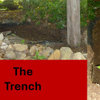
The low spot is next to my shed. I can't get the water to drain over my neighbour's grass and down the hill to the storm pond.

This photo was taken during our fence building. The drainage is supposed to go down the hill into the swale.

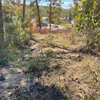
A close up of the low spot by my shed.

The swale shown at the bottom on the designer's drawing. I even moved my shed two feet uphill from where she had placed the shed so that I would be further away from the swale drainage.

Another swale on the left side of my property that also has issues with drainage due to the compacted heavy clay soil.

Comments (9)

  • 10 years ago

    Another photo showing the view from the rear swale towards the house. The side yard swale to the right of the photo drains towards the street.

  • PRO
    10 years ago

    "I have pooling happening as my swale is lower than my neighbour who still has the grass in his swale. 3) I have tried to regrade the low spot beside my shed but the soil there is heavy clay that gets so saturated that the water doesn't want to drain away. 4) I don't want to pile a bunch of soil against my pressure treated shed base"

    If your yard is supposed to be draining to the neighboring yard to the right (as looking toward the back lot line), then you cannot have your yard be lower than his yard, where they meet. "Cannot" means not now, not ever. You must raise grade in your yard so that water will pass on to his yard. If you don't care about planting in this area, then soil that has a high percentage of clay would be OK to use to raise the grade, especially if you are just covering it with rock. We're primarily concerned with grade and drainage at the surface ... moving water from your yard to his.

    If you create an area that is lower than the surrounding area, rain runoff will find it because gravity is the only thing that matters. It doesn't matter if you don't want to pile soil against your shed base. You're going to need to do it in order for water not to go there and just sit.

    As swales go, this one is modest. If you weren't telling us about it, it's doubtful that anyone could perceive it from the pictures alone. Most people with a small back yard don't want it taken up by a swale that is like a roadside ditch. So the grading is mellowed out in order for all the yard to seem more usable ... which it would be, save for the fact that water must pass through a portion of it occasionally. The limits of the swale are a grey area in which, apparently, your shed partially sits, even though it is officially outside of the easement area. I think I would be looking at solving this not by relocating the shed, but by raising it up vertically and raising the surrounding grade back to where it was supposed to be. That way you are not tearing up everything you built and rebuilding it, and destroying your landscape scheme in the process, but building on top of it a little and keeping the same scheme.

    There is landscape lumber that is treated to withstand contact with moist ground (usually 4" thickness and larger) and lumber that is treated only to withstand occasional wetting (like getting rained on) but not constant contact with ground (usually 2" thickness and smaller.} Hopefully, you have the former. If not, you're going to have problems anyway and need to replace it before you think. If you have the proper lumber, you don't need to worry about soil piled next to it. It will be fine. It's still going to last 20 years(-ish.) So just fix the grade and don't worry about the lumber.

    Given that there is already a drainage problem here, it would not be a good idea to continue with the plan of creating a base for compost bins within the swale area. Move them to somewhere else farther up grade.

  • 10 years ago
    last modified: 10 years ago

    Thanks so much Yardvaark for taking the time to comment on my drainage issues. I know you are totally right but I was hoping there was somehow a way to avoid piling soil against my shed base that I didn't know about but as you said I have no choice. The shed base can't be moved as it has been pinned 4 feet into the ground with rebar all around and then pinned to itself with stakes. Under the timbers I have at least 2-3" of compacted gravel on top of landscape fabric. The shed itself is sitting inside the wood box on 18" square sidewalk blocks on top of 5" of compacted gravel. If I move the shed base upwards out comes some of the gravel keeping my shed level.

    The good thing is I used double stacked 4x6 PWF lumber which is meant to be for below ground contact. It is the old arsenic type lumber. We live in a Alberta, Canada where it is wet and snowy much of the year. I also wanted water to be able to drain out the bottom of my shed base where I have the gravel so hopefully it still will drain when I pile the soil up against it. Live and learn!

    That said I have another question(s) regarding the compacted clay soil throughout our backyard. It has a rough grade of clay soil and if I am lucky 3 inches of topsoil for final grade. Some areas of my yard, particularly near the left rear drainage swale area near the deck is completely compacted heavy clay. It takes forever to dry when wet and sticks to your shoes at least an inch thick. It doesn't help that my neighbours two downspouts dump into the swale and I am lower than him so his downspouts have eroded the soil in spots.

    I amended our front planting bed with mushroom compost, coarse sand and peat moss and the soil is way better. There are no issues with drainage and there are no soggy spots there. My question is how do I amend the soil at the back of my yard but make sure that the excess water that doesn't soak in will somehow make its way down the swale and out to the street?

    I want to plant perrenials and shrubs in amongst the trees I have already planted but prefer to amend whole planting beds and grassy areas. I think i need to rototill the soil with amendments to relieve soil compaction and allow the water to percolate into the soil of course this would be done far enough away from my house. Again I don't want to screw up the drainage and cause myself more stress.

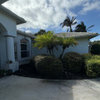
    This is a photo looking from the front of my house towards the backyard. My neighbour on the left is the one whose two downspouts dump into the swale. We have put mulch there temporarily to get our landscape deposit back and to leave a way to the backyard open until we are done landscaping.

    Thanks for your help!

    Carebear

  • 10 years ago
    last modified: 10 years ago

    Sorry for the long reply!

  • PRO
    10 years ago

    "... how do I amend the soil at the back of my yard but make sure that the excess water that doesn't soak in will somehow make its way down the swale and out to the street?"

    I don't understand your question. Excess water that doesn't soak in is supposed to flow in a downhill direction and onward to somewhere off of your property. Why is this a problem? If amending the soil will raise the grade and create a ponding problem, you may need to first remove some soil before you amend so that it ends up at the correct grade by the time you are finished adding amendments.

    It's usually the case that wood-based mulch is not great for staying in place against moving water and preventing erosion. It's plants and their roots that do a better job of that.

  • 10 years ago

    I'm sorry if I am not explaining myself very clearly.i love to garden but yard drainage is not my expertise and I am afraid to screw things up. I have read that the reason they do rough grades with clay soil and then final grade with topsoil is to create an evenly compacted slope in layers so that the water doesn't have a chance to soak into the soil much especially near the house and erode it before draining away. If I rototill the soil and add amendments I will be loosening the soil and "altering" the graded clay below. If I remove the excess soil, add amendments to slightly higher than my original grade allowing for settling should I expect my yard to drain well from the back to the front street as long as the grade is good? Of course I will plant things to help anchor the soil and prevent erosion. Thats another one of my dilemmas. What to use in the side swale area where my neighbours downspout dumps to help anchor the soil?

    The mulch is there in my narrow side yard just until spring to act as a walkway to the backyard and so we could get our deposit back before October. My thoughts for the skinny side yard you see in the photo was to put a pressure treated divider in between us and the neighbour to keep his front downspout water on his side and then bring in some boulders to help anchor the slope on the highest part of the driveway. It iis very sloped there. Then put rock and fabric in the lowest swale area and put mulch in the upper part of the slope next to the driveway. I plan to put in grasses, shrubs and other perennials with deep roots to anchor the slope. I don't really care for small rocks but they probably work the best for preventing erosion. Anyway that's my dilemma for the rest of my yard. I have more questions but I hope to ask them another time.

    Thank you,

    carebear


  • 10 years ago

    Re the clay soil... an interesting thing to try would be to use the MYKE mycorrhizal planting supplement when you plant and not bother with amending the soil in a big way. We had awful clay soil here - I swear you could throw it on a potter's wheel and make pots with it! I used MYKE to plant everything. I don't mulch but I do plant densely and leave as much of the dead foliage as possible in place to rot down in the winter, so that helps improve the organic matter in the soil - while minimizing the labour required! :-) Two years ago we dug out a butterfly bush that had died over the winter after being in place for about 10 years. We had to dig down at least two feet. All the soil was rich and dark, with no sign of sticky, heavy red clay! It's not a quick-fix but it really does seem to help improve the soil when you're starting with lousy stuff! Their website has a 'where to buy' function which is useful because it can be hard to find.

  • 10 years ago

    Thank you Woodyoak! Hello to a fellow Canadian! (I'm from Alberta). I have been using Myke in my planting holes and it is good to know that it will help improve the soil a lot over time too. Our soil is yellow clay. Horrible stuff. Every time I had dug into the soil this summer I didn't see a single bug. No beetles or otherwise! I did find a few earthworms though and now that I have added organic matter and mulch to my front planting bed I should have more. Once I am able to add some more organic matter into the soil in the back I should see some more worm activity. Thanks again for taking the time to comment!