Software
Houzz Logo Print
jltahb

Can Anyone Identify This?

9 years ago
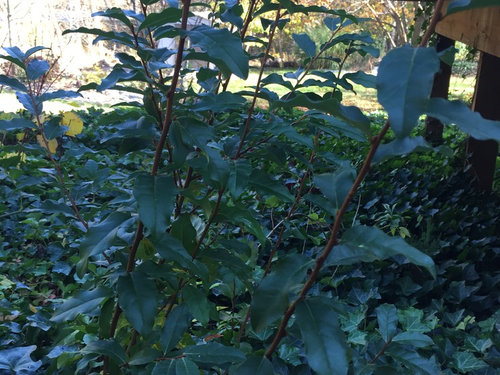
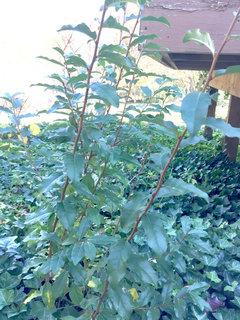
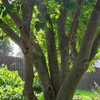
I live in zone 4. This multi-stemmed shrubby thing is growing in a bed of ivy. For a few years I have just cut it back to the ground, hoping it would give up. It comes back the next year stronger than ever.

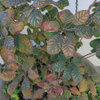
Could anyone Identify it for me? The veins are pinate, and the leaves are abt. 2 " long. Maybe it a 'good' shrub. If it's not, I'll have to dig it up.

Thanks,

Janice

Comments (19)

  • 9 years ago

    We can't really see enough detail of the leaves in those pictures. Is it evergreen or deciduous? What do the backs of the leaves look like? Possibly Eleagnus umbellata? Or a Prunus?

  • 9 years ago

    Looks like an oleaster to me also.

  • 9 years ago

    For a few years I have just cut it back to the ground, hoping it would give up.


    ==>>>nothing dies because of pruning ... next time you cut it.. treat with undiluted round up.. or stump killer ...


    looks a bit like a crabapple ...but those above are better at the ID game ...


    whatever it is.. it shot out the butt of the bird that stopped on the edge of your deck ... which only means... its sorta of a invasive .... and a vast majority of such are not really valuable things ...


    ken


  • 9 years ago

    That is pyrus calleryana! How can you people not see that? LOL

    Kill it with a cut-stump herbicide.

  • 9 years ago
    last modified: 9 years ago

    Maybe we can't see it because it isn't the case? Look at the leaf shape more carefully, Logan-Caldwell. It isn't cordate.


  • 9 years ago

    The leaves are glossy and have the shape of pyrus calleryana (species not 'bradford').

  • 9 years ago

    I can't tell what it is in that photo. The glossy leaves remind of glossy buckthorn but I can't make out the buds well enough to tell. Don't know-dark photo, not much detail.

  • 9 years ago

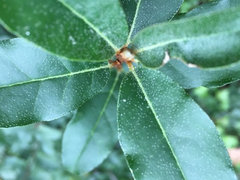
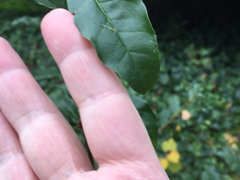
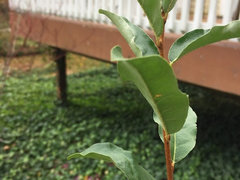
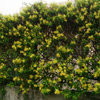
    Wow! First of all thanks for the help. I'm sorry about the dark photo, I should have known better. Here are some better ones. It isn't evergreen. There are three of them. Last year I just cut them off at the base, this year they are stronger than ever, and grew to abt. three feet.


  • 9 years ago

    Looks like some type of elaeagnus from the new pictures. Most likely a "good" shrub, just not for the space. Worth trying to transplant to a new spot.

  • 9 years ago

    If it is E. Umbellata, the fruit can be harvested and has many uses. They also fix nitrogen with their roots, helping other plants around them. They also have a nice ornamental value, producing very fragrant flowers.

    https://caldwellhg.blogspot.com/2016/07/autumn-olive-nuisance-plant-with.html

    This plant was introduced in 1830, and there is no stopping it. The benefits just outweigh it's downsides, use it to your advantage.

  • 9 years ago

    It's a very large shrub - more like a small tree. If you try to prune it to control the size, the result is an awkward looking mess. The fact that three have popped up in your yard uninvited shows the invasive nature. You would be wise to dig up all three and dispose of them before they grow larger.

  • 9 years ago

    I don't think that Ivy needs any 'help', Logan.

    I'd cut it out with a sharp spade and be done with it.

    Mike

  • 9 years ago

    We're so used to seeing nitrogen fertilization assumed to automatically be a good thing that it can be surprising to learn that the introduction of nitrogen to many if not most natural systems is not helpful to these systems. It ends up tipping the balance in favor of invasive stuff in more cases than not. And autumn olive is looking like a really bad one, right up there with the buckthorns and honeysuckles. No way can the continued use of this and other known problem-makers be justified.

  • 9 years ago

    Nitrogen fertilizers cause abnormally fast and tender growth making the plants an aphid magnet. Aphids can really distort new growth. I don't use fert at all in my garden, concentrating instead on good soil structure. Containers are a different story, and even then, only occasionally. My potting soil is made from decayed woodchips and a little garden soil. Little, meaning less than a quarter by proportion. Good for two years. By then most plants are planted out in the garden.

  • 9 years ago

    A little OT Mike but did you ever happen to see my post in the Containerized Gardening forum about Al's Gritty Mix? You-like me-are falling outside of that edict and should you-as I once did-make mention of the fact that while this technology is important for long-term containerized plants, that for those plantings which would only last the "summer", like all containerized plantings pretty much in a cold-winter area like this are, the mix does not really matter and is in fact not suitable for some plantings....you would find yourself at the end of lots of wrath in that weird forum. People really get attached to these concepts, yet here is me-a professional horticulturist in my 36th year of service to this city, using a combo of municipal compost and good field soil, to achieve outstanding results. The gritty mix would just dry out too fast. We achieve good aeration and permeability, and by Oct. when the planters are coming out, what's the difference if the soil has collapsed somewhat? These are annual plantings-the medium does not have to last for years and years. What a weird deal that was!

  • 9 years ago

    I really don't think the ivy needs help either, LOL. That's why I said move it to a more suitable spot.

  • 9 years ago

    They take it real serious over there. I just mix up what I think is appropriate for the plant and the container it's going in and for how long. A mix of woodchips of varying degrees of decay really do the job of aerating AND water retention while adding nutrients. No sense making it complicated. I have Japanese maple seedlings that were just under a foot tall in the Spring that are over 3 ft. tall now in one gallon pots. No fert.

    Pic tomorrow when it's light.

    Mike

  • 9 years ago

    I just dig up some soil, mix it with leaves and old mulch. Perfect and very cheap potting soil.