Software
Houzz Logo Print
fechterc

front yard landscaping

9 years ago
last modified: 9 years ago
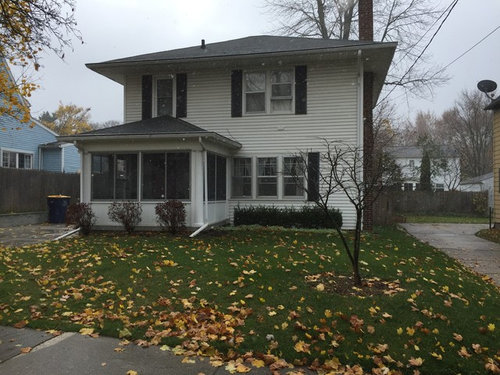
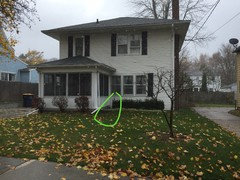
Looking for some help planning my front yard landscape.


Comments (14)

  • 9 years ago

    Always good to start with what zone you are in to recommend plants.

    fechterc thanked User
  • 9 years ago
    last modified: 9 years ago
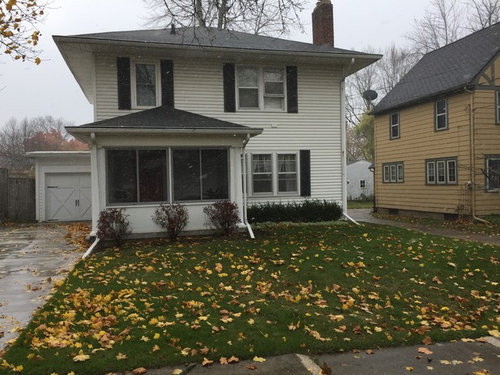
    Thank you Yardvaark for the scheme and arrangement. My planting zone is 6A and my home faces North with very little sun.

    What type of plants would you recommend?

    What type of boarder would you use for the yellow line?

  • 9 years ago
    last modified: 9 years ago

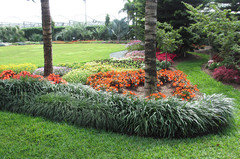
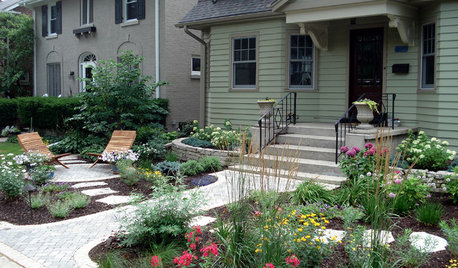
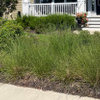
    A border of Liriope could work with some azaleas in your zone (pictured below), Sweet woodruff would be a good ground cover, pachysandra would be another wonderful choice for a ground cover.

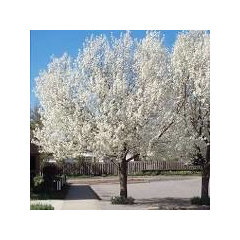
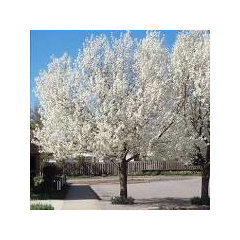
    Also I am a fan of Cleveland Pears (does not bear fruit except for tiny little shaped berries). Smaller tree, great for a front yard. Flowers white in the Spring, turns to green with leaves that shine and becomes a beautiful flaming orange/red in the fall.

    .When you look for trees look for small ornamental trees that won't cover the house or grow into the house., I noticed in 1 pic you have a tree in the second you do not--is there already a tree there?


    fechterc thanked User
  • 9 years ago

    Plaft, thank you for the excellent recommendations! I agree, the sweet woodruff will be a beautiful ground cover. The tree in the first photo is a redbud that will need to be transplanted.

    How much space is needed between the Cleveland Pear and the home?

    Thanks again for the help!!

  • 9 years ago

    Zone 6a (my zone too), you could also go with any of the upright form Japanese Maples, like Bloodgood, Fireglow, Katsura, or one of the smaller varieties of Flowering Dogwood, such as 'Cherokee Princess' or 'Summer Gold'. I'm partial to the multi-stem forms.

    fechterc thanked groundigger
  • 9 years ago

    Thank you groundigger. Any recommendations for the side of the porch? I can't find anything to fill this area.

  • PRO
    9 years ago

    I would definitely use a multi-trunk tree and since you already have a redbud, this could be used if you can transplant it successfully. However, the form of it now is not impressive. If this were mine, I would cut it back to the ground (6") in the Spring in order for it to become a fuller multi-trunk specimen. Doing this one year would probably not create enough trunks. I would do a second year if needed. I think a dozen trunks coming from the ground would create a nice, full bouquet structure. Japanese maple would be a good choice, too, as would several others. Look around and see what large shrubs grow that size.

    Since your windows are only 3' off the ground, you need a low shrub. It could be a single, low, spreading shrub or a collection of low shrubs that can be pruned in the desired shape. (I think dome is better than squared off.) I'm not going to know what will work best in your locale, so look around and see what others are growing that meet the criteria. Whatever shrubs you have at the farther back windows could be reconfigured to create the span and form.

    While I don't think Liriope makes a horrible border, I do not see the purpose of using a border plant that is TALLER than the plants that are behind it. I also do not see the need for such a border when a field of groundcover has its own nice edge. A flush laid brick mowing strip (8" wide) will make a nice, dressy way to separate the lawn from the bed. It helps with maintenance, covers nothing, and does not stick up looking junky. It must be installed well, though. If you want the cheapest nice edge, use a trench edge that is nothing more than periodically cutting off the edge of the lawn in a clean manner, next to a bed that is a slightly recessed elevation.

    While the ornamental pears can look handsome in their young age, they are fraught with problems (splitting) in their middle age. I would avoid.

    The "sprays" I'm showing at the house corner ... could be yucca or another plant that will create that form. Or it could be a cluster of perennials that does not get too crazy. At the farther back corner could be a different perennial or even another shrub if it is low enough. You must pick considering the light conditions. Look around your town to see what plants other people are using growing these sizes.

    The pink cluster could be annuals.

    fechterc thanked Yardvaark
  • 9 years ago
    last modified: 9 years ago

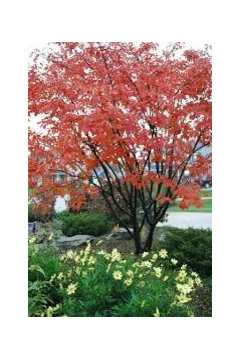
    The Cleveland Pear with get about 15-20' wide. Really not a big tree. I have not had problems with my Pear Trees, it is recommend from time to time to trim limbs because they are more upright and stiff. Otherwise a nice shrubby tree like a Service Berry could look good in the design Yardvark came up with.. Be careful with Japanese Maples I understand some varieties need to be protected from wind. They are beautiful though.


    fechterc thanked User
  • PRO
    9 years ago

    One other thing .... Is the grade around the house such that water flows away from the house? If it is not, can you adjust grade (slightly) so that this happens? If it already is, or you can, (and it certainly should be possible as this is necessary for the home's health) then use a splash block at the base of the downspout and get rid of the long downspout tails. They do not add a positive quality to the overall look.

    fechterc thanked Yardvaark
  • 9 years ago

    The Cleveland, or more correctly, Cleveland Select pear is a just a cultivar of Pyrus calleryana and ALL cultivars of this species are considered highly invasive across much of the country, certainly all along the east coast, southeast and through much of the midwest. It has formed large colonies across much of the eastern US, outcompeting native plantings. It DOES produce fruit, although not edible, and hybridizes easily with any nearby callery pears, resulting in the proliferation of this troublesome species. I would highly advise against planting ANY callery pear - 'Bradford', 'Cleveland Select' (aka 'Chanticleer' or 'Stonehill'), 'Aristocrat', 'Autumn Blaze', 'Redspire', etc. - as any and all contribute to this problem. They also tend to be overly weak-wooded, structurally vulnerable and are easily damaged by wind, snow and ice. And when in bloom, the flowers stink! You will find countless discussion about this issue on the Trees forum. This is not a nice tree and should be avoided at all costs!!

    fechterc thanked gardengal48 (PNW Z8/9)
  • 9 years ago
    last modified: 9 years ago

    Thank you gardengal48. What tree would you recommend in place of the Cleveland Select that has a similar appearance?

    Would a crabapple or Malus tree be appropriate for yardvaark's scheme?

  • 9 years ago

    Interesting, did not know that about Pears. I have not had any problem. But sounds like you should avoid. Still like the idea of a Service Berry. Good luck in all your your gardening, wishing for the best and that you will love your new landscape for years to come. Choose wisely.:)

  • 9 years ago

    In place of the pear, you could consider a redbud (Cercis canadensis), a serviceberry (Amelanchier species) or a dogwood (Cornus florida, C. kousa or a hybrid). All are relatively small trees - smaller in stature even than the ill-advised pear.

    plaft - you may not notice the pear being a problem but then invasive species seldom are a concern in cultivated gardens :-) The problem is when they escape cultivation and invade natural settings, which the pear has done to an astonishing degree. Probably one of the most serious invasive threats we have in this country!