

Kentucky Coffeetree
We planted a coffeetree last year and it looks perfectly healthy except for each layer fall/ early winter it's branches fail off... even just to the touch... any ideas why??
Comments (41)
 9 years agolast modified: 9 years ago
Those are really not branches but rachis or extended petioles, to which the compound pinnate leaves attach. A number of other trees with a similar leaf structure show this characteristic as well. It is perfectly normal but does the leave the tree with somewhat of a naked, bare appearance in winter. The botanical name Gymnocladus is Greek for "naked branch' :-)
 9 years ago
It's a Jekyl and Hyde tree. In summer it looks lush and tropical, in winter it looks like death warmed over.
Related Professionals
Quincy Landscape Architects & Landscape Designers · Toms River Landscape Architects & Landscape Designers · Yakima Landscape Architects & Landscape Designers · Dalton Landscape Contractors · Sedalia Landscape Contractors · Lebanon Landscape Contractors · Ithaca Landscape Contractors · Eau Claire Landscape Contractors · Vancouver Landscape Contractors · Manhattan Home Additions · Meridian Home Additions · Gloucester Home Additions · South Sioux City Home Additions · Youngstown Home Additions · Salem Home Additions 9 years ago
Kudos to you for planting this wonderful American native. It cannot be an easy tree for retailers to market in spring when it looks mostly dead, especially when crabs are in full flower. I find the seasonal transformation of this tree to be a desirable quality.
- 9 years ago
planted a few whips a couple years ago they have basically done nothing up to this point. should have went with a slightly larger starter tree with a better root system
- 9 years ago
Patience is key with this tree. Plant it and check back in three years. If not doing much, check back in two years.
- 9 years ago
It's what they do...
For quite some time during its youth, it will drop everything... looking like a dead stick every winter. Just give it time...
- 9 years ago
A couple more comments...
Around here the tree leafs out around the same time as everything else, so not as stark looking in early spring.
The sexes are separate, female trees have thick pods somewhat like honeylocust, and the blossoms are fragrant up close. The literature says that male trees are more upright and taller than females, which are shorter and more wide-spreading.
Trees can be clonal. My tree sprouts sparingly from the roots, but since it's in grass these get mowed off. When I moved the tree the roots left behind made a clump of trees, I've left 2 and these, while smaller than the original, are more vigorous, even though genetically identical.
My largest tree is around 30 years old from seed collected on the campus of a local college. Back then the parent tree was a large open grown specimen, but was in decline. It was removed about 10 years ago and unfortunately not replaced.
The tree is native locally on basic soils but is not common. It does well on acid soils. The native trees I'm aware of are in small (probably clonal) groves. I once read that throughout it's native range trees are generally found widely separated, leading to the belief by some that the indigenous people used the tree and planted seeds in their travels.
A very interesting tree that may be an acquired taste for some.
 9 years ago
The seed-pods of KCT also contain a somewhat sweetish "goo" like honeylocust, tho not as sweet as honeylocust-goo. One might guess for both trees that this is an attraction for animals to chew/eat the pods & disperse the hard seeds.
A native tree that IMO should be planted more. Wherever I see mature trees they are attractive & distinctive in all seasons. Below is a big one in Washington Co, MD:
http://www.mdbigtrees.com/tree_detail.aspx?tree=TR20121127200114477- 9 years ago
NC State Univ factsheet states that the sweet "goo" within the seed pods is toxic. I have tasted it before with no ill effects but only a very small amount.
- 9 years ago
Id really like mine to get a move on. there are some other trees near by I want to cut down eventually when these make a decent canopy
- 9 years ago
Please, should anyone wish to know an extremely easy and virtually 100% effective way to get KCT seeds ready for planting/germination, fill a bucket with hot water. This water can even be scalding hot. Careful! Now, after you've removed a bunch of the hard, roughly marble-sized seeds out of the pods, just place them into that hot water. Done! Whenever the water has cooled, the seeds are ready to go. Obviously, you will have mixed flowering types as well as open genetics.
I'm mixed on the tree. We have many on the streets; The winter look is an acquired taste. The summer look is quite impressive indeed, and this is a well-adapted tree for us here in neutral-to-alkaline soil land. I wouldn't take this tree any further north than here. It both doesn't belong there-should it escape into the woods-and would probably eventually find conditions unsuitable.
- 9 years ago
Like IPA and dark chocolate, it's a taste I've acquired.
Tom, I'm confused: Are you concerned it may be potentially invasive?
- 9 years agolast modified: 9 years ago
Invasive... not a chance... at least, not unless the mammoths make a comeback and start spreading them around. Despite their name, here in KY, they are, at best, uncommon, if not altogether rare. Don't know that I've ever seen one 'in the wild' here in western KY... have seen some planted in town, along the interstate highways, and on a walk with my daughter through Iriquois Park in Louisville a month or so back, I ID'ed 2 or 3 - initially by their unique bark character, but the leaf structure was a dead giveaway.
- 9 years ago
that is funny in northern KY they are rare as well..no much for a KY coffee tree
- 9 years ago
That hot water method works with other legumes as well, like robinia and laburnum.
 9 years agolast modified: 9 years ago
"Please, should anyone wish to know an extremely easy and virtually 100%
effective way to get KCT seeds ready for planting/germination, fill a
bucket with hot water. This water can even be scalding hot.""That hot water method works with other legumes as well, like robinia and laburnum."
The only times I could successfully germinate Lessertia montana seeds (also a legume) was after tossing them into a coffee cup of water just removed from the microwave, which had been brought to a _full boil_. Belying the notion that such heat would sterilize them.
- 9 years agolast modified: 9 years ago
With KCT, I just take the seeds and rub them vigorously for a few strokes on a concrete block (you city folks could do it on the sidewalk, I suppose) or a file/rasp - just enough to break through the seedcoat, then soak them for a day or so prior to planting.
It's fun for kids to watch them swell to 2-3 times their original size, splitting the seedcoat off as they absorb water.
I guess if I were doing large quantities, I'd try the hot water deal, but for just a few, I'm just gonna scarify the seedcoat.
- 9 years ago
Thanks for the mammoth link, Lucky -- very interesting.
Most of the biggest MD KCTs are in Washington Co, prb'ly because it's the county w/the largest tracts of limestone soil. Ditto for Chinkapin oak. - 9 years ago
I would be concerned with invasiveness where it is not native. Like lots of legumes, root suckering is a possibility, and that can mean big-time invasiveness. I like the tree, just don't want it to start showing up in maple/hemlock, or some other similarly high-conservativeness-value plant community. We've got enough junk like that already with Robinia.
 9 years ago
For some reason I've taken a liking to them. They are like this quiet dark horse, even though they are native and definitely present.
Finally going to plant one...this one in particular due to the branching which is highly desirable in winter.
http://www.mckaynursery.com/kentucky-coffeetree-decaf-kdeca.html
- 9 years ago
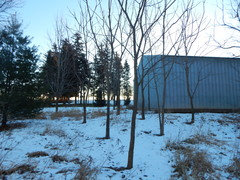
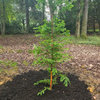
I planted 7 of them in a little grove a few years ago and I think they are looking pretty good. They started out as basically roots from some nursery trees that were cut off at the ground and then began to sprout. The sprouts were about 2 feet tall when I planted them, but with roots from the original 1 to 1 1/2" caliper trees. - 9 years ago
The "nativeness" of Kentucky coffee tree in Wisconsin has long been exaggerated. Just barely present-likely a relict population from some warmer period-not sure about that bit-this is an example of how the clamoring for native species can and often does go wildly off-course, these things being touted as "native" from one end of the state to another. Never more than a tiny cohort in this state during the historical period. And that only in the extreme southeast. A couple blips and bleeps extending up my way, towards Green Bay, but tiny, tiny islands, nothing more. Meanwhile, whole genera of true, good native plants are utterly ignored, or bulldozed out of the way. We had this tree show up as a "native species" in some stormwater projects-right around the time my employer was moving me into that facet, so it was just before the point where I had any control over that stuff. Such doesn't happen anymore!
- 9 years ago
Nurseryman33: I love that little grove, that place is looking good already and it will be even better every year when the trees grow
 9 years ago
More about the 'nativeness' of the species to the north of it's known range. Kentucky Coffee Tree is one of several species of tree in North America that was dependent on the mega-fauna herbivores for their northern migration after the last ice age. When the mega-fauna disappeared, the spread back into their pre-ice age range slowed drastically.
The extreme example of that would be Osage Orange...no reason why it shouldn't be found naturally all over eastern North America if it weren't for the loss of the herbivores it depended on.
- 9 years ago
I don't doubt that smivies. Yet that tree, along with the entire Leguminaceae, was absent from anywhere north of the "tension zone", a known zone of climactic shift (who knows now?) that crosses this state at a roughly SE to NW line. It's out of character with what was, yet in truth, with climate shift clearly going on, this and other central hardwood forest tree types may become the norm up here. Hate to see it but could be. Heck, the Menominee indians, who just happen to sit on the finest chunk of northern forest in the nation, are experimenting with sycamore and perhaps other more southerly species, north of the 45 parallel.
- 9 years ago
Can't say I know much of the history but I do see them quite a bit in the state forest here. They aren't used much around here what so ever unless Milwaukee uses them. Just think they are nice and should be used more.
- 9 years ago
Can't we predict with some reasonable degree of confidence a tree species likelihood towards invasiveness? How far has science advanced over the past fifty years or so towards this end? I'll let forest ecology experts and botanists guide my thinking, but it seems highly improbable KCT will become a nuisance tree. Are there any other woody plants that are relatively scarce in their native haunts that have shown a tendency towards invasiveness when introduced outside their natural range?
- 9 years ago
Efforts at making such predictions are in existence, but scattered and hard to find. I base my concern on the tree's family; Legumiacea are highly adaptive, invasive plants all over the globe. And those that think the fact these plants are nitrogen fixers, and that this is somehow a good thing are misinformed. Most natural systems-plant communities and all the other organisms that depend on them-are very low-N systems. The addition of more N creates problems, not solutions. So
I would not tout this tree's supposed nitrifying abilities as a positive thing in escaped situations. It only makes life more difficult for the more conservative-value species. BTW, the use of the word "conservative" here is in the ecological sense. I'm sure not talking about political philosophies here. The term "conservativeness" in this context refers to the likelihood of a given plant species' being found in an undisturbed environment. In other words, the higher value a species is given on these charts, the more rare and special it is. A dandelion has virtually no value in this hierarchy, a hemlock tree or a specialized forb that lives in only certain environments will be rated higher. For example. - 9 years ago
According to the USDA, there's little to worry about as far as Kentucky coffeetree's "invasive" potential, especially since most of us don't have mammoths roaming the neighborhood.
"Kentucky coffeetree’s numbers are declining rapidly due to over harvesting.The species is not invasive; it is only found in small clusters due to root sproutingand makes up a rare component of any woodland. In nature the seeds germinate with difficulty due to a hard outer shell. Squirrels do not cache them, so the seeds do not spread from the mother tree except along streams where the seeds may be transported by water down stream.
https://plants.usda.gov/plantguide/pdf/cs_gydi.pdf
That site (and some others) recommend soaking seeds in concentrated sulfuric acid to aid in germination, which is potentially risky and unnecessary (the hot water soak method works fine in my experience).
I have a nearly decade-old tree raised from seed collected in Kentucky. I like the form and interesting leaves, plus it has a cool history.
- 9 years ago
Any Dirr fans out there? He made some bad calls (check out his take on Euonymus alatus), but I like his praise for KCT: To know her is to love her.
- 9 years ago
Dirr's just a man. He also single-handedly damned Norway spruce to oblivion for decades. That was dumb, and led directly to the millions of junk Colorado and Black Hills spruces planted all over creation and dying ugly. He's no saint, just another person.
- 9 years ago
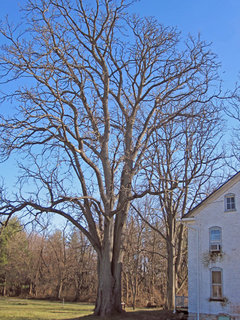
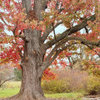
sam -- yes indeed, the older KCTs are quite distinct in winter. Trunk bark up close is also attractive & corky. That's a female tree? Would've thought some pods would still be hanging on....
Tom -- not just Dirr. States & other government orgs got into the "natives only" scare-mongering and started discouraging even Norway spruce! The scare spread to the retail nursery trade and continues today -- not nearly as many NS planted now as in the past. Replaced by foo-foo, short-lived, disease-prone plants that have gaudy flowers for a few days in spring (often right around the peak of spring store-sales) and are nondescript the rest of the yr. - 9 years ago
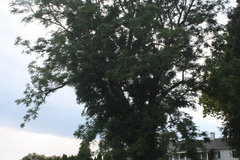
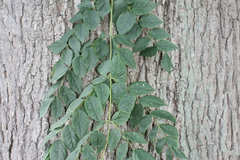
Here's another nice example of KCT @ Swan Harbor Farm overlooking the Chesapeake bay, this one is male.
- 9 years ago
Tom, a little off topic but you mentioned Black Hills Spruce. I've been telling everyone they are a terrible option for high humidity areas like WI and no one believes it. Do you see an issue with Black Hills Spruce?
- 9 years ago
Absolutely. It maddens me to see really good outfits, like Johnson's, etc. still tout BHS in their literature. It's a known dog, and for all the same reasons. And it stands to reason that when some genius plantsman decided that the white spruce from S. Dakota were the ones to plant in Wisconsin, not the native type we've already got.....that there would eventually be trouble. It's here now. Nor did I ever agree that BHS is somehow more aesthetically desirable than the native item.
- 9 years ago
I do like those KCTs in your photos, fellas, and in fact, anywhere from S. WI on down, I'm fine with the tree. I also like its use as a street tree up here and don't see problems with that. People are starting to accept them as they shape up with some age. I just bristle at certain plants always being on lists of WI natives.....it's way more complicated than that. Like my frequent and I'm sure tiresome-to-some rants about Betula nigra! But KCT are great trees and part of a truly important family, especially once one pokes their nose into tropical forests!
- 9 years ago
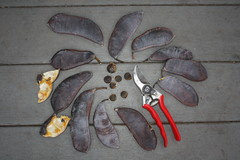
KCT is the only large growing legume in my state which is unarmed. Here are the pods many of which are empty. Every winter ID fieldtrip should include KCT.




sam_md