

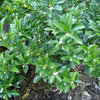
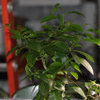
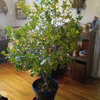
Eureka lemon with scab and mites (?)
I've just bought a house with a Eureka lemon tree (has seeds, thickish peel) that has been neglected.
I pruned about 1/3 of it off, removed all the fruit I could reach and on close inspection saw the lemons have citrus scab. My father also pointed out red spider mites via photos and he recommended imidacloprid (Bayer Advanced) for the mites.
I read that a copper fungicide sprayed twice is right for the scab.
Is there a treatment that will do both scab and mites, before I spend $40 on two separate treatments?
Comments (11)
 9 years ago
I can't help much with the scab--but I do know that imidacloprid won't help with mites. As mites are not insects, it doesn't have efficacy on them, and can actually make the problem worse!
The most ecological way of treating mites would be periodically spraying the tree with neem oil (mixed with water according to instructions). The azadirachtin in the oil is a proven miticide, and as a bonus, the oil will suffocate any scale insects and other beasties on the tree if there are any. If you want to control mites via chemicals, look into abamectin.
-Tom 9 years agolast modified: 9 years ago
- The fruit on your tree has already developed scab lesions, therefore the fruit will not become unmarked even if you spray. You can do a spray now if you wish. When scab is severe and there is a great deal of inoculum carryover from the previous year, as in your tree's case, fungicide should be applied before the spring leaf flush is one-fourth expanded to reduce inoculum levels and protect young flushes. Another application should be made at flower petal fall to protect young developing fruit. A third spray will protect fruit until it becomes more mature and resistant to infection. Copper fungicides are usually as effective as others for protection of fruit.. The main broadcaster of scab is wind driven rain, therefore any over head watering should not be done because it greatly increases the amount of infection. The fruit that that you picked that shows scab infection is OK to consume. For mite control on larger sized trees, horticultural oil would be much easier to use, and does not have the foul odor of neem oil. Talk to the company that will be doing the spraying, and see if it might be wise to wait until the spring flush.
Related Professionals
St. Louis Landscape Architects & Landscape Designers · Plattsburgh Landscape Architects & Landscape Designers · Fayetteville Landscape Contractors · California Landscape Contractors · Gulfport Landscape Contractors · Corpus Christi Landscape Contractors · Newport News Landscape Contractors · Fergus Falls Landscape Contractors · Winona Landscape Contractors · Albuquerque Landscape Contractors · Redding Landscape Contractors · Helena Landscape Contractors · Charlottesville Home Builders · Fall River Home Builders · Fairbanks Home BuildersAnnie
Original Author9 years agoThanks both. I'll be doing the spraying myself so I'll locate some horticultural oil (since it seems to hit both scab and mites) on Amazon and go nuts! Can you tell me at what frequency I should spray for the mites with this, if it is not at the same frequency as scab?
This PDF http://www.bonide.com/assets/Products/Labels/l210.pdf just says spray monthly or as needed. Which seems like a lot of work... do you think three monthly applications should do it, if the symptoms go away?
- 9 years ago
Horticultural Oil does do a very good job controlling mites, but where did you come up with it controls scab?
Annie
Original Author9 years agoHm, I did some Googling and it came up. Is this incorrect?
http://homeguides.sfgate.com/oil-spray-citrus-trees-50204.html"Horticultural and neem oil control insects -- such aphids and whiteflies
-- that carry viruses that infect plants. In addition, they protect the
citrus plant from various fungal diseases, such as powdery mildew,
rusts, black spot and scab. Neem oil works by preventing the fungal
spores from adhering to the plant while horticultural oil disrupts the
fungal pathogen's cell wall and prevents it from attaching itself to the
citrus plant. "- 9 years ago
From reading your information, it states that H. Oil when sprayed on the tree will prevent the fungus from attaching to the fruit and tree. This is the first I heard of that. However, even if so, this would "work" only for an uninfected scab tree, and would have to be sprayed over and over and over every couple days. Personally, I've, actually never heard of HO being used for scab by anyone. Copper sprays actually attack the fungus.
Annie thanked Silica  9 years agolast modified: 9 years ago
This might help also..You got some very good advice up above! I don't see where Citrus is mentioned but you could probably take something away with this..
Cultural control
- For control of apple scab on apple and edible crab apple cultivars, see the IPM guide for home apple growers.
- Rake up and destroy fallen leaves before the first snowfall to eliminate locations where the fungus can survive to re-infect the plant the following growing season.
- Alternatively, leaves can be chopped with a mulching lawn mower. Fall lawn fertilizer applications will further encourage the breakdown of these leaves. In mulched areas, urea can be applied to chopped leaf litter to encourage decomposition.
- Do not overcrowd plants – use size at maturity as a spacing guide.
- Prune crab apple trees so that the branches are spaced well enough apart from each other so that air can move through the trees and dry the leaves quickly.
- Remove vigorous upright suckers and water sprouts that have formed along the main trunk or within the canopy in order to improve air movement and sun penetration. This will help leaves to dry quickly after rain or dew.
Fungicides
Fungicides must be applied preventively to successfully manage apple scab. Because spores are released so early in the growing season, fungicide sprays must begin when the first green leaf tips emerge in spring. Sprays should be repeated until petal drop for crab apple. If the tree is healthy and free of leaf spots at this point, further treatments are unnecessary.
Check fungicide labels for the recommended spray interval. Most labels offer a range of days to wait before spraying again. (e.g. 7 to 10 days after spraying, you will need to spray again). Several factors affect what spray interval is most appropriate. In plantings where there was a severe scab infection the previous year, use the shortest interval. In plantings where scab has not been a problem, a longer interval will probably give adequate protection. In addition, if the weather is dry the longer interval is acceptable, whereas during rainy weather the shorter interval is preferable.
Once leaf spots appear in the tree, fungicides provide very little control of disease. There is no point in spraying an already heavily infected tree. Contact a certified arborist to apply fungicides to large trees. Chemical treatments are listed in the table below.
The name of the plant being treated MUST BE LISTED on the fungicide label or the product cannot be used! Some products are registered for use on ornamental crabapples but are not safe to use on crab apple or apple fruit intended for human consumption. Always completely read and follow all instructions on the fungicide label.Active ingredient Representative Trade Names*Tebuconazole Bayer Advanced Disease Control for Roses, Flowers and ShrubsMyclobutanilSpectracide ImmunoxCaptanBonide CaptanChlorothalonilBonide Fungonil, Ortho Garden Disease ControlPropiconazoleBonide InfuseMancozebBonide MancozebSulfur/lime sulfur**Safer Brand Garden FungicideNeem oil**Garden Safe Fungicide3Copper#Bonide liquid Copper*Trade names are for demonstration purposes only and do not imply endorsement by UMN Extension. Trade names may change over time. Products with the same active ingredient but different trade names should offer disease control as well.
**Burning of plant tissue may be observed especially in times of high heat.
#Russeting of fruit may occur with use of copper products- 9 years agolast modified: 9 years ago
And this article addresses it in particular....
2016 Florida Citrus Pest Management Guide: Ch. 20 Citrus Scab1
M.M. Dewdney 2
Citrus scab caused by the fungus Elsinoë fawcettii affects grapefruit, Temples, Murcotts, tangelos, and some other tangerine hybrids. There is no need to control citrus scab on processing fruit, except possibly Temples, where severe early infection reduces fruit size. Reduction or elimination of overhead irrigation on susceptible varieties during the active growth period of the fruit will decrease disease severity.
Spores of this fungus are produced directly on scab pustules that occur on leaves and fruit. One to 2 hours of wetting are sufficient for spore production and only an additional 3–4 hours are needed for infection. Spores are spread to healthy tissues by water splash.
If leaves from the previous season are heavily infected by citrus scab, 3 applications of fungicide may be needed to control the disease: one at about 1/4 expansion of the spring flush, a second at petal fall, and a third about three weeks later. With citrus scab, the timing of the spray applications is critical but if there is little carryover of disease from the previous season, the first spray can be omitted. Ferbam, Enable 2F, Abound, Gem, or Headline are good choices for the first application because they are all able to kill the fungus in old lesions and thus reduce inoculum as well as protecting foliage. Any of these products may then be used in the petal fall spray but do not use a strobilurin product (Abound, Gem, or Headline) twice in a row. Copper fungicides, Abound, Gem, or Headline are good choices for the third spray since they will protect fruit from early melanose as well as from scab, but copper products are less effective for scab and should not be selected where scab pressure is high.
On Minneola tangelos, Murcotts, and certain other varieties, Alternaria brown spot and scab can occur in the same grove. In those cases, copper fungicides, Abound, Gem, or Headline may be preferred, since Ferbam and Enable 2F are less effective for Alternaria control. With average quality copper products, about 2 lb of metallic copper per acre are usually sufficient for scab control. The scab fungus may develop resistance to Abound, Gem, or Headline if these products are not rotated with alternate modes of action frequently. These products are all strobilurin fungicides and only one should be selected for scab control each season.
Fruit usually becomes resistant to scab sometime in May, about 2 months after petal fall.
DO NOT APPLY ABOUND,GEM, OR HEADLINE IN NURSERIES. Application of these fungicides in nurseries can result in selection of resistant strains which are then distributed on nursery stock to groves.
Recommended Chemical Controls
READ THE LABEL.
See Table 1.
Rates for pesticides are given as the maximum amount required to treat mature citrus trees unless otherwise noted. To treat smaller trees with commercial application equipment including handguns, mix the per acre rate for mature trees in 125 gallons of water. Calibrate and arrange nozzles to deliver thorough distribution and treat as many acres as this volume of spray allows.
Tables
Table 1.
Recommended Chemical Controls for Citrus Scab.
Pesticide
FRAC
MOA2
Mature Trees
Rate/Acre1
copper fungicide
M1
Use label rate.
Enable 2F
3
8 fl oz. Do not apply more than 3 times per year; no more than 24 fl oz. (0.38 lb a.i.)/acre. Minimum retreatment interval is 21 days.
Ferbam Granuflo
M3
5-6 lb. Maximum 3 applications a year and do not apply more than 6 lb ai/acre in a single application.
Abound3
11
12.0-15.5 fl oz. Do not apply more than 92.3 fl oz (1.5 lb ai)/acre/season for all uses.
Gem 500 SC3
11
1.9-3.8 fl oz. Do not apply more than 15.2 fl oz/acre/season for all uses. Do not apply within 7 days of harvest.
Headline SC3
11
9-12 fl oz. Do not apply more than 54 fl oz (0.88 lb ai)/acre/season for all uses.
1Lower rates can be used on smaller trees. Do not use less than the minimum label rate.
2Mode of action class for citrus pesticides from the Fungicide Resistance Action Committee (FRAC) 2015. Refer to ENY624, Pesticide Resistance and Resistance Management, in the 2016 Florida Citrus Pest Management Guide for more details.
3Do not use more than 4 applications of strobilurin fungicides/season. Do not make more than 2 sequential applications of strobilurin fungicides. Do not use in citrus propagation nurseries.
Annie
Original Author9 years agoThanks for all the comments folks. So I have done one spray of horticultural oil, and still need to buy a treatment for scab. A few more questions:
1. Can I eat lemons sprayed with hort oil? Or should I harvest and throw them away?
2. How often to spray hort oil for mites? Monthly? For how long?
3. I cannot locate a lemon-specific fungicide. Admittedly I've only shopped for 9 different products on Amazon so far and found none of them specified lemons on the label, or they were unavailable, or only available in a pack that costs $500... Can anyone suggest a specific product for scab on lemons please? For my one tree?
4. Can I use the same sprayer for both treatments?
5. Do I need to wait between spraying for different things?
Thanks!!!


Jean