Software
Houzz Logo Print
kitasei

serious advice re voles

9 years ago

I posted this summer about the sprawling network of voles that has made a lawn squishy. I stuck a hose into one hole and let it run forever thinking I'd flood it. I gave up before it ever filled. I lost a heather to root damage. I got advice about trapping, which seemed overwhelming in light of the numbers, and a Barred owl appeared that I hoped would take care of the problem. Well yesterday i pulled out a new climbing rose with NO root left! I'm ready to go to war, but can it be done effectively now that winter is here? What should I do when I see a big hole right next to a rose, hydrangea, or heather? Excavate it? Dig up the plant? Is there a way to protect roots?

Comments (20)

  • 9 years ago

    Anything you can do to encourage predators like owls, hawks, weasles will help. Several times this past summer I saw a Merlin (which this program insists must have a capital M) swoop down and eliminate a small part of my vole population.

    Thiram containing animal repellents placed directly in the holes and runs. Not sure how well this will work in below freezing temperatures. Keep it away from any area people frequent. The odor is a very effective human being repellent

    kitasei thanked akamainegrower
  • 9 years ago

    Snap type mouse traps baited with apple, peanut butter, lettuce, potato. The smallest size Hav-A-Hart trap baited with the same as above. These have been most effective in eliminating voles from my small lean-to greenhouse.

    kitasei thanked akamainegrower
  • 9 years ago

    The Hosta Forum had a recipe for vole control

    tj

    kitasei thanked tsugajunkie z5 SE WI ♱
  • 9 years ago

    Great suggestions all! I had to google thiram and don't know where to source it. Nor do I know how to procure the castor oil that would work and be in the quantity needed... Amazon? I think either would have to be done in conjunction with trapping or I could sacrifice the lawn (such as it is)...

  • 9 years ago

    A very quick Google turns up no thiram and a couple products which used to contain it no longer do. You might want to try one of the granular animal repellents based on hot pepper and other ingredients. Again, keep away from people-inhabiting areas.

    i've never tried it myself, but fox or coyote urine or products containing it are supposed to be effective. Do My Own Pest Control is a good website with many repellents. Ingredients listed for all of them. Any outlet selling supplies for trappers would very likely have the urine products. If you have a cat, try using the clumping type litter and placing the urine soaked clumps in the holes. Castor beans ought to be available in quantity from large seed houses, but may be tightly restricted.

    once food becomes scarce, trapping can be very effective and can make a big tent in the population pretty quickly. You really do have to use quite a few traps and keep at it for the entire winter. A pain but worth it. It would probably be a good idea to continue to utilize repellents over the next summer to prevent a new vole population from taking over the old runs.

  • 9 years ago

    My gardens all touch rough field on at least one side, and there is a never-ending supply of voles constantly arriving from the fields, so I have tried a lot of things to protect plants:

    vibrating machines (didn't see too much difference)

    castor oil in many combos - alone, in the hosta forum's vole repellent mix, mixed with hot pepper trimmings, and there might have been a bit of reduction, but they were still there, tunneling and munching. (I can get castor oil at my local Home Depot. It comes in a yellow hose-end sprayer or as granules, both in the pest area of the garden department.)

    traps (I don't think I had enough of them to make a dent, and I don't want to catch the snakes or birds that also frequent the gardens, so either they need a box over them or I use them in winter.)

    gravel around each plant installed when planting (maybe helped some)

    Stomping tunnels right before freeze (this helps reduce winter damage)

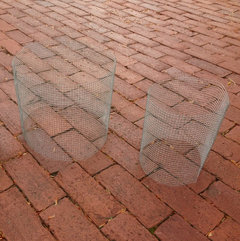
    and realistically, the only two things I have found that really work are barriers (I use either 1/4" wire mesh AKA hardware cloth or plastic mesh to make an 8" deep cylinder/bottomless basket to place in the planting hole that sticks up at least 1" above grade) and using plants that the voles like less than the field plants.

    I would love to find something low tech and less expensive and less visible than mesh baskets, but I haven't found anything yet. I probably have more vole population pressure than most gardens, so something may work better for you than for me if your gardens have less of a ready supply of the **&%#* critters.

  • 9 years ago

    I'm with NHBabs on all things castor oil I've sprayed a homemade castor oil solution and poured Ferti-lome MoleGo into the holes. My voles went away. Of course, it may have helped that the snow cleared last winter so predators had a better chance of catching the buggers.

  • 9 years ago

    a serious gardener told me several years ago that his jack russel terrier was the best vole control. their instinct is to kill vermin/rodents. not recommended if you have cats or hamsters. :-)

  • 9 years ago

    I once saw a TV show in which rat terriers caught rats and shook them to death. It was impressive.

  • 9 years ago

    When we had a indoor/outdoor cat, we didn't have the vole issues that we currently do, so that may help, similarly to the terrier mentioned by Jeff_al. I found a photo of the vole exclusion cages that protect my favorite plants. They aren't perfect (rarely a vole goes over the top of one) but they work better than anything else I've tried. (just don't step on one barefoot - ouch!) I use castor oil and stomping for less vulnerable plants.

    kitasei thanked NHBabs z4b-5a NH
  • 9 years ago

    My best Christmas present was SIX vole traps, each of which has a ferris wheel mechanism inside that catapults the vole to a holding cell and ready for the next -- up to five times. The first night I caught five, the next night two. Last night I caught none. I emptied and rinsed them, added new apple slices. So now I would like advice about the finer art of trapping. How many voles should I expect to catch at a single hole, or in a given area? Is it possible that seven voles in an area of 20 x 20 is all there are? Time to move to a new area?

  • 9 years ago

    Another question. What can I do with dead voles? Does anything eat them? Do they attract predators I might not want?

  • 9 years ago

    Compost them. I've done it with gerbils, I'm sure voles would rot just as nicely.

  • 9 years ago

    Kitasei, can you post a photo or two of the traps? I am very interested.

  • 9 years ago

    Dead voles attract things that eat voles. Something makes ours disappear, though that is probably crows since they get them from the back porch.

  • 9 years ago

    I didn't think that the usual predators -- snakes, owls and hawks, raccoons - ate anything dead. Babs, I'll take a picture of my wonder traps tomorrow (with an update on my tally!). Happy New Year all.

  • 9 years ago

    Here is the trap I'm using. Caught one this morning, in the old location. None in the new areas Maybe peanut butter is necessary in winter? I have just been using apple.. http://www.kness.com/ketch-all

  • 9 years ago

    I just read that placement of the trap is crucial because voles do not stray from their paths... Also, will remember to sprinkle seeds or oatmeal outside the trap! My goal is 100 by the first daffodil (approximately 100 days of the Black Period).

  • 9 years ago

    Thanks for sharing your experience with this trap, kitasei!