Software
Houzz Logo Print
willskatesruff

Need help with my Adenium. cant figure out what is wrong.

9 years ago
last modified: 9 years ago
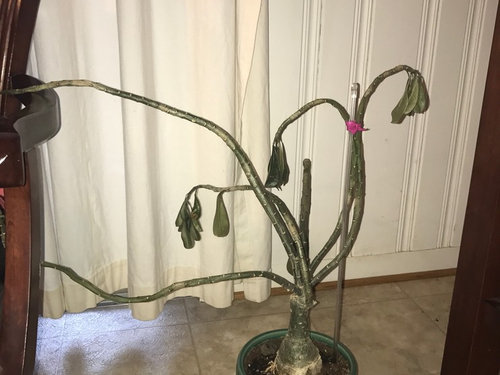
I was gifted this Adenium earlier this year, and it has been thriving on my back porch until last week. Temperatures have finally dropped here in Georgia, and it spent some time outside in the cold before I brought it in. Also, when I was away, my dad watered my Adenium unknowingly. now its branches are drooping, they are soft, but also shriveled. The leaves are dying, but all of the branches are still green, and when i poked small holes in them, white stuff came out, which leads me to believe that there isnt any rot present. I have been reading countless forums online and I cant seem to figure out what is going on. I cant tell if it is dehydrated, was hurt by frost, or is experiencing rot. Please someone give me some insight, and tell me what to do to save this Adenium.

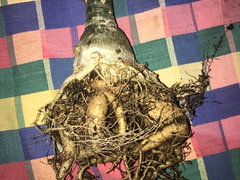
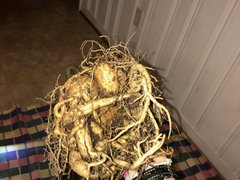
EDIT: I posted pictures in the comments of the unpotted plant.

Comments (8)

  • 9 years ago

    Hi, saw your post in the Plumeria section. Ironically, I actually spend most of my time here. Anyways;


    Water is probably not the problem. The branches probably were damaged by the cold. If it was exposed to freezing temperatures for an extended time, that might be the problem.


    See how your leaves are drooping, but still green? Plants don't do that when they get dehydrated. They suck water and nutrients out of the leaf, leaving it yellow and withered before it drops off. That tells me it's probably a reaction to the cold exposure.


    Check the caudex (the swollen trunk at the base of the plant). If it is still firm, it probably isn't too damaged. I would also unpot it and check the swollen roots beneath the soil. If they don't show signs of rot, then you're probably safe, although it wouldn't hurt to apply some anti-fungal.


    If isn't firm, you can look up a course of action. Some people will cut the dead parts out, it's a pretty drastic operation and I'm not an expert on that, since I've never had to deal with it. Luckily, if it does survive, adeniums are absurdly hardy. They don't like cold or rot, but they will tolerate unbelievable amounts of physical mutilation.


    You'll probably loose the branches from where the withering is and above. Cut them off if they don't recover and you notice the withering spreading downwards. That will let the adenium form a callus. Careful, the sap is poisonous, like plumeria sap. Don't sweat the branches; adeniums usually get pruned down to about that level when they get as leggy as yours.


    Be careful with the watering, it might stay dormant all winter, and you shouldn't let it go completely without water, but you don't want it to rot either. Maybe give it a little water once or twice a month, it really depends on the potting medium.

    willskatesruff thanked thezombies
  • 9 years ago

    Also, it looks like you probably have a grafted adenium. Any idea what the flowers look like? I'd say probably not the standard single pink flower, because that's a lot of effort to go to for something like that.


    Of course, it could just be a weird growth pattern caused of genetics or someone messing around with branching hormones.


    The fact it's grafted probably won't be an issue, it looks like a pretty good graft, but there's an off chance it will try to make roots while still attached to the base. Or if a branch comes out below the graft because of a response it loosing the other branches, it will probably have different flowers.


    I doubt it will give you any issues though.


  • 9 years ago

    Yeah. Pagan is right about that. #1 Priority is to make sure that it doesn't rot. A cold damaged plant is going to be more susceptible to rot.


    Since it was probably forced into dormancy by the cold exposure, it won't be too bothered by being unpotted. Some people will actually just store them without soil over the winter, and even though it's not great for them, most survive.

  • 9 years ago
    last modified: 9 years ago
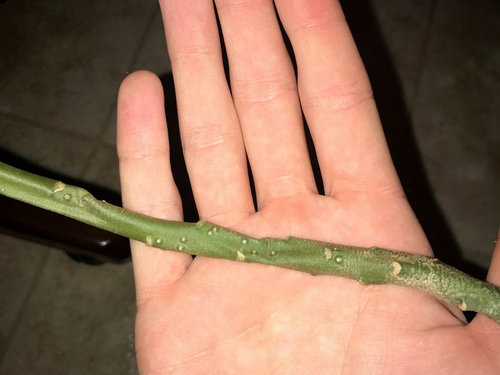
    Hey guys, thank you so much for all of the great answers! i just took it out of the pot and cleared off as much dirt as i could. Here are the pictures.

    there doesnt seem to be any signs of root rot, which makes me think you are all right about the frost damage. What should I do next? do the branches that seem to be shriveled slightly have a chance of recovery, or should I cut them down? how long should I leave it out of the pot? should I keep it inside for the rest of winter? Should i cut off the leaves? Sorry for all of the questions, I am an avid Bonsai enthusiast but know close to nothing about these tropical plants. Thanks again!

  • 9 years ago

    Pot it up in a slightly moist mix and cut off all branches "Above the graft" as long as possible, but making sure to get all damage wood (tissue) off.

    Keep warm and do not water for a week, then give a small amount of water.

    Cold weather is what has caused this, but you need to remove damaged tissue or it will rot back into the stems.

    Rick

  • 9 years ago

    You act fast, yo.

    The good news is that I do not see anything in the photo that will make me suspect the roots were damaged by the cold. You did not answer my questions though---that will give me an idea of whether you should be expecting cellular breakdown in the next few days or the wilted branches are the end of it. Did it actually experience frost? Or just cold? If so, how cold? For how long?

    The next thing to do is to give that thing another bath--remove all the old soil as much as possible. Then examine each of the branches that seemed damaged and trace the damage up to where it ends closest to the trunk. Then mark a spot about half an inch from that. That's where you will cut. This kind of damage may recover but I have personally never seen or risked it. I think it is prudent to remove all the damaged plant parts before they start decomposing. You're essentially pruning the plant. If you have an idea how you want it to look later on, you can prune it that way too, even if it means removing a lot of healthy tissue.

    Then, let the whole plant dry for a couple of days indoors, out of the sun. You can not put this plant outside anymore, until it shows new healthy growth and outdoor temperatures have risen back to 20C at night.

    If you already have bonsai plants, then you know how water moves around in containers. The same rules apply to adeniums---you need fast drainage and some water retention. In summer, they are as thirsty as tender tropicals. In winter, they should be treated like succulents unless you are able to provide summer temperatures for them.

    So, you can pot it up after it dries out for a couple of days---the easiest is half-and-half potting soil and perlite. I don't personally like this substrate but it will do in a pinch.If you have other potting materials like bark or pumice, use those instead and add as little soil as you feel comfortable with.

    I strongly recommend putting it in an unglazed pot. If you are up to it, add more holes to the pot. If not, one of those nursery pots with multiple drainage holes will be perfect. Worry about presentation later, when it recovers.

    Finally, while this plant is recovering, what it will need most is heat. It needs to be warm more than it needs to be lit. This means do not put it near a glass window. Put it on top of a radiator with a terracota water tray underneath.Or use a heat mat if you have it. If you have a sunny window that gets hot during the day, that will work but you can NOT leave it there at night when that glass gets cold.

    I hope the plant recovers.


    Pagan

    willskatesruff thanked User
  • 9 years ago

    Yup. Keep an eye on the caudex to make sure it wasn't damaged. If it was, you're going to need to operate. Err on the side of dryness with watering. Try applying cinnamon to the cut branches if you're worried about rot. It will actually probably look better after they branch back out.

    Definitely keep it warm. Keep it inside. They can go dormant in winter, so not getting a ton of light isn't a huge deal. Avoiding cold is much more important. Be sure to keep an eye out for signs of rot, because a lot of fungi like warm growing conditions too. You just don't see rot as much in warm seasons because the plant has better immune function and it's usually actively growing and using water.


    They can take 40s when healthy, but you should avoid anything close to freezing.