Software
Houzz Logo Print
mayhemingway

Kitchenaid slide-in induction range scorched the wall

9 years ago
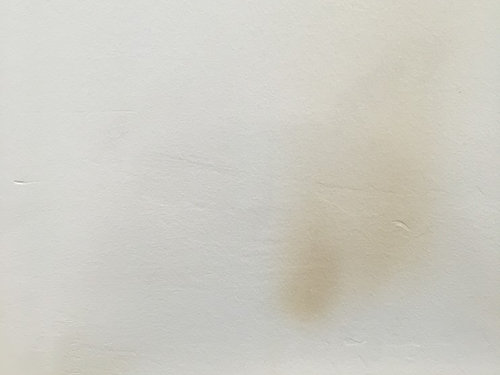
I recently bought a Kitchenaid slide-in induction range for a kitchen in the middle of a facelift. The new countertops, backsplash and range hood have not been installed yet. I did roast a chicken at 450* a few days ago though, with the window wide open for ventilation. The following morning I discovered the wall on the left side of the range had been scorched or smoke damaged. No amount of scrubbing with a melamine sponge will remove this mark. A couple of days later I put the oven on to 400* for 10 minutes and then dropped it to 350* for another hour. The wall on the left side specifically becomes very hot to the touch.


I'm planning to install light grey marble countertops and want to run the marble up the wall behind the range as a backsplash, but have heard of marble becoming marred by smoke and heat from ranges as well. I don't want to need to apply a poltice to the marble backsplash every time I make a roast.


Has as anyone experienced this problem? Is it just because it's painted drywall? Is it normal for the wall to become so hot? I'm moving from a house with a Kitchenaid gas range and oven and a ceramic tile backsplash and have never had any issues, at any level of heat or cooking time. What should I do? Rethink my marble backsplash? Call Kitchenaid?


Comments (36)

  • 9 years ago

    Calling customer service and asking for tech support could get you further towards a solution. Email them that picture.

  • 9 years ago
    last modified: 9 years ago

    This is not normal. You are supposed to be able to install the range against drywall. Whirlpool does sell a backsplash kit, but this should not be required. This is either a design flaw with the product or a manufacturing defect with your particular unit. Definitely call for service.

  • 9 years ago
    last modified: 9 years ago

    Ok call tomorrow. I'm glad I discovered this problem now before installing the backsplash anyway. It's good to hear this isn't normal. I'll call Kithenaid, and the appliance store I bought the range from in the next couple of days. I don't expect New Year's Day is the best day to get someone on the phone.

  • 9 years ago

    A ceramic backsplash would be able to withstand the heat. I would be curious what the installation instructions say about clearances to combustables. I think the both the paint and paper covering of drywall would be considered combustable.

  • 9 years ago

    There's also this one:

    IMPORTANT:

    To avoid damage to your cabinets, check with your builder or cabinet supplier to

    make sure that the materials used will not discolor, delaminate or sustain other damage. This oven has been designed in accordance with the requirements of UL and CSA International and complies with the maximum allowable wood cabinet temperatures of 194°F (90°C).

  • 9 years ago

    It's odd that it's only venting extremely hot on one side and not distributing the heat across all the back vent holes. I don't have any wood uppers near the near, and the hood will be installed 30" off the cooktop. The wall damage is all within 10" of the cooktop. The sales rep I bought the range through is taking this up with Kitchenaid because he agrees that roasting a chicken shouldn't burn my wall.

  • 9 years ago

    The wall is not showing a burn mark this is smoke damage. If you look closely at the vent below the smoke mark you will see some smoke residue on the SS. This is normal as the oven vent pipe is below this area. The smoke from anything you are roasting will come out of that area of the rear vent. The other holes are there for ventilation of the range blowers which help keep the product with in UL temperature range and keep the electronics from overheating.

    Marble is a semi-porous material and I've seen it discolor when used as a range back splash so I would not recommend marble behind any range.

  • 9 years ago

    Thanks Jakvis. Smoke when roasting is normal though. Do you think once the extractor is installed this damage will be lessened?


    For or the record though, the drywall on that spot got too hot to touch.


    Do do you think back painted glass would be a better material than marble? Grout is also porous and I'd rather not try to clean that from grout.

  • 9 years ago

    Well, I got off the phone with the bitchy robot lacking all humanity at Kitchenaid Customer Service and it sounds like this is just how it is. She wouldn't comment on what backsplash material would best handle smoke damage, but did say that the smoke would continue damaging or not damaging whatever material I chose.


    Now I feel like my option is limited to back painted glass because grout is porous, marble is porous, and stainless is not going to happen because it's wrong for the room. I'm feeling supremely disappointed.


    Do you think my range hood (definitely strong enough) will help minimize smoke damage to the wall once installed?

  • 9 years ago

    We have a SS sheet for a backsplash.

  • 9 years ago

    Too hot to touch is different from too hot for a UL certification. Most people consider 120F too hot to touch but 120 is well below the allowable temperatures on a combustible surface.

    If you use your hood vent this will help keep some of the smoke off the wall surface but heat is always attracted to a cool surface so you may still see some smoke deposits. (You can demonstrate this by holding a lit match next to an ice cube. The flame will bend towards the ice.)

    Granite is less porous than Marble and if the stone is sealed well it should be easy to clean. It's mainly been marble that I have seen permanently stained from an oven exhaust. You may just want to talk to some stone experts and get their recommendations. I'm sure they will be able to guide you to your best solution.

  • 9 years ago

    Grout can be sealed as well.

  • 9 years ago
    last modified: 9 years ago

    >>> "Do do you think back painted glass would be a better material than marble?"<<<

    Yes.

    I had my town's glass shop make me a glass backsplash for my pro-style gas stove. Made from tempered glass, it was relatively inexpensive at around $120, IIRC. (That was five years ago, however.)

    Instead of painting the back of the glass, I ordered it with a frosted back. Looks fine on the painted wall. I'll just take it down when I eventually repaint the wall. I can put it back up and not have to worry about matching the rest of the wall whatever I repaint with.

    The smooth front side is as easy to keep clean as you would hope.

    Make sure you get tempered glass.

    mayhemingway thanked jwvideo
  • 9 years ago

    Did you mount it with adhesive?

  • 9 years ago

    I sent the installer a photo of the yellowing on the wall, and they now understand the issue. They said the sealer prevents anything from penetrating into the marble, and so it won't discolour. Any grease would just wipe off. So... marble or glass?

  • 9 years ago

    For glass, adhesive is a mounting option. You also could have the glass shop drill holes for mounting screws. I wanted my backsplash to be easily removable, so what I did was th following. The glass panel was sized extend several inches below the level of the stove top. I then used mirror clips to hold the base and support the weight. The top end of the glass slips into a ¼" slot that I made by putting a spacer behind my range hood when I mounted the hood to the wall and cabinet.

  • 9 years ago

    That's great JWVideo. And you never have problems with condensation getting behind the glass?

  • 9 years ago

    Soapstone is also impervious, if you want a darker effect.

  • 9 years ago
    last modified: 9 years ago

    >>> "have problems with condensation getting behind the glass?"<<<

    No, but: (a) I live in a fairly dry climate; (b) the wall space behind the stove is flat; (c) the wall's paint was completely dry and cured before I put up the glass; (d) the range hood is run whenever we are cooking anything steamy; (e) like the rangehood, the glass is sized wider than stove (e.g., 36" width over a 30" wide stove); and (f) I used the thicker tempered glass so it does not bow much.

    OTOH, you would not have to even think about this if you painted the back of the glass and attached the panel with adhesive (kind of like a single, very large piece of tile.)

    I went with a less permanent mounting because I am a serial remodeler. You might or might not share my preferences for being able to easily dismount the backsplash. Or, as Red Green used to say of duct tape: "It is not hardware, it is philosophy. All things are temporary." :>)

    If you do prefer the mounting scheme I used but are worried about bowing and vapor collecting behind the glass, you have other options. You could put a couple of mirror clips on each vertical side to hold the glass flatter. You could have the glass shop drill some screw holes along the edges and use stainless drywall screws to attach the sides to the wall. And/or you could shoot a thin bead of caulk right around the edges.

    My contractor friends --- the ones who gave me the idea for my glass backsplash --- used the screws and caulk option on a bungalow reno project they did in the San Francisco Bay Area a decade ago. That area is a lot more humid than where I live in the Rockies, so more potential for condensation in the back. Last I heard, there have been no problems with anything collecting behind the glass. Recently however, a decade on, the buyers reported that the edge caulk is starting to yellow with age. The mountings make it easy to dismount the glass panel to clean off and replace the caulk.

  • 5 years ago

    I have the same problem, but with a unremovable heat stain on my quartz backsplash.

  • 5 years ago

    Randy, please post a picture. Many people come here asking why they cannot have quartz behind a powerful range. A photo with heat damage might convince someone to choose differently. Sorry that it happened to you.

  • 5 years ago

    I have experienced the same thing with my tumbled travertine, after sealing. I am still working up to calling KitchenAid but my tile retailer did some testing and discovered that the product called Oxy-Klenza removed the stain. Not a solution however I’m hopeful it will remove the stain on mine. I don’t mind replacing the tile behind the range but I have a microwave above with the minimum clearance so a design feature would not be aesthetically pleasing. I haven’t decided what I will do but I do know that there are multiple things I dislike about this very expensive range.

  • 4 years ago

    I have the same issue with my backsplash which is also tumbled tr

  • 4 years ago

    Tumbled travertine. And the left side gets very hot / much more than the mid or right side. We just got the new Kitchen-aide range in February. Suppose I could have a stainless backsplash that could be removed when not using oven!!!

  • 4 years ago

    These important and unforeseen backsplash issues deserve their own thread!

  • 4 years ago

    I see that I responded to this thread 6 months ago and now, after cooking Thanksgiving dinner and daily meals, my travertine is so stained, I fear I will need to remove it. My kitchen is not designed to have any 'feature' tile behind the range so I truly don't know what I'm going to do. The stainless backsplash they sell is shorter than the height of the stain. It's truly terrible and I regret spending so much money on this range. Oh, and cleaning it? Yikes! It can't be done properly

  • 4 years ago

    We just completed reno in our kitchen and installed a slide in kitchen aid range. The first use of the oven mirrors the comments above. The key is there is only one vent for release of smoke and heat and it is the second open slot on the left of the unit. In our case the heat release exposed our quartzite backsplash to extreme heat and yellow stained it. I had our stone man come back he elaborated that the vent and maximizing the heat vented to one slot is not ideal. I now put a trivet at an angle between the stove and the wall to deflect the heat and coupled with the installed vent seems to deflect but ideally is not a long term solution. My thoughts are that the design of the venting slots on the stove are not correct and need modification.

  • 4 years ago

    I think you are right about the design. My travertine tile looks terrible there and it's been less than a year. I still don't have a solution but I do know the size and area of the stain by now. Let me know if you come up with something. I haven't done it yet, but maybe we should be contacting Kitchen Aid and complaining about the design ?

  • 4 years ago

    Yes, I will be contacting Kitchen Aid today.

  • 4 years ago

    @Laurie Armstrong wrote, in part: "The stainless backsplash they sell is shorter than the height of the stain." Depending on the back-guard/riser design, there could be temperature dilution within the device, and/or hot air spreading. It might also tend to move the heat plume a bit away from the wall. Endless show and poser kitchen photographs notwithstanding, "Island trim" is for islands.

  • 2 years ago

    Did anyone ever contact kitchen aid? I have the same problem.

  • 2 years ago

    Yes, I contacted them. They blame the tile. Tile company blames the range. Customer is stuck in the middle.

  • last year

    Does kitchen aid offer a heat guard for the slide in range?

  • last year

    They do not that I have found. I finally started using a new cooking sheet behind when I am baking. Not ideal.

  • last year

    I tape a piece of foil behind it. I have a ceramic backsplash and it stained the grout. I talked to Kitchen aide. They don’t care.