Software
Houzz Logo Print
chickencoupe1

Urea or Something Else for Onions?

9 years ago

Hey all. Hope you all have been well!

I love onions. Harvested a couple hundred or more last year. They really needed nitrogen. I'm cooking up plans for this year's onion patch.

Location: Oklahoma
Soil: Alkaline (7.3ish), Natural clay loam with construction sand and natural organic material.
Planting dates: Last week of Feb/early Mar

I have never purchased fertilizer for the garden. Totally clueless. Don't want to go chemical. Someone here suggested urea to me once (on another related topic), but I never used it.

This year, though, I need to feed those babies. So, urea came to mind and I looked up this info.

It suggests application of urea can often be ineffective if the soil is dry.

Well ... we're severely dry.

I wonder the best way to apply Urea. Should I bury it quickly and make sure the area remains moist? Or is there a better way?

Note: Everything's dead. I don't have access to natural nitrogen and did not plant a cover crop.

bon


Comments (27)

  • 9 years ago

    I suppose that all nutrients have a chemistry...are chemical to an extent. You just have to decide if you are going to provide a lot of natural organic matter with some enrichment or like me,... provide a lot of good organic material AND some less organic material too.

  • 9 years ago

    The article is discussing applying urea to large fields ... home gardeners have it easier.

    Vegetables are "heavy feeders" ... I'd apply the urea at about 1/4 the recommended dose, rake it into the soil to the depth you are planting the seeds or starts, and plant the onions. Water well to dissolve the urea.

    Throughout the season, apply more light applications of urea as a "side band" (a strip of fertilizer along the planting row, where the roots will be able to access it), rake them into the top inches and water it in.

  • 9 years ago

    What you do NOT want to do is scatter it on top and leave it there.

  • 9 years ago

    What I do is add a lot of organic material the summer or fall before and that breaks down and feeds all season...though I do add fertilizer [both organic and otherwise] at planting time.

  • 9 years ago
    last modified: 9 years ago

    The way urea works is that it hydrolyzes (as in, combines with water and a naturally occurring enzyme called urease) and forms ammonia gas. That ammonia gas is ideally absorbed in the soil, where it is "nitrified" to produce nitrogen compounds that plants can use. It mainly combines with water to produce ammonium ions, which are a plant-available nitrogen source. That being the case, the urea won't do anything in dry soil. It'll just sit there. BUT, when it releases ammonia, you want to make sure the ammonia doesn't just escape the soil entirely. It's a gas. So you need to dig the stuff in before applying water. Do not water when the urea is laying on the surface!

    Urea is a widely used ag fertilizer, and there have been many many research papers published on how to get the most nitrogen enrichment out of it. It is a VERY powerful nitrogen fertilizer when used correctly. It's a waste of money if it isn't used correctly. It basically nitrogen shocks the soil. BOOM! Lots of ammonia.

    You might want to consider a slow release nitrogen fertilizer. Lawn fertilizer is precisely that. Just get a bag of it from your garden store. I think that's a smarter approach. How do you know your soil needs nitrogen?

  • 9 years ago
    last modified: 9 years ago

    Oh, you said you didn't want to go chemical. Well, urea is a "chemical". It is artificially produced by the Bosch–Meiser urea process, which combines ammonia with carbon dioxide. That's how what you get in a bag is made. Big tanks and pressure vessels. Not very natural. But potent! 45-0-0.

    You can get "organic" slow release lawn fertilizer. Feather meal and poultry manure, I guess. Something like 10-0-0. Of course that stuff contains all sorts of crap the chickens are fed. Antibiotics, fungicides, sex hormones, etc. Some controversy about how healthy that is for humans. By that measure, artificially produced urea or chemical nitrates sound pretty good.

  • 9 years ago

    " Don't want to go chemical. Someone here suggested urea to me once (on another related topic), but I never used it."

    Urea, about 45 percent Nitrogen, today, is a synthetic material, man made. So if you do not want to go that route it is not an option. Since water is a chemical those that disparage those products by saying things such as "don't want to go chemical" are not being very clear about what they want to do.

    Application of any nutrient source might be "ineffective: if the soil is dry because plants need moisture to uptake any nutrients through the roots. Your soil pH, 7.3, is a bit high for onions, 5.5 to 6.5, but why the "construction sand" with a clay loam soil? How much organic matter is in that soil? What "natural organic" material was added and how much? What does a good reliable soil test say about the soil and nutrient balance?

    kimmq is kimmsr

  • 9 years ago

    OH! I love and miss you nerdy gardeners! Intelligence and wildness all rolled up into one goody ball.

    Wayne - you'll be happy to know I'm not a purist. I must have planted 300 onion starts last year. I'm almost out of onions. Yep. I need to nearly double my amount this year to last as long as I want (in the freezer). Let's face it. This is not "sustainable". This is one of those things where I'm spoiling myself, dammit, and I don't care. lulz I'm gonna eat my grub, by gollies!

    Interestingly? I never seem to need full-on chemical. I've always managed to keep it organic. THANKS TO YOU GUYS! Wayne, I have one eight foot onion row - right now - that I recently buried in kitchen compost about 6" beneath the bed. Easy Peasy, right? I just don't have enough to do it all since I need so many onions. Plus, it's Oklahoma. if it's nitrogen, it's gone quickly and for the healthiest, we STILL must add nitrogen for nitrogen-lovers. Without the numerous nitrogen-fueled lightening and thunder storms, this place would be a friggin dead zone. Hope to leave it behind, one day.

    lazy_gardens That hit me as I was washing the dishes - they're talking about acres and acres - but it was good to research or I would have just laid that stuff on the surface like some other onion fertilizer suggestions.

    Dan - I'm seriously going to check out the lawn fertilizers, now. However, I could use urea in some other places, so I might still benefit from buying a #25 back of urea from the Ag store. But now I know if I'm in a pinch I can run off to the local hardware store and get what I need. I had no idea! I love simple solutions.

    Your explanation gives me concerns to storage of urea or the lawn fertilizer. If I open the bag, will it be okay to leave it in the bag? We're pretty dry here, but our storms would provide humidity. Do I need to buy a plastic tub for housing to extend the shelf life?

    kimmsr my puritan! Missed ya. Hope you've been doing well? Good to see ya.

    In this case, my soil test was last year's onions. In this I am observant and I could tell they were pretty lame onion plants but sufficient. They needed more nitro. Cuz they're onions and they're not green without nitro.

    And the reason they were sufficient is because of the sand. I stumbled across the opportunity to bring in some sandy stall muck full of well-composted horse manure. I'm talking 2 tons of sandy stall muck. I nearly killed myself hauling that crap home, too, as the truck bed was overloaded.

    That horse manure was sufficient to keep them going until harvest. I dumped that sandy stall muck atop fresh ground which was only regular Oklahoma clay (but not the red kind). That was in spring of '16. I know from experience that regular clay soil beneath eight inches to 1 foot of sand and organic material is now a clay loam. Cuz I have great clay soil. It only needs a heavy mulch and all the tiny critters bring it right front and center to health if they're protected from the our hateful sun.

    Onion roots don't usually go down that far, but this year the sand has settled in, spread out (it's not contained) and is just at the right height for the onions to take advantage of the goodness that has been happening beneath the sandy beds. But it's Oklahoma. Never enough nitrogen, especially if it hasn't been storming and well, there aren't many storms, dam it. Headed right into a drought if they don't return. And, to be blunt, I know this becuse I can feel it. I love storms, because our environment won't survive without the dam storms. It even makes me feel refreshed. I'm native Okie. I can't help it. lulz

    *hugs*
    bon


  • 9 years ago

    Kimmq, Sand can make clay loam soils more workable...especially for onions that need to be planted early in the season.

  • 9 years ago
    last modified: 9 years ago

    And, when you apply it, it's probably already producing ammonia. So you'd better keep it well covered, to prevent innoculation with urease, and use it fresh. Ideally within a couple of days. People slowly fill open pails with the stuff, and by the time it gets used, it's pretty non-functional. Drink up! Depending on diet, it can also come loaded with salt.

  • 9 years ago

    Wayne, I have posted numerous articles about why a gardener should not add sand to clay soils unless that gardener is prepared to add a very large amount, 45 percent by volume, of sand. No soil scientist I have talked with about this during the last 50 years recommends that practice. Perhaps this article from Southern Living might help you understand what sand does in clay.

    http://thedailysouth.southernliving.com/2009/10/16/garden-myth-busted-dont-add-sand-to-clay/

    kimmq is kimmsr

  • 9 years ago

    Why don't we start at the beginning.


    Many fertilizers will cause problems if the soil and plants are too dry at time of application. for most fertilizers, this presents as burnt foliage. Urea can certainly do this. so can alfalfa pellets.


    However, let's be specific to this question. if you strongly suspect or absolutely know you need to supplement some fertilizer during the growth cycle of a plant, in this case, a specific crop, and you've never added any fertilizer, why go straight for strong stuff that has application requirements most people just don't have the equipment for?


    I'm willing to bet that fertlizer...any fertilizer...would work. my own experience tells me that with onions, strength of fertlizer isn't that important, but frequency is. i've gotten good results on onions using small amounts frequently applied. meaning, about a one quarter recommended rate, weekly.

  • 9 years ago
    last modified: 9 years ago

    I use urea (49-0-0) for all of the nitrogen loving veggies including onions, garlic, lettuce, brassicas, etc. I apply it with a old spice can and sprinkle on the surface around the plants prior to rain or irrigating. For a entire 4'x8' bed of onions or garlic I would use about 3 oz. by weight. For brassicas I apply around 1 tablespoon per plant. I do this about every 2 weeks. I stop fertilizing onions when they start to bulb.

  • 9 years ago

    As noted, sprinkling urea on the surface prior to rain is a recipe for losing most of the nitrogen contained in it. That just throws much of it away. Tilling after application is the standard way of using it. Sprinkling on the surface works fine for a regular nitrate fertilizer. It does not work fine for urea.

    Urea is soluble in water, and hydrolyzation begins (depending on temperature and organic content of the soil) about a day after it gets wet. So I guess if you have a really hard rain that dissolves the urea and carries it deep into the soil, that might work. But just getting it wet near the surface is a guarantee that the ammonia produced will escape the bed entirely.

    I agree that a nitrogen sledge hammer isn't really appropriate to a bed that has never been fertilized. I really think that slow release lawn fertilizer has to be the best option here. While it has half the nitrogen content of properly used urea, it is also about half the cost.

  • 9 years ago

    kimmq, I have added a fair amount of sand to clay loam with excellent results. Of course, I add lot of organic matter too. You make it sound like adding sand is almost bad...JUST add a fair amount...enough said.

  • 9 years ago

    I think kimmq is correct about not adding sand to clay soil. I suspect success with it has less to do with the sand, and more to do with the organic matter that was added as well. But sand by itself added to clay results in a denser, rather than less dense, soil.

  • 9 years ago

    dan, Have you had much experience adding sand. I have added probably 60 tons. We are talking clay LOAM here. I have added local sphagnum peat moss at the same time.....dream soil instantly.

  • 9 years ago

    I have some experience, but certainly not 60 tons worth. That's about forty yards of sand. Two tandem dumpers worth. That being said, this extension service is pretty definitive about it.

    https://puyallup.wsu.edu/wp-content/uploads/sites/403/2015/03/soil-amendments-2.pdf

    As noted, if you make the sand the majority of the mix, it can turn out well, but that's a LOT of sand. I guess that's what you've done.

  • 9 years ago
    last modified: 9 years ago

    Clay loam and silty clay loam already have about what % of sand...30%? I have added about 3 inches more to the top 9 or 10 inches. That makes a bit over 50% likely. I have added more than 2 tandem loads of sand...like 45 yards I would say.

    I have posted many times of adding both sand and local peat moss...no takers...their loss I suppose.

  • 9 years ago
    last modified: 9 years ago

    I'll have to respectfully disagree with you Dan regarding the need to till in the urea after surface application. I have been applying urea for years with this method and my results are proof of it's effectiveness to me. I also have a friend who grows a 1/2 acre patch of sweet corn that applies urea with the same surface application method with excellent results. The rain or irrigation do a great job of dissolving the urea into the soil. Without the water, you are correct that the urea would quickly volatilize in a day or 2. All of my beds are mulched with chopped leaves which I also think helps protect the urea from volatilizing away.

    Another option for applying urea if rain is not in the forecast is to dissolve the urea in a watering bucket at a rate of about 1 - 1.5 oz. per gallon. It takes a little while for the urea to fully dissolve though.

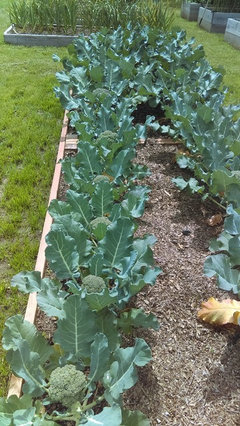
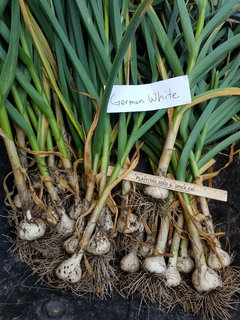
    In addition I will add that it is not often feasible or advisable to till in or even scratch in the urea when beds are intensely planted such as the garlic, onion, and broccoli beds shown below.

    I pay about the same per pound (~$23 for 50 lbs.) of urea as I do 12-12-12 lawn fertilizer and see no need to use 12-12-12 when all the crop needs is nitrogen. Seems to be a waste for most crops if P an K are already abundant.

    Onions

    Garden pictures · More Info

    Garlic

    Garden pictures · More Info

    Broccoli

    Garden pictures · More Info

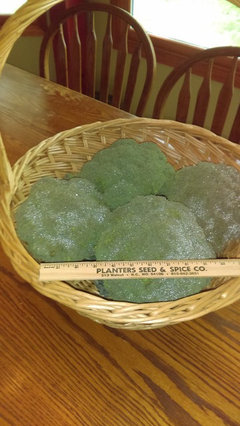
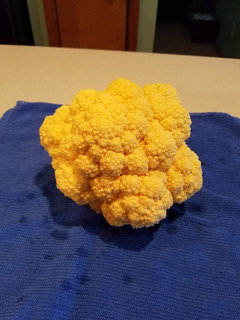
    And here are some pictures of the harvest results after only surface application of urea.

    Garden pictures · More Info

    Garden pictures · More Info

    Garden pictures · More Info

    Garden pictures · More Info

  • 9 years ago

    you are both right. DITD lives in a hot place. I too apply urea effectively (even the granulated form) when it is cold. When it is hot, you lose it fast. Having it dissolved helps regardless or temperature as it goes deeper, faster.

  • 9 years ago

    You'll be disagreeing with ag research and common best-practice. I have no doubt some of your urea is contributing to your soil nitrogen, and your crops look beautiful. My point is that much of the nitrogen you're applying is floating away if you just scatter some urea on the surface. If you're happy with that, I can't complain. I'm talking about efficiency.

    Urea simply works differently than other chemical fertilizers. Chemical nitrates dissolve and slowly percolate in to the soil. The more rain, the deeper they percolate. The fuse for urea is lit as soon as it gets wet, and if the urea isn't deep in the soil when it gets wet, the nitrogen it turns into is volatilized and not absorbed efficiently by the soil.

    That's exactly why shouldn't be used as lawn fertilizer. Because you can't till it in. Same might be said for dense plantings of onions and garlic.

    As I say, if you dissolve the urea in lots of water, it could work well but you'd need enough water to soak your soil at depth. It's hard to predict that kind of rainfall. Sounds like you're trying to do that.

    Try tilling it in where you can. You'll need less urea to do the job, and you might end up with even prettier pictures.

    I've never seen urea prices as low as what you pay. You're lucky! Standard Scotts Turf-Builder nitrate lawn fertilizer is 32-0-10. That's actually an expensive lawn fertilizer, and it's about $1/lb. But it's slow release, and you get all the nitrogen from it incorporated in the soil.

    The literature is pretty consistent on this point. Here is one reference.

    http://www.montana.edu/cpa/news/wwwpb-archives/ag/baudr131.html

    "It really cannot be over-emphasized that incorporating urea into soil will minimize
    such loss. Once urea is well incorporated into the soil, either by mechanical operation or
    water movement, its loss as a gas is minimal. Do not allow urea to remain on the soil
    surface."


  • 9 years ago

    Dan - thanks for the complement on last year's crops!! Right now my onions are only about 1" tall in my basement so lots of growing left to do!

    I agree that some of the nitrogen is definitely escaping into the atmosphere but my garden is not a commercial or market garden and I can put up with some loss and apply it a little more frequently. I try not to apply urea if rain is not expected but if I have to apply it with no rain, I try to make sure most of the urea is as close to my soaker hose as possible and then run them for about 1.5 hours to dissolve and incorporate the urea.

    With my intensive planting I would be concerned with disturbing the root system of some plants if I attempted to scratch it in with even a hand cultivator. It would also disturb my mulch.

    I only use one 50 lb. bag every 2 years and probably 3/4 of that is actually used as a compost nitrogen source in the fall when leaves are abundant but grass clippings are not.

    Glib makes a good point that temperature makes a big difference in how fast the urea will volatilize. The below link from the University of MInnesota confirms this as does your link to Montana state. I did not realize soil PH can also affect how fast the urea will volatilize....interesting stuff!

    Anyway - good luck with your onions this year Chickencoupe!!!!

    Urea application

    Exert from the supplied link

    Incorporate urea for best use

    Nitrogen from urea can be lost to the atmosphere if fertilizer urea remains on the soil surface for extended periods of time during warm weather. The key to the most efficient use of urea is to incorporate it into the soil during a tillage operation. It may also be blended into the soil with irrigation water. A rainfall of as little as 0.25 inches is sufficient to blend urea into the soil to a depth at which ammonia losses will not occur.

  • 9 years ago

    Wayne, your discussion of peat moss reminds me of my time with coco coir in an outdoor planter. Compressed rough cut coco coir is fairly cheap. I'm going to look into this again.

    Excellent post, everything. Thank you for your contributions. I'll be considering the best approach.

  • 9 years ago

    I can see how urea might volatilize out with a light sprinkling of water on top of it.

    For most home gardeners my guess would be that it's as likely to leach past the roots as volatilize. The stuff is quite water soluble and I expect the tendency of most is to water it in good.

    I've taken to using ammonium sulfate in my alkaline conditions. Nearly as cheap as urea and tends to be acidic. Perhaps the sulfur can give the onions extra zots.

  • 9 years ago

    You need lots of water to promote urea leaching. You don't need much water for it to volatilize. But yes, if you want to just sprinkle it on the surface, you need to water it in heavily. That's standard ag practice for urea that isn't tilled in, and even once it is tilled in.