Software
Houzz Logo Print
maison2017

Getting ice dams after polyurethane insulation, is it normal?

9 years ago
last modified: 9 years ago
Hi all,

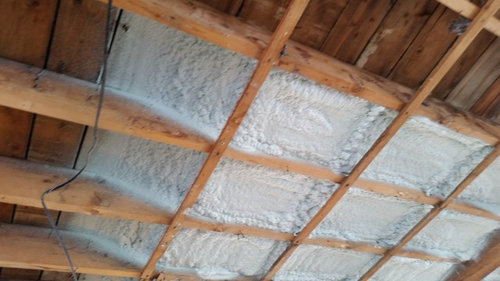
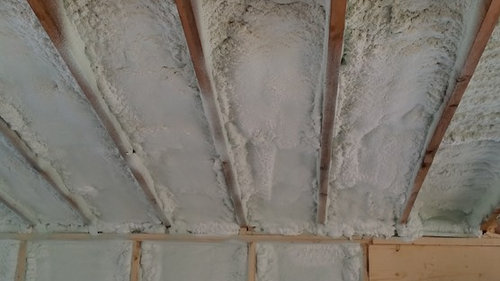
We're into a major renovation of a split level raised bungalow. We had the upper floor and roof sprayed with closed-cell polyurethane (people call it spray foam = SPF)

The upper-floor walls were sprayed 4 inches = R-24

The roof was sprayed 5.5-6 inches = R-33 to R-36

The lower floor will be done next week.

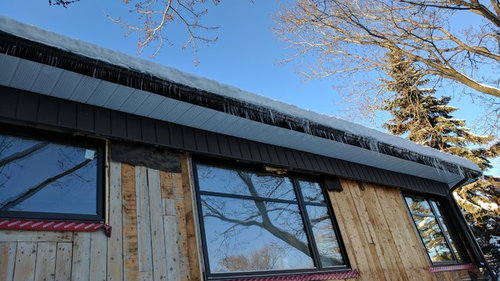
It's a cathedral ceiling so no attic space, and no ventilation. We're spraying the foam on the roof itself, which should insulate enough to avoid snow melting and ice dam formation. However we still have ice dams. I'll be talking to my contractor Monday when they get back from holidays, but I wanted to get some input here before. By the way the insulation company is a very reputed and knowledgeable one, but could it be bad quality work? It doesn't look like it...

The way I understand insulation, if you get proper roof SPF insulation then you shouldn't have heat escaping, so no snow melting and no ice dams... or are they unavoidable in real life?

Also the exterior of the house is gutted too. The new windows are installed but not yet insulated. The soffites weren't removed and no work outside yet. Only thing that was done is SPF and window installation before the holidays.

One last note, we had freezing rain in the last 2 weeks... I know it's not a commonly listed factor for ice dams, but could it have played a role?

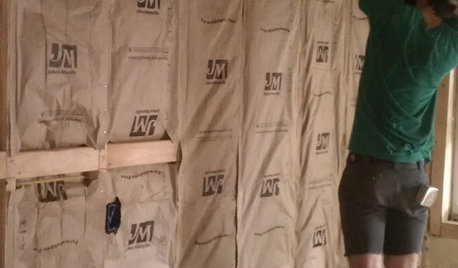
What do you guys think? I'd appreciate any input please. Here are some pictures during installation. Sorry for quality.


Comments (11)

  • 9 years ago

    Ice is also found on cars, sidewalks, dog houses, roads etc etc. Its a natural occurrence when snow melts and refreezes.

    Note how bright the sky is. The sun with or without temperatures being above freezing mark will cause snow to melt

    What leads you to believe the insulation is causing this natural occurrence?

    Mike thanked roof35
  • 9 years ago
    last modified: 9 years ago
    Thanks to both of you. I assumed there was damming because of the icicles. I also wasn't sure of the difference between both... It's reassuring to see I might be wrong. Is there a way to check without going on the roof?

  • 9 years ago

    Ice damming is typically caused by the existence of an area at the lowed "edge" of the roof that does not have warm air beneath coupled with the upper portion of the roof having somewhat warm air beneath.

    In the classic case there is an attic with eaves extending out beyond the sides of the home. With the loss of any heat in the attic thru the roof directly above there is the potential for melting of the snow.

    There is no heat, or at least virtually no heat, beneath the eaves area therefore the snow above does not melt.

    The melted snow from the large area of the roof above the attic flows down the roof until it reaches the colder eaves area. That water now freezes above the eaves, forming an ice dam. The water now backs up against the ice dam and when enough water collects , the water works itself under the shingles and may seep down into the outer walls or attic.

    The water has the potential to evidence itself in seemingly odd places. It may flow down inside the exterior wall and not be seen or hear until it becomes visible around a window in the basement. It might run along your attic floor and pool in a low point and ultimately bring down a plaster ceiling.

    In the OP's case, seems an attic is not in play, but heat may be lost thru the insulted great room ceiling and melt snow above. The eaves are presumably not conditioned so the potential exists for an ice dam to form. With foam insulation also in your outside walls I'm not sure what could happen as far as water getting inside that foam envelope, but the potential for roof sheathing damage would exist.

    On a nice warm day you could remove a bit of your eaves vinyl and inspect for any history of ice damming.

    Some things that can be done to prevent ice damming might include: additional attic/ceiling insulation; a membrane installed beneath the shingles for at least ~4 feet before shingling; adding thermostatically controlled electric resistive heating wires in a saw tooth pattern extending that 4 feet to maintain a draining channel.

    I'm not a roofer, but I'm sure roof35 or others can tidy up my reply and possibly add other ideas.


  • 9 years ago

    @SaltiDawg, at 6 inch = R36 do you think we could have heat loss?

    @roof35 : so you think this is caused by normal melting by sun heat?

  • 9 years ago
    last modified: 9 years ago
    Of course you will have heat loss. If you had R72 there still would be some heat loss. If you have a temperature gradient across a substance there will be heat flow. The issue is the amount of loss.

    The snow on your roof is being heated by a combination of direct sunlight and heat loss from the structure.

  • 9 years ago

    You can take a lot of the guess work out by having thermal imaging done.

    By guessing, you can attempt a process of elimination. If the ice cycles are more prevalent on the same side at which the sun sets. Then I would conclude the sun is playing a major role.

    Also attempt to compare conditions with neighboring structures. My own home has R49 in the attic with proper ventilation (which I know you have none). My structure has snow still up there when all neighboring structures have none. However, on the west facing gable I get ice cycles and none on the other. Once the sun sets, and it's in the teens, instant freeze.


  • 9 years ago

    Icycles are on the side that actually never sees sun... because that's the longest and steepest slope. The side where the sun sets is flat so no chance of getting icycles there. But I got your point, maybe I'm overthinking it. I always thought about comparing with neighbors but keep forgetting to check when I pass by (we don't live there).

    @SaltiDawg yeah I guess what I meant is : at R36 can I have enough heat loss.


    Thanks to both :)

  • 9 years ago

    This often happens on north facing roofs where the snow doesn't melt away quickly in the sun and run off as water. It melts a little and slides down toward the gutter, then refreezes at night. It doesn't require heat from the structure if the weather is just right (not too cold, not too hot).

    I built a basically unheated metal shop building with a metal roof here in MO and was advised not to put gutters on the north side as the ice dam will slowly and inexorably curl into the gutter and tear it right off like a giant fist. Solely due to the warming and refreezing of day and night.

  • 9 years ago

    This is why low sloped roofs are not recommended for cold climates.

  • 9 years ago

    Actually, in New England it is snow loading that drives the roof to a higher pitch. Ice damming can occur with any pitch.