Software
Houzz Logo Print
stephanie_graham38

Front lawn

9 years ago
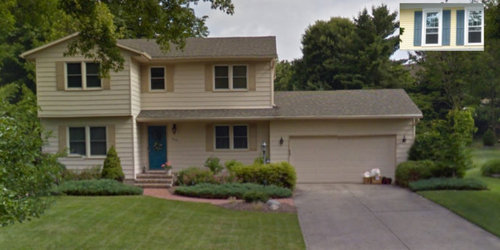
This photo is from google images.

The house is two years older now and we are the new owners.

The house actually sat empty for a year. And didn't get much attention after this picture was taken.
Everything was overgrown and when we got our hands on the keys.


The little tree next to the door and next to the garage are gone because they were dead.


I would love some ideas on what to do this spring.

To the left of the garage is a HUGE bed.

We are in Ohio.

Comments (6)

  • 9 years ago

    This is more of a lawn care forum. Most people here would tell you to make your grass greener...and get rid of all the shrubs and plant grass, and make it really green. :)

  • 9 years ago

    haha That would make it really green. How do I know what kind of grass I have? There was a ton of grab grass in the fall. We tried to spray it but that didn't do much.


  • 9 years ago

    Generically, in Ohio, you have a cool season grass, like bluegrass, fescue or rye as opposed to warm season ones like bermuda or St. Augustine. You probably need a close up photo to tell for sure. Kind of hard in the winter, but normally you get within about 4 inches of the grass, right down on the ground, and take a pic on an overcast day when there is no direct full sun. Then we can tell more easily.

    Crabgrass dies off every winter, so there is no need to spray them that late in the season. It is possible that was not crabgrass you were spraying. To minimize the bloom of new crabgrass from last year's seeds, or any other new weeds, you should consider putting down a pre-emergent right around when you see the forsythias starting to bloom in the spring. It could be the single best thing you can do for weed minimization next year. Other than that, only spot spray weeds as you see them.

    This is a good product. Seems pricey, but it will last you about forever:

    https://www.amazon.com/Prodiamine-Generic-Barricade-5lbs-ali8056/dp/B004GTQBEK

  • 9 years ago

    "How do I know what kind of grass I have? "https://turf.purdue.edu/tool/

    It would really help if we had up to date pic's. As the best thing you could do this spring could be just watering correctly and nothing else.

  • 9 years ago

    Well, we can give you some lawn suggestions if you want. Are you going for something green or best lawn on the block?

  • 9 years ago

    If the yard was neglected for 2 years, I would be surprised if you have much crabgrass. You could have plenty of other weeds, but crabgrass usually needs special watering in the spring to get it started. If you happened to have several days in a row of spring rain, then you could have crabgrass. Crabgrass is a summer annual plant that dies completely in the winter. It can only come back from seed in the spring. The key to keeping it from getting started is 1) create a dense turf in the fall by reseeding, and 2) don't water too frequently in the spring.

    You can minimize summer weeds by using a preemergent herbicide through the spring. The first time to apply is when the forsythia plants are starting to bloom in your neighborhood. That indicates the soil is warm enough and wet enough for plants (and weeds) to start growing. Use a preemergent that does not contain fertilizer. Don't be tempted to fertilize until late May. You'll see the fertilizer and seed commercials starting any day now. Ignore them. They are selling trouble this time of year. Also don't be tempted to use weed n feed products. As I have sort of outlined, herbicides go down in early spring while fertilizer goes down in late spring. Thus the timing is off for weed n feed. No matter when you use it, it's the wrong time for one or the other.

    Since your yard was neglected for 2 years, your soil biology is very likely to be depleted. The result is the soil will become very hard whether it is dry or wet. Hard and dry is normal. Hard and wet is not normal. It should become soft to walk on when it is more normal. You can reinvigorate the soil biology by spraying the soil with shampoo at a rate of 3 ounces per 1,000 square feet. Water that in with 1/2 to 1 inch of water or rain and the microbes will take back your soil. Wait until at least April to spray the shampoo. Use any clear shampoo. Cheap is fine. You can further enhance your soil biology by applying an organic fertilizer at least once a year. Inexpensive organic fertilizers include soybean meal, alfalfa pellets, and corn meal. More expensive ones include corn gluten meal, Milorganite, and any Espoma or other commercially bagged organic fertilizers. Some places in Ohio have really good deals on corn gluten meal. If I could get that for under $15 per bag I would use that exclusively for all fertilizing. The application rate for most organic fertilizers is 15 to 20 pounds per 1,000 square feet. Over application of organics is not a problem. And they can be applied at the full rate even on the day you apply a chemical fertilizer. The two work totally differently.

    Watering: Deep and infrequent is the mantra for watering. This is for all turf grass all over the place. Deep means 1 inch all at one time. Put some cat food or tuna cans around the yard, and time how long it takes your sprinkler(s) to fill all the cans. Memorize that time. That will be the time you water from now on. My hose, sprinkler and water pressure takes 8 full hours to fill the cans. Your time will likely be less. I like gentle watering. As for watering frequency, that depends on the daytime air temperature. With temps in the 90s, deep water once per week. With temps in the 80s, deep water once every 2 weeks. With temps in the 70s, deep water once every 3 weeks. With temps below 70, deep water once a month. Note that you have to keep up with quickly changing temps in the spring and fall. This deep and infrequent schedule works in Phoenix and in Vermont, so it should work for you. The reason for deep and infrequent is to grow deeper, more drought resistant roots and to allow the soil to dry completely at the surface for several days before watering again. If it rains, reset your calendar to account for the rainfall.

    Mowing: For your lawn, mow at the highest setting.

    Fertilizer: Once in late spring, once in early fall (Labor Day), and again in late fall after the grass has stopped growing but before it has gone completely dormant.