Software
Houzz Logo Print
missionmom

Please help me ID this tree

9 years ago
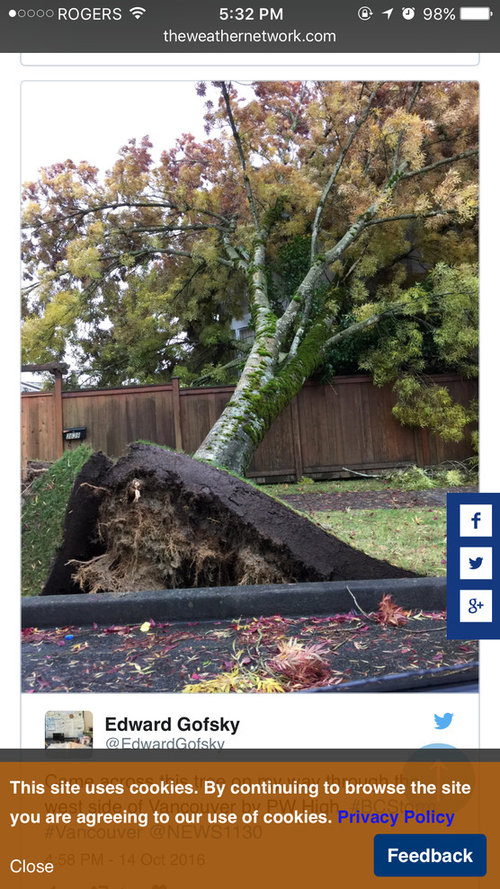
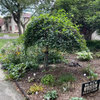
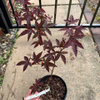
Hi there, I realize this photo is a bit absurd.... but I cannot help wondering what type of tree it is. It's fall colors appear magnificent, theleaf shape is airy, ferny and dreamy and the bark is interesting. The photos Is off a local weather persons twitter page this past November when we were expecting a storm of the century that never really manifested. I am just outside of Vancouver BC, zone 7ish-8ish?

Thank you for any input!!!

Cheers :)

Comments (20)

  • 9 years ago

    I agree that it looks like an ash, though which kind I can't be sure. The bark texture, the leaf color, the opposite branching and the compound leaves all support this. Around here white ash is most common with green ash being often planted, but I don't know what is most likely for you in Vancouver.

    missionmom thanked NHBabs z4b-5a NH
  • 9 years ago

    Also agree on ash, likely F. oxycarpa (syn, angustifolia) Raywood or Flame - they are heavily planted in this area.

    missionmom thanked gardengal48 (PNW Z8/9)
  • 9 years ago

    Agree with 'Raywood'. Note the very thin, willow-like leaflets.

  • 9 years ago

    Do they have an issue with falling over like in the pic?

  • 9 years ago

    Any tree planted directly adjacent to an impermeable surface treatment will have this issue.

  • 9 years ago

    The planting and replacement sequence on Seattle streets has been 'Flame' > 'Raywood' > Fraxinus americana, with the latter being used to replace the Narrowleaf Ash cultivars by 2006.

  • 9 years ago

    Assuming it is Fraxinus, google Emerald Ash Borer before planting one. At least be aware of its existence and possibility/probability of having to treat it.

  • 9 years ago

    Definitely a Narrow-leaf Ash. Main problem in Seattle has been branch breakage.

  • 9 years ago

    Pavement looks shiny-new. Roots have been cut recently.

  • 9 years ago

    Still plenty of the Raywood/Flame planted as street trees in the greater Seattle area. Very distinctive in their fall coloring :-) EAB is not a presence on the west coast......yet.

  • 9 years ago

    A street originally planted with 'Flame' will usually have replacement trees of 'Raywood', and even more recent replacements of White ash cultivars

    --Arthur Lee Jacobson, 2006, Trees of Seattle - Second Edition, p. 42


  • 9 years ago

    Sorry, but I trust my own eyesight before what I read in books. And Seattle is not the only place in this area that uses F. angustifolia as street trees.

  • 9 years ago
    last modified: 9 years ago

    Apparently you're arguing with something that is not being stated. By 2006 a routine had arisen that as the Narrow-leaf Ashes in municipal street plantings failed on their own, the City was replacing them with American Ash.


  • 9 years ago

    You were not clear with your cutting and pasting that any replacement trees were the result of a previous tree failure. You made it sound as though it was a selective process undertaken by the City with ALL F. angustifolia. And since I am aware of numerous street plantings of these tree both in Seattle and surrounding areas, I naturally disputed that contention.

    btw, not everyone in this area deifies Jacobson as you appear to do.

  • 9 years ago
    last modified: 9 years ago

    At any and all times the facts are what they are, regardless of what anyone says or thinks.

  • 9 years ago

    This is very interesting. Thank you all for your knowledgeable IDs. To say what a newbie I am, I thought the leaves looked like a podocarpus *embarassed*

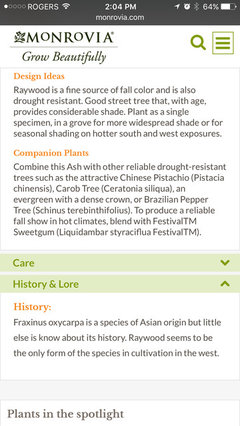
    I saw this on the Monrovia website while attempting to Lear about this species. Here in Vancouver I can't say I see oodles of them. Now that I say this I probably will....

  • 9 years ago
    last modified: 9 years ago

    Fraxinus oxycarpa is a species of Asian origin but little is known about its history.

    F. angustifolia is native to Europe and Africa. It was introduced to cultivation in 1800 but it is not known when it was introduced to North America. F. angustifolia subsp. oxycarpa is native to the Mediterranean and Caucasus. It was introduced to Europe (Germany) in 1810. It is not known when it was introduced to North America. The morphological differences between it and F. angustifolia are minor, with there being a later tendency to consider it not meriting separate recognition, list cultivar names under F. angustifolia. As I have done here.

    'Raywood' seems to be the only form of the species in cultivation in the west

    F. angustifolia 'Dr Pirone', F. angustifolia 'Flame', F. angustifolia 'Raywood' and F. angustifolia 'Scanlon Pyramid' were present in Seattle ca. 2006. F. angustifolia Moraine was still common in California as of 1996.

  • 9 years ago
    last modified: 9 years ago

    Wondering if this ash is vulnerable to EAB? Or perhaps it's not known yet....


    Edit: Thanks, smivies. It's unfortunate.

  • 9 years ago

    It is vulnerable to EAB...not currently an issue on the west coast but would be in MD. In the absence of natural (or chemical) EAB population controls, all of the Ash species are vulnerable (even eastern Asian species).