Software
Houzz Logo Print
faerybutterflye85

Building a garden fence for deer?

9 years ago
last modified: 9 years ago

Hello all my fellow Okie gardeners! I'm in need of some advice. I'd really like to have a garden this coming year & figured now is the time for planning. I've selected a plot on the southern edge of our property that is clear pasture to the east & has 2 mature pine trees on the western edge that would provide some afternoon shade in the heat of summer & theoretically help things to not burn up so much. We have heavy deer traffic on our property, mostly near the eastern pasture where the pond & feeder are, but when it snowed last week, we had tracks & antler rub marks on the pine trees right by the house & future garden location. We see deer just about every day even before we put the feeder up, plus we have rabbits & squirrels & raccoons & possums & moles/voles (not sure but there's tunnels all over the property) & birds of course, including a ton of wild turkey. So, just about every type of wildlife you wouldn't want in your garden. I've been doing a little research & wanted to gather some advice from those of you who also have to have fences to keep critters out. What materials do you use for your fences? Would I be better off buying a fence kit or separate pieces of materials to build my own? And if so, how does one go about building such a fence? I'm a garden amatuer, but willing to take whatever knowledge I can get & run with it. DH will be helping me build & till & such. I think it'd probably be easier to till & rake sooner than later in order to get the currently dormant bermuda grass out now, rather than trying to battle with it when it's green. Thanks for any help!

Comments (5)

  • 9 years ago

    We recently moved to a country community with an HOA. The HOA will only let us build a 4-ft high fence to keep our dogs in. Still we have not had any deer in the yard since building the fence. That could partly be due to the dogs in here. We also have a cat which takes excellent care of the rats and mice. Those are no longer an issue for us.

    If you are renovating bermuda, please do not rototill it. In fact never rototill in preparation for any new lawn. The bermuda is not dead; it is dormant. It will come back in April. If you want good care instructions for it, go to the lawns forum. If you want to renovate and go to a cool season grass like fescue or Kentucky bluegrass, you'll have to wait until August to start that project. For now it would be best to adjust your thinking to having a bermuda lawn for the summer and learn how to take good care of it.

  • 9 years ago

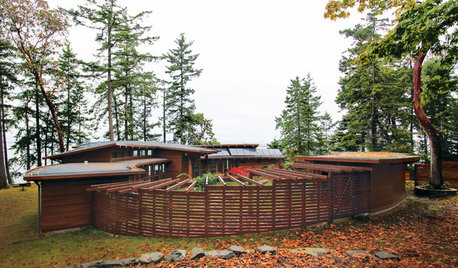
    I live in a heavily deer populated area. If one wants to grow veggies or other edibles here, deer fencing is a must. We have no HOA concerns so height is the determining factor. Deer have an amazing ability to jump great heights, even from a dead stop, so effective deer fencing here is at least 8' tall and often higher (depends on the size of the plot you are fencing - larger = taller). Doesn't really matter what you construct it out of - can be very informal vinyl deer fencing sold at the box stores or something more carefully designed like this:

    design elements · More Info


    Also need to make sure that you have some sort of underground barrier as well - like wire mesh screening - buried deep enough to discourage the burrowing rodents like rabbits, gophers or voles.

    IME, nothing stops raccoons :-))

  • 9 years ago

    Every tiny piece of bermuda will regrow a new plant. Roto tilling only makes millions of little pieces that will choke your veggies and flowers. Bermuda is the scourge of Oklahoma gardening. I'm going to link an older thread on new gardens with a lot of info in it, though it only touches on fences. Someone with more experience will talk about fences.

  • 9 years ago

    For over twenty years we had only a four ft fence around our 1/3 acre garden and almost never deer damage. Before that we had no fence, but dogs that ran the deer. We built the first fence to keep the neighbor's cattle out. But it also kept the deer and dogs out and five years ago the deer jumped in and ignored the dogs. The repellents didn't work at all and we tried several. So we bought 4 ft tall chicken wire and attached it to T posts that we wired to the post in the ground. It isn't pretty, but for the last three years we've not had a deer get into the garden. As far as Bermuda goes, it is a nuisance. We laid black plastic on an area in the garden last summer. Then so far this winter have tilled twice and raked roots out. Tilling in warm weather doesn't do any damage to the roots, but we've heard and read that repeated tilling in the winter exposes the roots to freezing and does kill them. We will see.

  • 9 years ago

    We have tons of deer here and they eat everything they can reach, so a good garden fence is imperative.

    Like Dorothy, we had a short garden fence for ages and it worked well, until suddenly it just didn't work any more. Once the deer started jumping it, we had to raise it from 4' to 8'. Being a person who loves to grow vertically in order to get more harvest out of the space we have, I now grow beans and all kinds of other climbers on the garden fence, and the deer still come by and eat anything they can reach on the fence at times, but at least everything within the fence is protected. Well, it is protected as long as you don't forget and leave the garden gates open at night.

    Since our front garden started out with a 4' tall fence, it had just t-posts and woven wire fencing. We put in taller posts when we raised it to 8' but made the upper fencing chicken wiring as a budgetary thing at the time. It has worked out okay but I don't like the way it looks and for several years now I've wanted to redo the front garden fence to make it sturdier like the back garden fence. It perpetually stays on the To Do list but not high enough on the list that it ever gets done. The back garden fence is maybe 5 or 6 years old, and we made it 8' tall from the start as deer trails run right through that area in several directions. For it, we used 8' landscape timbers as posts and two runs of 4' high woven wire fencing. The top foot or two of the fence extends upon above the posts and is bent slightly outward to help deter climbers like raccoons. There is 1" chicken wire attached to the inside of the lower 2' of fencing to keep out rabbits and such. Deer have never breached this fence, but on some drought-plagued years, the deer have stood outside the fence and watched me work inside, which is sort of creepy. (ALWAYS close the gate behind you when you go into the garden, so no unwanted animals can come in there while you're in there, and have 2 gates at opposite ends in case a skunk, bobcat or cougar shows up. These are lessons I learned the hard way.)

    Sinking fencing into the ground can help keep out burrowing critters, depending on the topography of your land and all. It doesn't work in our back garden which is sort of like a mesa that sits 4 to 6' higher than adjacent non-gardening land because there was no way I was going to sink fencing down 4' to 6', so that back garden has vole issues. They are worse in drought years and not so bad in good years when the voles can find plenty to eat in our acres of woodland. For root crops in the front garden, I have three raised beds lined with 1/4' hardware cloth to keep out the burrowing critters, something made necessary by the great vole immigration of 2011 when everything left the woods in tremendous drought, moved into the garden and began eating potatoes and other root crops. I'd like to eventually build hardware cloth-lined beds in the whole back garden, but I'm not sure Tim and I will live long enough to get that done. It is a tremendous amount of work and quite costly so we just keep it in mind as one of those things we want to do one of these days if we ever can get around to it. Every time I try to start any new major garden project, it seems like wildfires start breaking out and devouring our time, so my major "wants" often stay on a To Do list for ages and ages before we can get them done.

    We have had a marked decrease in most wildlife problems since the Red River record flooding of 2015 which occurred I think 5 times in our area, and which then occurred again on a smaller (and not quite record-breaking) scale multiple times in 2016. However, you cannot let your guard down because even if you see less wildlife for a few years, their population is cyclical and always rebounds.

    There are many deer fence designs available online to copy. And, we did try deer netting/deer fencing and found that it was not very effective. Deer here can run into it at a full tilt and knock it over enough to be able to scale it. Then you come out in the morning to fencing tilting at various weird angels, netting half pulled down off of it, and a trampled garden because the deer had to run around in circles and work up speed to be able to get back out of the fenced garden once they had breeched the netting and gotten into it. Our experiment with deer netting fencing around a small potager's garden was a dismal failure that only lasted a few years. Sturdy, woven wire fencing and strong posts work best for us in our location and with our soil.

    Electric fencing can work if you maintain a bare fence line so nothing can interfere in its operation, but I've also seen deer master going between two strands of electrical fencing the same way they glide effortlessly between strands of barbed wire fencing. The worse the drought and the hungrier the deer are, the harder they will try to overcome your fencing, and the harder they try, the more successful they are. We go to so many grass fires/barn fires/house fires started by electrical fencing igniting dry grass land areas and then having those fires run wild and hit the nearest structures that I steer completely clear of electrical fencing. I am sure they are great in some areas, but living here in the midst of thousands of acres of grassland on all sides of us and having grass fires be such a common problem here, they're not a good option for us.

    Be sure to spend the money for sturdy wooden posts that won't rot because the posts need to last for decades without their sturdiest becoming compromised by rot.

    Our early garden fence worked because we had two separate 4' high fences about 3' apart, creating a "garden moat" that the deer couldn't breech for many years. Deer generally can jump high or wide but not high and wide at the same time. I grew flowers in that moat for the pollinators and sometimes the deer reached over the outer fence and ate the flowers, but my veggies remained safe inside the inner fence. Finally, though, and it may have been during the 2008-09 drought (or maybe 2005-06, as the years all run together in my memory now), a deer figured out how to jump sideways over the first fence, landing in the "moat" and then could jump sideways over the inner fence, landing in the garden. Once one deer did it, others learned from him. One day I walked out and had a whole herd of deer in my garden and most of the plants eaten down to the ground, or pulled out of the ground and tossed aside after a few bites. My garden got eaten down to the ground repeatedly that year, and we took out the inner fence and then raised the outer fence to 8' on most sides.

    Repellents never have worked for us, and we have to keep our dogs inside at night because of all the wild animals that roam around here in the dark, so the dogs are not effective at repelling deer here. We have lots and lots of coyotes, and our dogs tangled with coyotes once (in broad daylight in the middle of the day) and that was enough for me. Now the dogs are confined to a fenced-in dog yard (also with 8' high fencing to keep them safe from coyotes and other varmints), and all the dogs sleep indoors at night. The deer that live here are very friendly (too friendly) and aren't afraid of our dogs at all as they know the dogs are confined. Sometimes if I haven't been putting enough goodies on the compost pile for the deer to steal, they come into the yard and look in the window at me. I love looking at the deer and we went to extraordinary lengths to provide them with food and water during the summer of 2011, but I don't want them in the garden eating everything.

    Dawn