Software
Houzz Logo Print
chrholme

Beginner Bromeliad

9 years ago

I am located in zone 7b (Lubbock,tx) and am wanting to add bromeliads to my waterfall surround (very tropical looking setup). They will live outside from Spring through Fall on the north side of my house where it gets at most 1 hour of direct sun a day. In the winter, they will be put in a greenhouse or brought inside my home. What would you all suggest as a beginner plant? Also, any tips for caring for them? Thank you!

Comments (14)

  • 9 years ago

    With it being on the north side of my home, it will be shaded. The brick color is red/orange and he roof is black. There are several floor to ceiling windows that look out upon the waterfall setup that can help bounce light around though. Lubbock is in West Texas and is a very sunny, hot dry place by nature.

  • 9 years ago

    Would it be helpful to see a photo of the courtyard where they will be going?

  • 9 years ago

    Hi everyone.

    Chrholme - Photo's are always helpful when seeking advice, and I'm sure if you can oblige you will get more feedback to your question.

    All the best, Nev.


    chrholme

    chrholme thanked splinter1804
  • 9 years ago
    last modified: 9 years ago

    Easily grown and popular Billbergia nutans might work for you. Keep in mind when considering this routine that any indoor-outdoor plants are likely to bring bugs etc. in with them in autumn.

    chrholme thanked Embothrium
  • 9 years ago

    Hi everyone.

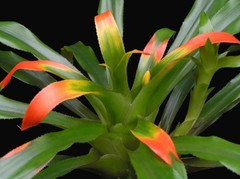
    Chrholme - Have you tried Guzmanias? They like lower light than many others and can be brought inside when flowering. What's more, the bracts stay in colour for many months.

    Below is a link to some easy to understand information on their cultural requirements.

    http://www.greenculturesg.com/guzmania-the-beginners-bromeliad.html

    All the best, Nev.

    chrholme thanked splinter1804
  • 9 years ago

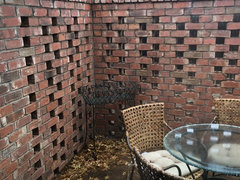
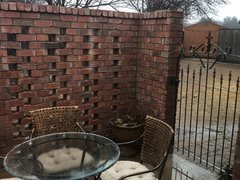
    These pictures were taken today, in the rain/ice storm so please bare with me. The waterfall has been put away for the season but goes in the corner where the metal plant stand is now. It is a large glazed pot that spills over into several landscape boulders. I am thinking of adding the bromeliads in between the boulders. This courtyard again is on the north side of my home and doesn't get much direct sunlight. The other picture shows the other side of the courtyard leading to the backyard. I hope this all makes sense.

  • 9 years ago

    Lots of bromeliads prefer low light, and I tend to run out of shady areas for some of them. I have bought a lot of mine at Home Depot in the indoor plant section. If the nursery has them indoors, then they should do okay with your available light.

    Guzmania are a good choice, as Nev. mentioned, and they do not get too large to bring indoors temporarily. A lot of Vriesea also can grow well in low light, but some of those get fairly large, as do some Aechmea.

    If you do go to HD, you will probably not find names on them, and even some nurseries do not have plants well marked.

    You may also find miniature neoregelia that do well in fairly low light. I grow mine in mostly shade, and I do not have any experience growing them indoors, and so I can't say how they would handle that. They would certainly do well in a greenhouse. They do like good air circulation, and so it would be good not to crowd them when they are indoors. Also, they do need regular watering - they are not desert plants, but they do need good drainage and often store water in their crowns.

    BTW, I have relatives in Lubbock. My great uncle lived there (until he died), and there is an elementary school named after him.

    chrholme thanked Lars
  • 9 years ago

    thank you for the information!!! I will check out HD and Lowes...can you all help me identify them if they are not marked?

    The courtyard doesn't look like much now- but I promise it is very cool in season!! I'll post pictures again once everything is set up!!

    What is elementary school?

  • 9 years ago

    Here is the homepage for the elementary school. Here is some info on my great uncle. I grew up on the same farm in Troy that he did when he and my grandfather were children. My grandfather stayed there, and then my father stayed there after him. Unfortunately, my grandfather did not start a bank, like his brothers.

    If you show photos of the bromeliads in bloom when you buy them, it will help in identifying them. Without flowers, it would be difficult, however.

    chrholme thanked Lars
  • 9 years ago

    Hi
    everyone.

    Chrholme
    – Your courtyard seems like it would be well protected from wind which is a big
    plus when growing any plants including bromeliads. I’m trying to imagine your
    waterfall in the corner spilling into landscape boulders. Your idea of locating
    brom’s between the boulders would probably be OK as long as they don‘t get too
    wet.

    We should always remember that most of the common bromeliads we grow are epiphytic or saxicolous (grow on trees or rocks in habitat) and because of the abundant circulating air, their roots never stay wet.

    Another
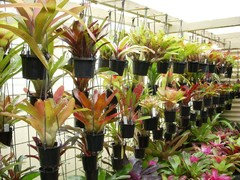
    option would be to hang plants from the wall; hanging plants add another
    dimension to any garden or shade house as well as making better use of available
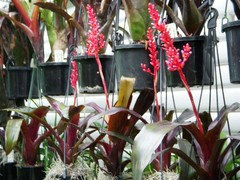
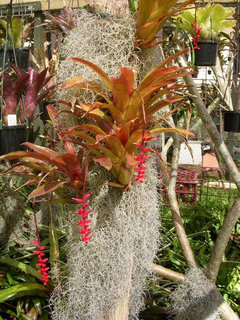
    space, especially in small areas. Hangers could be made to attach to the brick from which to suspend plants like those hanging plants shown below.

    Lars
    – Just because plants look like they are growing well at plant sale points such
    as Home Depot and similar retailers doesn’t necessarily mean they grow well in that amount of light, as many
    of these plants are grown “off-site” and just brought to these places to be
    sold while they are in flower or good foliage colour.

    As
    an example, if you have a Neoregelia in nice foliage colour and take it to a
    low light area inside your house, very often within a few weeks the colour will
    fade and the leaves will show more green than colour, that’s why it’s so
    important to try and find out under what conditions these plants were growing
    prior to you purchasing them and try to emulate these conditions.

    Some
    of the miniature Neoregelias will give reasonable colour when grown in low
    light areas, but not all of them; however they will all show improved colour
    when grown in good light and in the case of courtyard gardens, this means
    hanging them up higher so they get more light.

    Some
    of the smaller burgundy leafed Aechmeas such as Chianti and Mirlo need low
    light area to maintain the burgundy leaf colour as do the ones with discoloured
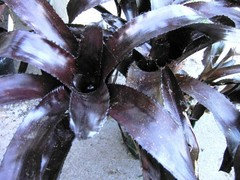
    leaves (burgundy below and green on top) such as Ae. Miniata discolor with its vivid fluorescent orange red berries. These different foliage colours help to break the boredom of too many green leaves, but you should also be aware that these plants with burgundy coloured foliage are more cold sensitive then other plants.

    Ae Chianti var. Jean

    Ae. MIrlo

    Ae. miniata v. discolor

    There is also another little Aechmea called 'Foster's Favorite'; when this is grown in low light, the foliage is a much darker burgundy than the one shown in the photo below and the accompanying berries seem to "glow" in contrast with the darker foliage. You can also add a little more character by draping pieces of "Old Man's Whiskers" (Tillandsia usneoides) in among some of the hanging plants.

    Aechmea 'Foster's Favorite'

    Another
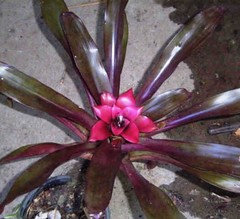
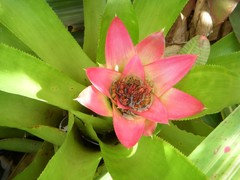
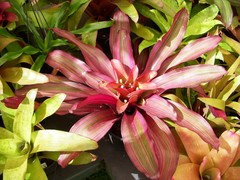
    “unsung hero” of the bromeliad world is the Nidularium; although these will
    grow and flower well under similar conditions to Neoregelias and Billbergias,
    they will also do equally well in lower light conditions and often flower in
    low light conditions where Neoregelias won’t.

    Nidularium campos-portoi

    Nidularium 'Red Queen'

    Nidularium Madonna

    As well as the flowers which are usually short lived, the colourful bracts often maintain colour for several months and make a nice alternative to other bromeliads.

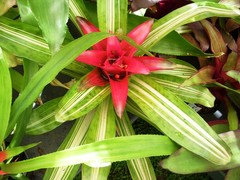
    They are easy to grow and will also grow well mounted on trees. As well as the bract colour there are some which have different coloured leaves as well as others which have variegated leaves, so there is quite a variety of colours.

    Nidularium 'Ruby Lee'

    Nidularium fulgens variegated

    These
    are just a few options for different coloured plants that will grow in low
    light.

    All the best, Nev.

    chrholme thanked splinter1804
  • 9 years ago

    thank you all for your very informative responses!! I am off to begin my hunt for bromeliads, wish me luck!

    Also, I will come back to this post with pictures once the waterfall and plants are all setup on the courtyard! I cannot wait!!!

  • 9 years ago
    last modified: 9 years ago

    Nev, I doubt you would be able to find most of the bromeliads you showed in Lubbock, and in Lubbock bromeliads will be sold mostly as house plants, as most people do not have greenhouses, as chrhome does. I've never grown any bromeliads indoors that I bought as house plants, but I do keep a lot of them in my pergola, which has protection from excessive light. Today I just moved a Billbergia back into a more protected (from light) area in my yard. I had thought that in January, it could be in a sunnier spot, but the color on the leaves is fading instead of getting more intense.

    The trick is to find house plants in Lubbock that can spend part of their time in the patio and part of the time either in the greenhouse or indoors. That is, unless you want to buy plants by mail order, which is another option, but not one that I have experience with regarding bromeliads.

    Were you planning to buy bromeliads on line, or did you want to try to find them in local nurseries? January is not the best time for you to buy them, unless you plan to keep them in your greenhouse at first.

    chrholme thanked Lars
  • 9 years ago

    I was planning to find them locally. I have very few options here in Lubbock, but I do frequent Dallas and I plan to look there in person as well. Also, later on in the spring there is a pretty nice plant sale at the arboretum here that I'll check out (lots of hobby growers)!! Since these most likely will be "indoor plants" that I am buying, I plan to acclimate them slowly over the next few months to being out in my courtyard. I was thinking I would acclimate them like I do my tomato plants- first day outside (on a nice warm, wind-less day ha!) for about 15 minutes, second day outside for about 30 minutes, etc. until my last average freeze date of April 15. Would the bromeliads respond well to that method, or would that create too much stress for them? If the weather turns bad, they would stay inside the greenhouse or my home for that day.

Sponsored
Peabody Landscape Group
Average rating: 3.5 out of 5 stars8 Reviews
Columbus' Reliable Landscape Design & Contracting