Software
Houzz Logo Print
razamatazzy

narrowing down shrub choices

9 years ago

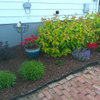
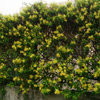
Does anyone have any experience with these

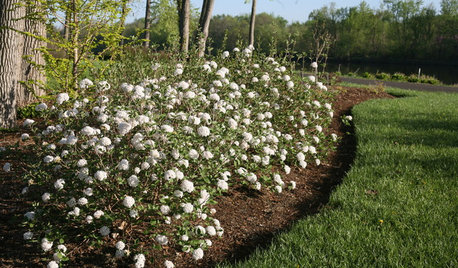
European cranberrybush viburnums

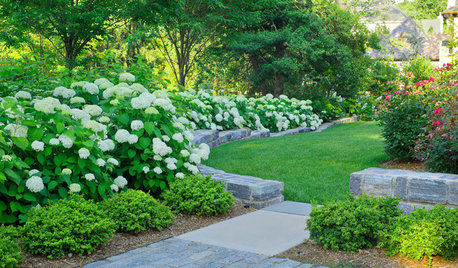
Oakleaf Hydrangea

Any photos of the mature plant to show?

I moved from Seattle area to Eastern WA, Wenatchee. Hot arid, high desert type environment in Wenatchee, zone 5, but I will have irrigation water to use. The planting area will be on the south side. New house so nothing planted to provide any shade yet.

Comments (11)

  • 9 years ago

    Thanks for the advice. I thought I would look around the area at what others planted successfully. Unfortunately right now everything is covered in snow. I need to be ready come spring because I am told all of the local nursery's (mainly the big box stores) sell out fast. Good idea about Yakima, but not sure I can wait till everything is leafed out. Right now I am looking online at old real estate photos. Plants around here are all common, I am just not familiar with all of them.

  • 9 years ago
    last modified: 9 years ago

    Maybe you do have these in that spot already but if you don't include an adequate percentage of evergreen plants like conifers the whole planting will be sticks and stubble all winter. Simplified version of a fully realized mixed planting is herbaceous plants backed by deciduous shrubs and climbers (when there is a fence or hedge behind) flanked by evergreen shrubs. When there is no fence or hedge forming a backdrop continuing the evergreen shrubs across the back, from the sides may need to be done. Otherwise there is a tendency for the planting to be looked past, at whatever lies immediately beyond, resulting in a confused scene.

    Warehouse and supermarket plant departments only stock a tiny percentage of what kinds are on the market in any given year.

    Maybe order in instead. This place has a large selection.

    https://www.forestfarm.com

  • 9 years ago
    last modified: 9 years ago

    I would go visit the arboretum that Embo suggested now since you will want an attractive yard, even in winter. You can notice plants with good overall shape, interesting bark and colorful branches. You will see the range of ever"green" colors and textures that often fade to attractive backdrops in the seasons where other plants are looking appealing. IME, many evergreens are a somewhat different color in winter, so it's good to know that before planting. In my zone 5 yard, about 5 months of the year is gardening winter, so it's a large enough portion to make me consider my options for having a lovely winter garden as well. It's easy to focus on the warm weather garden, but what you see when you look out the window or are playing with the kids in the yard or are driving up to the house in the winter will help get you through the dark and cold months. You will also probably notice which plants need to be a bit camouflaged or distracted from. For instance, I love hydrangeas, but they are pretty homely in winter, so I site them accordingly.

    I'd also probably get a soil sample tested now if you can dig. It's a slow time for soil labs, relatively speaking, and knowing something about your soil's texture, organic matter and pH will be helpful in deciding what to plant.

  • 9 years ago

    Alkalinity may be a factor there. The Inter-mountain Region has two dominant zones, the often arid and alkaline flats, valleys or adjacent areas where most people live and the forested mountainsides where there is enough moisture for species like true firs and spruces to survive. This latter realm may even have acidic soils, offer wild huckleberry picking in summer.

  • 9 years ago
    last modified: 9 years ago

    "...I love hydrangeas, but they are pretty homely in winter..."

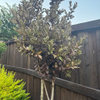
    FWIW, that's the reason why I looked into training Hydrangea trees with interesting wood. I think that that can be done for the main branching structure. However, I am not sure (yet?) if the fine branching structure can be done so as to support a snowy crown for extra winter interest.

  • 9 years ago

    Ontario, I actually like H. paniculata untrained in winter. I didn't specify, but that comment was for H. arborescens (Annabelle) and H. macrophylla.

    Embo, I was wondering specifically about pH, thinking about the variety of soils in the intermountain west.

  • 9 years ago

    Thanks all for the info.

    The soil is very sandy.

    I plan to get out and measure and then draw a sketch to scale and will post that.

    I do want to use evergreens, especially for some privacy. I am dealing with a septic and drainfield on probably 1/2 the area. I need to be careful of the root system on deciduous tree's around the drainfield, so I was looking at deciduous shrubs thinking the root system on them would not be as invasive as deciduous trees.

    I will try and plan a time to get to Yakima to look at the arboretum.

    There will not be a fence in the area I am landscaping.


  • 9 years ago
    last modified: 9 years ago

    There is a convention that you don't want anything growing over septic systems and drain fields except grass. If deer are present you will need to fence those out or your plantings will be forever subject to their attentions.

    Same goes for rabbits.

  • 9 years ago

    Thanks Embo

    I am in East Wenatchee, no deer or rabbit issues here. Locals say the deer stay in West Wenatchee.

  • 9 years ago

    I will add to Embo's comment about septic that as far as I am concerned any perennial is fine, but I try to stay away from any woody plants over septic and for several feet around. Replacing a septic system is expensive.