Software
Houzz Logo Print
doreen_ulrich

Grass won't grow since tree cut down!

9 years ago

Ever since I had a large maple tree cut down all the grass around it has died and I cannot re-grow grass in that area. At first I thought it was from the sun on it or maybe the type of grass that was there, but since multiple times of trying to re-grow grass there I'm wondering if it's about the old roots affecting the soil? We've tried everything we could think of to make this ground accept and grow new grass. Looking for advice!


Thank you,

Doreen in PA

Comments (17)

  • 9 years ago

    Maybe the ground around it is compacted from all of the work involved with cutting down the tree. Have you tried core aerating?

  • 9 years ago

    Some maples are allelopathic

  • 9 years ago

    Yes, we've tilled and re-seeded and we've aerated and re-seeded. The grass grows but I think when the roots get to a certain point they're reaching bad soil below? From the dead tree roots? There is a LOT of fungi growing in those areas as well. It seems pretty obvious just looking at the ground that there are areas where the grass still grows, so I think the bad areas are following where tree roots are. Maybe? I'm no expert. I have no ability to diagnose other than seeing a few signs like these dead areas and the fungi. The tree that was there had fungi growing on it all the time too. Would pictures help?


  • 9 years ago

    Pictures almost always help. If you can take them on a cloudy or overcast day, they will be more helpful. Pictures of the fungus would be helpful, too.

    The fungus that decomposes wood requires air to proceed at a normal pace. This fungus normally grows above ground and takes copious amounts of nitrogen from the air. If it cannot get nitrogen from the air, it takes it from fertilizer or any other source it can find. Is there any chance you rototilled wood chips or sawdust into the soil when you tilled? Even compost can have undecomposed wood chips in it. When that happens you'll see the wood decomposing fungus mushrooms around. If you have wood buried under the surface you will have problems growing anything until it is fully decomposed.

    Doreen Ulrich thanked dchall_san_antonio
  • 9 years ago

    I will post pictures as soon as I can. I do believe my problem has everything to do with the tree roots. The fungus growing right now (in Winter) is black and looks like the holes of a bee hive, but we've seen various types over 7 years living here. Moreso on the tree when it was there, now on the ground.

    Will post pics. Thanks!

  • 9 years ago

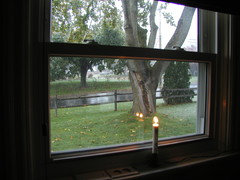
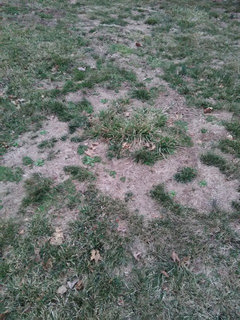
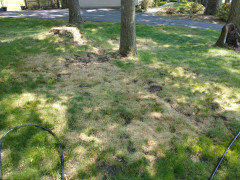
    This is the tree in 2011. Before we cut it down. The grass was so nice! I will get pics of how it looks today.

  • 9 years ago


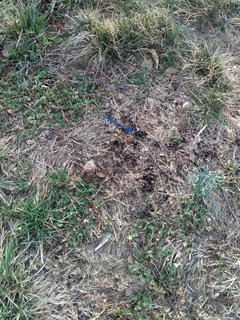
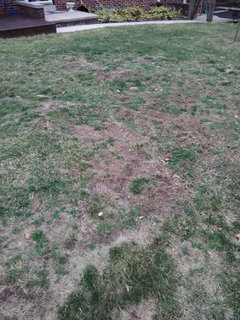
    This is the fungi currently growing over most of the bad areas. It appears to be dying off because of the cold maybe?

  • 9 years ago

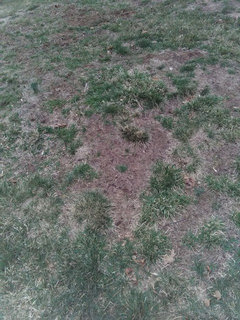
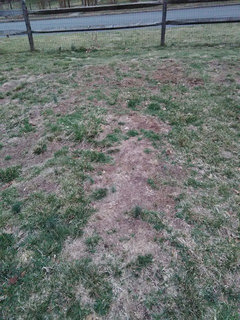
    To add to the frustration of this, in Summer weeds grow in these areas which makes it even uglier!


  • 9 years ago

    Keep in mind, all these areas has new grass growing in them last Spring. Then it all just died. After much care to ensure survival they just gave up. That's why I think it has to do with the soil below. What could it need to help it?

  • 9 years ago
    last modified: 9 years ago

    Rotting wood has been known to suck up available nitrogen. I was going with the allelopathic theory until I saw the before pic!

  • 9 years ago

    Another cause is that the rotting tree roots provide a way for water to quickly go underground. So it's a bit dryer there.


    Doreen Ulrich thanked User
  • 9 years ago

    dschall.....We did reseed last Spring and that was a failure, so we just spread a new different kind of seed in the Fall. I don't know the name of it but it was a suggestion from a neighbor. Hoping for the best!

    lazy_gardens....yes, the first Spring/Summer after the tree was cut down I just assumed all this mess was from the sun because that tree provided a lot of shade before. But I do have another area of the same lawn which is definitely drier and the grass dies in mid-summer every year, then starts up as it gets cooler. This area where the tree was seems different. It certainly could be a combination of things.

    I will probably post again in Spring when I expect to see some new growth from the Fall seeding. Crossing my fingers.


    A neighbor suggested lime. My husband did add lime in the Fall as well. What do you all think of that?


    I really appreciate all the input!!! Thanks to all! :)

  • 5 years ago

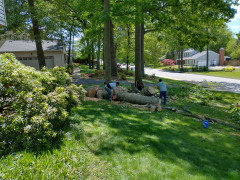
    This just happened to me. In my case I suspect that oil spray from the chainsaw is the culprit. I had a low-budget tree service doing the work. They cut the felled trunk into small slices so that they could lift them by hand. There was tons of sawdust generated. I sucked up all that I could with my leaf blower. And I imagine the crew removed a lot of sawdust as well. The other suspect is that the impact of logs hitting the ground sheared the roots, compacted the soil, etc. The yellowing was within a day of the job. I'll try to get some pics to post. I've been watering daily in the hope I can rescue the affected grass. This happened in mid-May and the temps are perfect for grass thriving elsewhere in my lawn.

  • 5 years ago

    HU-..., without knowing where you live or what kind of grass you have, I would suggest you stop daily watering and go back to normal watering. Overwatering will cause a lawn to turn yellow. It's about time to fertilize, so you could do that if you want. Water that in and make that your last water for a week or two.

  • 5 years ago

    I agree that daily watering is a bad thing. In this case though I'm hoping it might counter the immediate shock that lawn got from the tree service. If trauma was due to gas/oil then watering might help to dilute the effect. If trauma was due to the shock of large very heavy tree sections falling, then I'm hopeful that the over watering will help the roots to push out new stems. I'm located near Baltimore, Md. We've had no rain for at least 2 weeks. The rest of the lawn is still lush green due to the typical spring boost.


  • 5 years ago

    I'm hopeful that the over watering will help the roots to push out new stems.

    That is not what happens with overwatering. When you water every day, the roots have no need to push out. It's when water is restricted that the roots push out in search of moisture.