Software
Houzz Logo Print
wj_toh1005

Wilting after repotting

9 years ago
last modified: 9 years ago

Hello all,

First of all I'm a beginner for indoor gardening. I've done a lot of reading to educate myself in this field for the past few months thanks to this forum and the helpful people here. Really appreciate it.

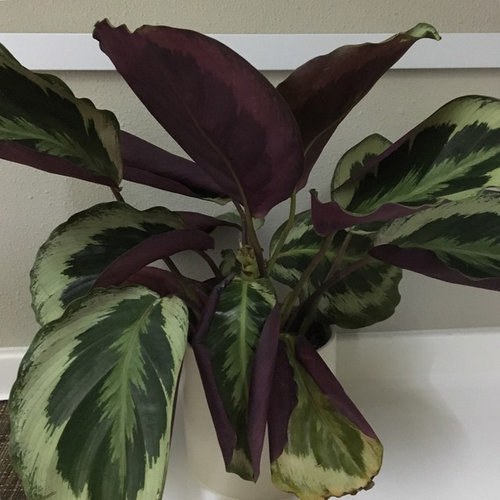
However this is my first repotting. I have a few plants that I owned for more than 6 months, wish to repot it due to its poor soil that came with it. Plants including calatheas and zebra plant. They're wilting and the leaves are soft after the day I repot.

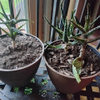
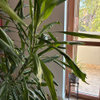
Picture first:

Some of the leaves of calathea even curl up. I not sure why.

As for my repotting procedure,

1) I've watered the plants that are going to be repot around 4 days ago, so the soil wouldn't be too moist to work with during repot. First thing first I took out the plants, remove the existing soil as much as I could, then rinse it with water to get rid of the soil that is still sticking to the roots. I've carefully remove them and avoid damaging the roots as much as possible.

2) From there I got the bare root plants, the roots seems to be healthy so I didn't remove any of them. I lay them on top of dry towel, then blow dry the roots slowly (maybe this is a mistake. Instead of blow dry I should leave it for a few days to dry naturally. However when I blow dry I did not use hot air and keep a certain distance in between the plants)

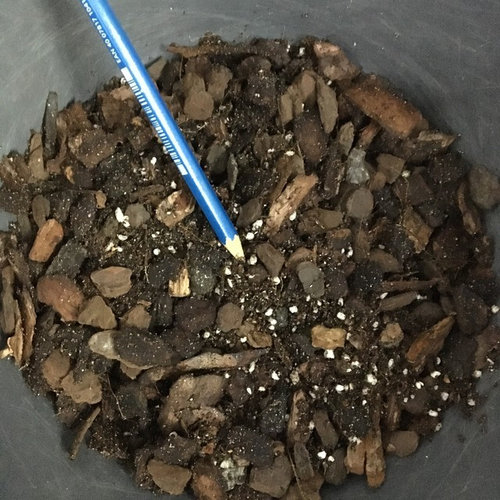
Then proceed with the soil mix. I spent quite some time reading and trying to understand the 5:1:1 mix before planing this repot. Can't really find some of the ingredient like sphagnum peat and gardening lime, so I decide to make an amendment but following the guideline.

Those are 5 parts of pine bark, I mixed it up with some larger particles. 1 part of sifted perlite and 2 parts of potting soil that I have in hand (it contains peat, coco coir, vermiculite, perlite). I know it is not ideal to have a peat base media, but I decided to give it a try. I also use 2 parts of it for more water retentiveness (perhaps this is a mistake as well) as I can't afford to water my plants that frequent base on my living schedule.

Finally, I water them thoroughly after repot. The water drain very quickly, within a minute or a few seconds after I water them. I suppose that is a good thing right?

The next day I discovered the plants that I repotted is wilting. I wonder if this is so call "plant shock"? Or maybe it is the newly potted roots is yet to establish to absorb water? I'm not entirely sure and really worry that they will die just like that.

Any opinion is appreciated. Thanks in advance!

Comments (12)

  • 9 years ago

    AHHH! I guess I applied the mind set of cacti & succulents here since they prefer dry roots when it came to repot.

    I really hope they will live...poor plants.

  • 9 years ago

    Yeah, you definitely don't want to treat tropicals the same way. You'll know soon if they'll live.

    Drying out the roots likely killed all of the fine feeder roots that do all of the work.

    WJ [Singapore] thanked Dave
  • 9 years ago

    Yes, apply what Dave wrote.

    Also, the bark particles are very large, which will cause rapid draining at first....but after a time, the finer particles will migrate toward the bottom of the container, causing the upper inches to dry out too quickly and the bottom inches to remain wet for too long.

    With this type of mix, you'll need to water frequently and lightly while the roots are colonizing the new mix.

    Josh

    WJ [Singapore] thanked greenman28 NorCal 7b/8a
  • 9 years ago

    I too am very new here and learning. I will give my experience with the 5:1:1 because you said, "I can't afford to water my plants that frequent base on my living schedule". I too have a very busy schedule. I have had many of my plants wilt too much with the 5:1:1 and I know it is because I don't water as often or my home is too dry, etc. I have had better success with cactus and succulent mix with 50% perlite. That seems to be the trick in my home. I think it has more to do with my living conditions and my schedule than that the 5:1:1 mix didn't work for some of my plants.

    Maybe put the plants in a bag for humidity as they try to recover?

    Good luck.

    WJ [Singapore] thanked massey516 (NW Montana z 4b)
  • 9 years ago

    First off, the plants you have here are not particularly "easy" to care for plants, so it may take some time for recovery. The fittonia (first pic) needs lots of humidity and is best suited for a terrarium (in my opinion). I live in a subtropical region and this plant would wilt in the 5:1:1 mix very quickly. I gave up.

    The humidity bag has worked for me when I had a plant almost near death due to under watering. Maybe give this a try. Good luck!

    WJ [Singapore] thanked jentsu926
  • 9 years ago

    Agreed that drying the roots was an unfortunate choice. Even for anything that should be dry (like succulents) that must be allowed to occur naturally (can't be sped up w/ blow drying).

    Agree too about the Fittonias requiring very high humidity & they would likely wilt from transplant shock, thirst too. I grow one on a pebble tray & still it requires watering maybe every 3rd day in a mix of African violet mix & perlite.

    I've only ever been successful growing Fittonias in terrariums as suggested above or in the bathroom.

    WJ [Singapore] thanked Karen S. (7b, NYC)
  • 9 years ago

    The environment I'm living here has high level of humidity, but I agree fittonias require very high humidity.

    The good news is this morning I noticed the fittonias show a sign of recovery. Some of the leaves perks up. I'm so happy to see that!

    What I did is amend the 5:1:1 mix by adding more potting soil (the one I mentioned in my post) into something close to 5:3:2. By doing this it loses the purpose of 5:1:1 mix already...but as you guys experienced maybe the 5:1:1 mix doesn't suits fittonias best. After that I kept misting it whenever I can (I know misting don't really help much but I did it as some sort of emergency treatment...well, better than not doing anything). Humidity bag seems like a good idea. I'll give it a try.

    However the calathea still remain the same. Lets hope for the best.

  • 9 years ago

    Pls stop misting & allow the roots to recover & do their work, otherwise you're likely to rot the Fittonia.

    I would not bag the Fittonia as you are watering it too much. The combination of that & the bag make it more & more likely to rot.

    WJ [Singapore] thanked Karen S. (7b, NYC)
  • 9 years ago
    last modified: 9 years ago
    Are your plants outside or indoors? If you have them indoors your aircon will be drying the air quite a lot. Have you tried the Green Culture site? They'll give you the best advice on your situation and where to get the materials locally that you need. By the way, your zone would be much higher than 11b. For Changi it's 14a so yours would be pretty much the same.

    WJ [Singapore] thanked tropicbreezent
  • 9 years ago

    Oh wow, that website could be useful. Thank you so much!

    My plants are all indoors with a few in the balcony. Most of my indoor plants don't usually get air condition. They are separated in a room with filtered sky light.

    If you don't mind me asking how did you figured changi's 14a? I've been looking around on web so far all I can gather is 11b in Singapore.

  • 9 years ago

    I searched the Changi weather station records (on the internet) and the lowest ever recorded minimum was 21.1, which is 14a. The 11 comes from that being the highest in the US, so everything above 10 was lumped together into 11 by those who didn't know better. The scale is in fact open ended. There have been discussions about zones on the Green Culture site before and generally they've said it's best to just ignore it.

    The reason I mentioned aircons is that being on an island your humidity would stay high, but indoors airconditioning removes a lot of moisture.

    WJ [Singapore] thanked tropicbreezent
Sponsored
Peabody Landscape Group
Average rating: 3.5 out of 5 stars8 Reviews
Franklin County's Reliable Landscape Design & Contracting