Software
Houzz Logo Print
dingoaint

Does this knob belong on this furniture?

9 years ago
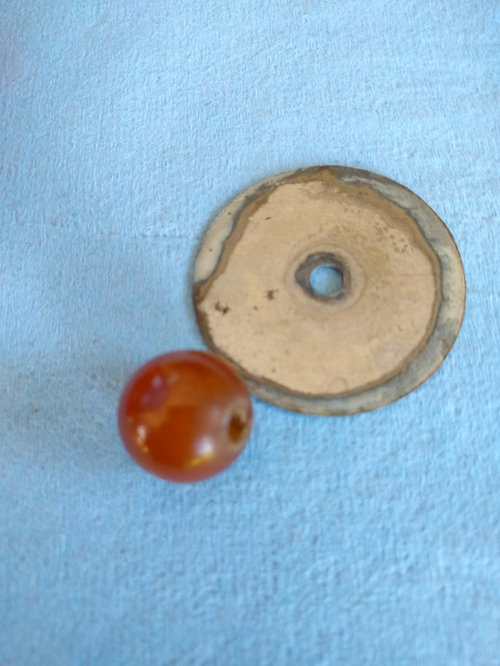
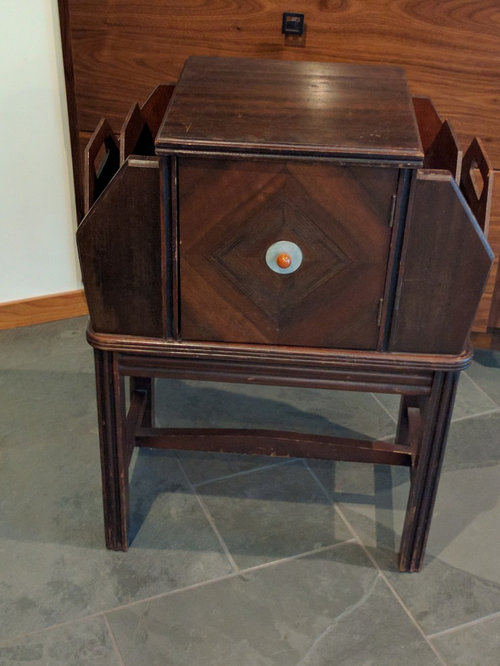
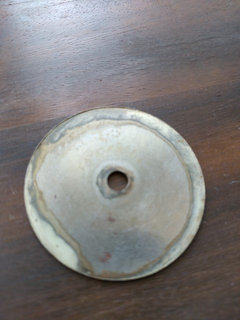
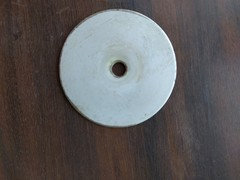
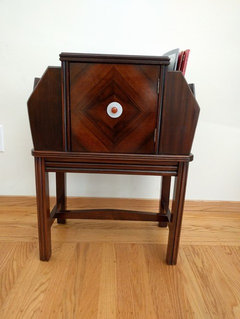
I'm cleaning up a humidor and took the knob off. The backplate for the knob looks like a big washer. Or it's super stylish. Does this look like an original, actual knob? Pictured here is the backplate flipped over. It's dull, uniform,and whitish on the front. On the back (and not really showing up) it's shiny except the edges. Is this actual furniture hardware or did someone stick a washer on it? The orange ball is plastic, maybe bakelite or similar.


As installed (this might give some indication of vintage):


thanks!


Comments (14)

  • 9 years ago

    Does not look original at all.

  • 9 years ago

    I disagree; I think the jury may still be out on this one.

    IF that knob really is bakelite then
    it, the knob at least, has a good chance of being "right" if for no other reason than that the orangish bakelite knob and the colors of the veneer on your humidor/magazine rack door really go together to say 1930s.

    There's a reasonably good guide
    for testing bakelite on eBay, Bakelite - How Do I Know What's Real or Fake
    . The only argument I'd make with it is the warning against the "hot pin test."
    On jewelry, dinnerware, or the like, the author is absolutely right, but on
    your knob, which has a "back" side which is not visible when its in place, I for one would go ahead and do the "hot pin". Bakelite smells nasty, like burning hair, when you apply a red-hot pin. That said, the 409 and the Simichrome tests are every bit as good (provided the piece is clean) and you won't accidentally burn yourself.

    I think what's really giving you pause is that metal disc... perhaps with good reason, perhaps not. The bright,shiny surface just doesn't go with the look of the piece, does it? What I'd do is examine the face of the door carefully in the area of the knob. If that disc (and it's not a washer, in the hardware store sense of the word) has been on the face of that door for seventy or eighty years, keeping both dirt and air off the surface of the finish on that door, you're going to see and/or feel the difference where the disc was.

    If there is a different size mark, then we can conclude that the disc, at least, is probably not original to the humidor. If the size matches, then I wonder if the disc wasn't originally wrapped with something. I can't be at all certain from this distance, but think about something like a very thin, supple, calfskin leather, the kind of material you might have found in womens' dress gloves, dark brown or black... Suddenly we're back in the Thirties with all our parts and pieces falling into place.

    I don't know... these are just guesses, possibilities.

    Enjoy your project.

  • 9 years ago

    Thanks. I'll do a bit of research tomorrow. I can find a photo of a cabinet with a disk, and one with an orange ball knob, but not together. :) As far as the disk on mine goes, the side facing out is a dull white, almost like oxidized aluminum (it's not aluminum) and only part of the back side was shiny. I like the brass one, but maybe not with orange...


  • 9 years ago

    I've seen those "washers" on other furniture as a protector around the knobs, where I know it was original.

    Yours is just peeling the finish.

    Fori thanked User
  • 9 years ago

    Thanks all. The disk has left a mark--there is a ring where its edges have pressed into the wood. The finish under it looked about the same although the finish on the front wasn't too badly discolored to begin with. The finish DID, however, easily slide off everywhere but under the disk so it's been there long enough to protect it some. (I've been gently deshellacking it.)

  • 9 years ago

    Good, the parts and pieces are right.


    Now, two more things... Aluminum was just beginning to find its way onto furniture sometime in, let's say, the 1920s, so a dull, not shiny, finish is what we'd expect. The whitish tinge is probably just oxidation. Polish it if you want to, but you probably shouldn't buff it. (BTW, this is what Simichrome is really for, although I wouldn't necessarily use it just because I'm not interested in the just-like-new look.) Unless you can actually be certain that whitish tinge is paint, go easy. If it should turn out to be paint... well, you'll just have to decide what to do next.


    And then, on the back side of the disk as you photographed it, that looks like maybe a paper (or thin cardboard, or something) sheet that may have been pasted(?) on. It's purpose may have been to prevent any kind of marking on the finish, a marking primarily due to oxidation. You may well want to figure out what it is, and replace it.


    Oh, and a third thing (sorry, there's always more), if it's a shellac finish that you're removing, please, please, please refinish it with shellac. The orange shellac that you can by at the hardware store is fine, although I would thin it for the first two or three coats just so I could decide when to stop before it got too dark. And if I thought it really needed a couple more coats for protection, I'd simply switch to white shellac (it's clear, but they call it white, NOT BIN which is a white pigmented shellac), thinned, and keep going until I was satisfied.

    Fori thanked cgard2
  • 9 years ago

    My photography skills are poor. This is the back:

    It's shinyish (see the photographer's head reflected in the bottom?) and the crud on the edges is what is on the front. There's nothing else there--no padding or anything.

    Front:

    I haven't cleaned it so it's a little scummy, but I can't tell if it's painted or oxidized. It seems too heavy to be aluminum, but maybe it's faux aluminum (to match the fake copper inside).

    Whether it belongs there or not, it left a mark so it's going back on. :)


    I do intend to shellac it again. I don't want to strip it, just get it so I can fill a few holes, do some minor repairs, and make it less gunky. I didn't expect the old stuff to come off as easily as it did. Thanks for the shellac tips!

  • 9 years ago

    There is no such thing as faux aluminum...likely it's what was called white brass....an alloy like brass but "whiter". Try cleaning it with the alcohol you used to get the shellac off.
    Faux copper??? Really? Tell me more!

  • 9 years ago

    It's a silver-colored metal with a metallic orange layer on top. It's not quite copper colored and it's certainly not the color of old copper. It's shiny like a new off-color penny. There are a few scratches through the orange layer to reveal the other metal. Whatever it is, it's pretty convincing, and its resistance to oxidation is just amazing. :)

  • 9 years ago

    Sounds like anodised aluminium. I have pot lids like that, also in other colours.

  • 9 years ago

    Although anodizing is an electrochemical process rather than a natural process, the surface of anodized aluminum is nothing more or less than aluminum oxide, chemically the same as natural oxidation. The difference is that it's a lot thicker. It's also quite porous. Consequently, a penetrating sealer can be applied, and the sealer can be colored. Sounds a lot like paint but it's very significantly different in that it doesn't wear off. I don't know when (what year) industrial anodization was introduced, but the first time I remember seeing anodized aluminum being sold as such was about the time I was graduating from high school, the early 1960s. It was turning up at every patio party in all sorts of bright MCM colors. It's still associated with that period, but not with 1930s style (although I wasn't around to witness that firsthand).

    I don't know what Fori's disk is made of, but the thing about anodization is that the oxidized layer is so thick, compared to the thickness of a naturally oxidized piece, that it actually resists further oxidation or corrosion of any kind, so if it's aluminum, and if anodization was around in the 30s, you could very well be right; I just can't imagine it would have been colored.

  • 8 years ago

    Just to report back...I was reminded by the other post with cool stripey veneers. It cleaned up well enough but won't pass for new. I didn't put a huge amount of effort into it--there's still a buildup in the grooves and some dents and dings. I didn't sand it except between coats. I still don't know what the knob's backplate is. I cleaned it as well as I could and put it back. Now the entire thing is only moderately grimy to go with the rest of my stuff.


  • 8 years ago

    I think that the back of your disc was coated with something that is now peeling off. It was probably a clear coat to protect the look of the disc's finish.

    When aluminum is exposed to air, it very quickly forms an oxide skin in a matter of a few seconds, and then oxidation slows to almost nothing protecting it from further oxidation.

Sponsored
More Discussions