Software
Houzz Logo Print
orneryponystudio

Semi-Hydro of Orchids?

9 years ago
last modified: 9 years ago

I am interested to know who among you have tried or are using any of the many semi-hyrdo techniques with your orchids. I have summer travel coming up this year where I may be away from my plants for as much as a month. Most of my no-orchid plants are self wicking on gridded water trays and I could arrange for someone to come in once a week to check on things, top up trays, and restart any stubborn wicks that failed. But my orchids are NOT wicked and require /daily/ misting. I could bag or dome them but...

So I am investigating semi-hydro options. Only options that can be left for at least a week at a time will be viable, and ideally weeks at a time would be better. I see hydro options where orchids are grown in glass vases with just the root tips in water, or semi-hydro options using expanded clay media balls which wick water through the media, if they work properly.

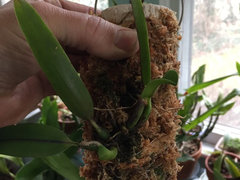
I have also been studying ceramic cylinder options where a 'branch' or tube is made of non-vitrified ceramic bisque such as terra cotta or earthenware and filled with water. Orchids are directly mounted on the outside of these and it wicks through the clay. The water level need not be closely monitored and larger cylinders can last for many weeks without need to be topped up again, depending on relative humidity levels. I've seen this latter form in person at my local AOS club meetings and the plants were lovely, developing very natural looking mounts complete with live mosses.

I am leaning towards trying this last method and I can make the ceramics myself here in my art studio. But I would love to see photos and hear feedback from members who have used or are using any of these methods.

Comments (18)

  • 9 years ago

    Thank you. I appreciate the input. I tend to lean towards keeping them as close to nature as possible but clearly I need to investigate options.

  • 9 years ago
    last modified: 9 years ago

    I used the "holes in side of pot/First Ray's" S/H technique several years ago. When I needed to prolong the time between watering, I would sit the S/H pot into a bigger non-holed pot and use it as a larger reservoir. You can also create your own pots (deli containers are ideal) and drill the holes higher on the sides than normal, @ 1" was normal as I recall.

    Good luck,

    Bob

  • 9 years ago

    Hi Patty, you wouldn't have any pictures would you? I've got to come up with a better way of watering myself. A few years ago I watched a video where a man used clay pots full of water on top of of a sheet of wicking material and allowed them to sweat out the water into the wicking material. However, in practice, the water levels went down very quickly (at least around here) so I gave up the pots and just used the wicking material. These were with african violets and streptocarpus though-not orchids-and the pots were set on the wicking material vice mounting them on the pots themselves.

    I'd be very interested to see some of these tubes, and adapt them to Bob's description of using a larger reservoir to set them in.

    Best,

    Judy

  • 9 years ago

    Pictures of what exactly, Judy? All of mine are potted in normal bark mixes at this time. I have about 4 months to resolve how this will work if I have to be gone for weeks or a month at a time. Bob, so much like a wicking reservoir but without the wick and the holes in the side up from the bottom rather than in the bottom? Do you have a photo of what you are describing?

    Judy, you are describing capillary matting and yes that won't work. I have something like 3,000 AV's and streps in here already. I use gridded trays with wicks and even then they have to be topped up weekly.

    Right now I am leaning towards making my own ceramic 'pipes' to look like logs and firing them in my kiln. But I hadn't yet seen anything like Cattleya mounted on them. I really need to go to my net AOS meeting next Monday but I've another commitment so maybe I can track down the fellow I had spoken with who uses them and email. If I can remember his name...

  • 9 years ago

    Oh I was just hoping you might have a photo of what you were describing. A few years ago I remember coming across a website that had something similar to what you describe. It seems like there was a discussion on one of the forms-might have been the gesnariad forum here-of someone giving them a try. They came in a couple different sizes but were a little pricey.

    Oh well let us know how it goes! I'm curious to see what you decide on!

  • 9 years ago

    If you search for "clay tubes" in the search box at the top of the page, you'll see a couple of older discussions concerning the use of clay tubes with orchids. Here is one of those threads: Clay tube discussion


    Bob

    Hyn Patty, Western NC Mountains (USA) thanked westoh Z6
  • 9 years ago

    Price isn't an option as I can easily make them myself. Anyone who knows basic ceramics can as long as you use a non-vitrifying clay that is low fired and not glazed. Terra cotta and earthenware being examples. I'll go have a look, Bob, thank you.

  • 9 years ago

    Yep that was exactly it Bob, thanks! SwampSticks. I notice in the conversation on the thread above that they stayed too moist on the bottom. Makes sense, terra cotta sweats where the water sits, but not above it. Doesn't look like they're selling them anymore.

    I know absolutely nothing about basic ceramics. Just playdough... and grandkids! :-)

  • 9 years ago

    I have experimented semi hydro for a while with a few different plants in various potting media and pot styles.

    Currently I am trying " Kool Logs" which sounds similar to the clay tube set up.

    It's a hollow tube filled with water, moss on the outside. The evaporation has a cooling effect so in theory it is supposed to allow me to grow plants that like cool moist environments. It's only been a few weeks so I don't have an opinion yet, but the tubes dry out pretty fast, 1-3 days depending on sun and humidity.

    I have also tried "Lechuza" pots which is a pot in a larger pot with a reservoir at the bottom. The smaller pot has a wick to draw up water.

    Most plants seemed to do good at first but I found that after a while, (2 years or so) they would start to decline.

    I've had better results which these pots without the wick, just letting the water evaporate and rise through the upper pot increasing humidity without being wet.

    I have also tried using a net pot with a shoe lace woven through the net sitting in a vase to wick up water which seems to work.

    One problem you may have over an extended period of time is the water sometimes will get moldy and could cause root problems. I usually change the water weekly.

    I also tried water culture once, ( roots submerged in water). I won't be doing that again

    If I'm away over summer, I put everything outside with a sprinkler on a timer. Depending on the plant you might be able to just let the normal rain fall take care of them.

  • 9 years ago

    I appreciate the feedback, James, and everyone thank you.

  • 9 years ago
    last modified: 9 years ago

    i go away for extended periods and 6 weeks is not a problem at all for me - all my plants are set up for passive wicking similar to african violets in very light mixes.

    last holidays i had for the first time rhizomatous begonias and 2 phalaenopsis orchids that started spiking when i was leaving for the holidays at the end of november. they were in my jungle mix 1:1:1 bark/perlite/av mix.

    since i drop the temps to 65F in winter when i am away i was scared that they will rot. and bark can mildew when damp at low temps. so i changed the mix on them completely to pure coco-chips with coir matting lining the pot and 3/8 nylon braided rope as a wick wrapping around the base of the pot on the outside of matting and spiraling up on the side. i soak my coco-chips for 24 hours prior to use with Cal-Mag added to the solution. then i let them dry a bit so they are not soggy. the top layer will dry up much faster, so i put some long fiber sphag on top as a mulch to keep top chips moister longer.

    the coco-chips by themselves do not wick, but coir matting does wick - so where the braid wick touches it it becomes moist and there is residual moisture in chips that holds for a very long time.

    i added 15:15:15 ratio of african violet fertilizer into the water reservoir too, they were in somewhat obstructed west window 1 foot away from glass with 1-2 hours of sun may be (when there was sun..im in NYC).

    they did just fine after 7 weeks - spikes continuing fine and top roots developing too.

    i top watered them once after initial 7 weeks with some water running down and remaining in the reservoir. now i raised the temps to 68F during the day, still 66F at night.

    then 1 month later again top watered - no fertilizer. so it was sort of a rinsing to leach salts after prolonged wicking. and finally a third time after 1 month. so 7 weeks initial + 4wks top water +4wks TW +4 weeks TW is about now. the last sev weeks have been much warmer with more sun hitting the room - so 70-74F during the day and i raised the night temps to 69-70F.

    one is blooming with a fat branch and the 2nd is still growing the spike (it was rebloomed and lost a lot of roots too, so much weaker plant overall).

    however that might not be enough wicking for you in summer heat though.

    i'll experiment and leave them in chips to see how much they will wick in summer.

    it's possible to wrap a 2nd braided rope wick around the top of the mix slightly burried under chips - and drop it in separate water reservoir - for extra supply of water in hotter temps. it adds humidity around the pot too.

    you still have enough time to test . another possibility instead of coco-chips is pure horti (large) perlite. it will wick similarly to chips i think. if not more.

    standard hydro with hydroton or clay-pellets will provide too much moisture i think, unless you give them high temps and lots of light too.

  • 9 years ago

    Interesting. Thank you for the very thoughtful response. I will give this some thought. I already wick a great many plants and was thinking about playing with it for my orchids but didn't think, as you said, that bark would wick or might stay too wet. I do use a lot of coarse, large perlite already in my orchid mix along with charcoal, etc. I do have plenty of time to play around with it, thank you.

  • 9 years ago
    last modified: 9 years ago

    just an eyeball figure - my mid sized phal with 5 large leaves took 3/4 cup water in 2 weeks in november in lower light and cooler 68F temps. so 2 cups roughly for 1mo is doable, easy to setup a small container. for such smalls i use large 1qt yogurt containers and set in half-pint deli tub for dips in the top with a hole in it.

    the wick goes down and the solution is sealed in the bottom - roots grow in it in the air in 100 humidity as the water is used up. i add peroxide to the solution to keep it fresh and or copper penny for longer periods of time in large containers , so no refilling is necessary and solution stays fresh.

    i grow anthuriums in jungle mix on wicks and it's ok in summer at 75f - but it provided too much moisture at 65F (low for them) and i had root rot and decline. i am thinking of transferring them into pure coco-chips too - their roots are very similar to orchids and they are epiphytic too. coco-chips give them enough air at the roots to prevent rot. they grow semi-dormant at cooler temps, but still need some moisture.

    i read posts that said that they grew AV's in pure perlite on wicks in the tropics - that was the only way to do it at high temps with humidity without rotting them.

    in florida they grow all orchids bare root in slatted hanging baskets - with very high humidity and high temps and very high light that works. they mist them liquid feed of course. you could set up auto-misting on the patio or something like that - in Arizona they sell pipes with nozzles for installation on the wall outside for misting with very fine mist - apparently it's very easy to do and not expensive. i saw posts on gardenweb about it too.

    Hyn Patty, Western NC Mountains (USA) thanked petrushka (7b)
  • 9 years ago
    last modified: 9 years ago

    Yes, I also grow a LOT of streptocarpus and it gets pretty hot in my art studio for them. I try very hard to keep it no higher than 80 but it can easily reach 100 degrees outside in the shade, with variable humidity that is often 60 to 80 percent on a typical Georgia summer day. My orchids stay outside from spring until autumn in the shade of a huge white oak that grows up through my back deck. My streps, AV's and other gesneriad stock plants are all wicked on gridded trays indoors on lighted shelving racks. If I propagate leaves in summer I have to use straight perlite and I may be switching the stock plants over to straight perlite for the hot months as well. So I am already very familiar with all of that. I've never tried doing orchids that way, however.

    I do not have an auto misting system but I certainly can look into one, thank you. My other concern if I have them outside is if it rains a lot, I would normally bring them in so not to rot (especially the cymbidiums) so that's something else I need to think about. Last year we had a drought though so too much rain wasn't a problem.

    My other option, /if/ I can find someone willing, is to move my orchids to a greenhouse and have someone babysit them for me while I am gone. I used to work for an orchid greenhouse about 15 years ago that offered that service when people went on vacation. The only orchid greenhouse in my area just closed and relocated but I could check in Atlanta.

  • 9 years ago

    well, last thought..:) you might transfer them into pure lava rock (scoria) - they do grow them like that in south florida too - outside in baskets, for downpours. scoria stays put better then perlite outside in the wind/storm, downpour.

    scoria wicks too. when soaked it can absorb very large amt of water and slowly release it while giving roots enough air.

    and can be used in hydro also if you need to bring them back indoors for winter. u can still just mist them in scoria. and for downpours it's better then coco-chips (those would stay too wet, though they drain instantly).

    perhaps keeping them under an overhang/roof can solve the 'too much rain' problem, while misting can give them enough without actual watering, provided u soaked coco-chips/scoria ahead of time? it's tricky but not unmanageable.

    i am curious what u'll do, aside from giving them to the greenhouse :). do post !

    Hyn Patty, Western NC Mountains (USA) thanked petrushka (7b)
  • 9 years ago
    last modified: 9 years ago

    I was thinking about the over hanging eave along that side of the deck. If they were on a misting system I could build an orchid wall there instead of on and around the tree. They'd only be about 5 feet from it. Hmmm. Some great ideas you have shared with me. I'll be investigating. I am particularly concerned about my compots of baby cattleyas. But I can mount them. Lava may be a good option too. No need for wicking if they are misted.

  • 9 years ago

    there's quite a lot of info on this forum about stuff that might be useful for you. i have some interest in it for the future, so i keep some links.

    about misters, about keeping various species of orchids outside..about using scoria outside

    i am sure you can find many more.

Sponsored