Software
Houzz Logo Print
kwie2011

Is western Oregon too overcast for tulips?

9 years ago
last modified: 9 years ago
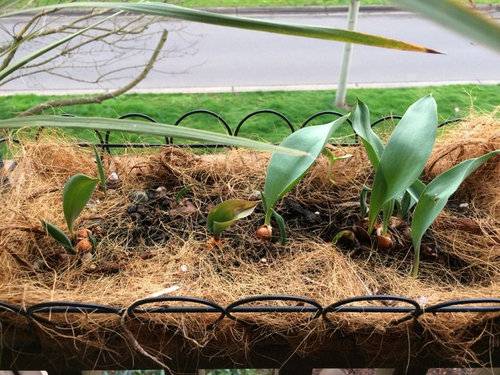
I bought live tulips spring 2015. I had no luck with them blooming again in 2016, so at the end of the spring, I packed them away in an outside closet where it was totally dark and they experienced lots of subfreezing temperatures. I took them out a month or more ago, put them on a south-facing balcony rail, and watched the puny yellow shoots turn dark green, but as you can see in the photo below, it doesn't appear they're going to bloom this year either. Pathetic.

I'm thinking that an average of less than one sunny day a week just isn't enough for them. Maybe if I forced them in May I'd get blooms, but our winters are way too bleak.

Good guess, or do you think its something else?

Comments (10)

  • 9 years ago

    I agree with floral - the Skagit Valley here in WA state is the largest commercial tulip growing area outside of the Netherlands and we are known for our long, uniformly gray and damp winters. Doesn't affect the blooming in the slightest!!

    I'd agree it is something about your storage methods that is causing lack of bloom (did you allow the foliage to ripen and die back naturally before lifting the bulbs?) or the lack of strong perennial tendencies in some varieties.

    kwie2011 thanked gardengal48 (PNW Z8/9)
  • 9 years ago

    I don't get it. If none of the bulbs are exposed to light, then how can light make them begin growing? Everything I've read says they have to be dark all winter, and exposed to sun in the spring. Forcing them is exposing them to light at an unnatural time of the year, so how does that work if no light reaches the bulb anyway?


    Why would you need to take them out of the growing medium? I let the foliage die back and then let the medium dry out before storing them in the cold and dark. No rot or anything like that.

  • 9 years ago

    Setting aside the issue that many hybrid tulips are just not reliable rebloomers, the typical way to overwinter tulips is in the ground in well draining soil. The bulbs are difficult to store on their own (no soil) from year to year unless you can offer ideal storage conditions, which most home gardeners cannot.

    They begin setting roots and emerging from dormancy once temps begin to cool in fall, which is why they are planted then (even though you will not see foliage until months later). Forcing the bulbs to bloom early also involves a temperature change after a sufficient chill period, in addition to light.

    Had you planted them in October in your planter and at the proper planting depth, and left them outdoors, chances would be much better that they could produce flowers this spring. With limited outdoor garden space, I plant tulips (and other spring bulbs) in containers every fall, usually replacing the tulip bulbs every year. They bloom like clockwork in April :-)

    kwie2011 thanked gardengal48 (PNW Z8/9)
  • 9 years ago

    Thank you. So, probably a pot of living tulips from a grocery store isn't the best way to try my hand at growing them, and they should be out all winter.


    If I did that in this rain-drenched climate, how wet or dry would I need to keep them all winter? How do you prevent rot if you're giving enough water to feed new roots? When in summer should I put them in the dark, or is that even needed?


    The year I bought them, I let the medium dry out on the balcony, and left them out all winter. They looked pretty much the same then as they do now: just a few small leaves, except I think the foliage wasn't as dark green then, which is hard to explain unless they were too wet.

  • 9 years ago

    You do not need to give them any water at all in the winter, even in containers, in your damp climate. There is plenty of moisture in the soil. I have some flowering now in pots in my garden. I have done absolutely nothing to them. I let them die down naturally after flowering, leave them outside all summer and winter and in the spring up they pop.My MIL, on the other hand, always religiously lifted her tulips after the foliage died down and kept them on open shelves in a dry greenhouse until replanting in October/November. That worked too. Do not worry about your climate - think about the Netherlands - do you think they have long hot summers and rain-free winters?

    But as GG says many tulips are just not reliable rebloomers, whatever the conditions. Do you know what type you bought?

    kwie2011 thanked floral_uk z.8/9 SW UK
  • 9 years ago

    They were just cheap ones- small red corollas. I think they were $4 or something in a 5" pot outside the grocery store. I think they were meant to be treated as cut flowers and tossed when the blooms died.


    Since I did leave them out all year the first year, and they didn't come back, I'm thinking they might be of the type that doesn't come back reliably.


    If I wanted to really make an effort, what bulbs would be good to start with? I love the more exotic-looking, lacy type tulips I see outside nurseries. Probably too expensive for a newbie.


    Do you know a reliable Internet source for instructions to grow them? I read so many different sites, and I'm not sure I got good information from any.

  • 9 years ago

    The exotica looking ones don't usually come back reliable. Old fashioned Darwins and species are the best for that. Just buy bulbs in the Autumn and be guided by catalogues or sellers websites as to description and flowering period. Much cheaper than buying flowering pots.

    kwie2011 thanked floral_uk z.8/9 SW UK
  • 9 years ago

    I often buy or receive potted tulips. I enjoy them while in bloom and then plant them in the ground after the flowers have finished. It does make a difference if the plants are allowed to ripen and dry off naturally outdoors as well as gain the nutrient benefits of proper ground soil. Most of these potted tulips are the Darwin hybrids and they do return fairly reliably but never with the same display as that first season.

    Planting tulips (and other spring flowering bulbs) is easy. You just need well drained soil and an open, sunny (when it's out!) location. October is an ideal planting time in the PNW. They should be planted deeply - a good rule of thumb is 3 times the diameter of the bulb, so about 6-8" deep. And pointy end up :-) I like them in clusters so I plant a group of 5-9 together in a single planting hole, the bulbs close but never touching. A word of warning - tulips are favored munchies for various wildlife, like deer, rabbits, voles, etc., so you may need to provide some protection if that's an issue for you.

    Some gardeners will work in some bulb fertilizer at planting time but I have never seen the need. I have good soil and the bulbs contain everything necessary to produce healthy growth and flowers the following spring. Fertilizing lightly in following years as you see the new foliage emerging can be helpful.

    kwie2011 thanked gardengal48 (PNW Z8/9)
  • 9 years ago

    Thanks for the information, everyone. I might give it another shot in the fall with fresh bulbs.

Sponsored